Many of our best vacations have been chosen spontaneously. We might be lounging on the couch reading random articles online, see something featured that looked like a once-in-a-lifetime experience, and start goading each other to go. Moai on Easter Island? Icehotel in northern Sweden? Let’s go.
When I first read about the ROSEOVERDOSE Rose Retreat via the blog Bois de Jasmin, I felt a similar tug. Of course, for me, this was less random because I’ve always loved roses, and everything about the retreat looked perfect for perfume lovers. The host, Silvia Yonkova, comes from a family that has been cultivating roses for generations.
To my delight, my other half hesitated only a little bit at the prospect of taking a perfume-making workshop as part of the program before jumping all in. We were quickly booked for a week of adventure in the Rose Valley in central Bulgaria (May 22-26, 2023).
On the agenda were visits to rose fields and rose oil distilleries, cultural sightseeing, wine tasting, a visit to the Rose Museum, an extended perfumery workshop with none other than Sarah McCartney of 4160Tuesdays, and more.
Now, having been, I would highly recommend the Rose Retreat to anyone who loves roses, perfume, and travel, and can fit it into their plans. The following are some of my personal experiences of this year’s retreat. I’m sharing only because I want to—I have received no requests or incentives to do so.
(Note: There is also a ROSEOVERDOSE Lavender Retreat scheduled for June 26-30, 2023 at the northern Bulgarian seaside, which looks to be equally worthwhile.)
Even with our excitement and anticipation, a theme throughout this trip in terms of matching expectations to reality was “underpromise and overdeliver.” Silvia set the positive tone early by sending timely communications with information and recommendations, and as the days unfolded, it was clear that she had thought through every detail to ensure that we all felt comfortable, safe, and could relax and fully enjoy all that the Rose Retreat had to offer. The weather even conspired in our favor—the forecast had predicted that it would rain all week, and instead, we got glorious sunshine most of the time!
Day 1
Each of us was picked up from our respective hotels in Sofia and we headed first to the old town of Plovdiv. The long van ride was ideal for us all to get to know each other organically without any artificial icebreaker activities. It was so refreshing to be in the company of like-minded, lovely people from different countries and diverse backgrounds. Most participants were in a business related to fragrance, although a few others were also there for interest and the love of roses. I felt right at home when perfume vocabulary started flowing naturally in conversation: “Immortelle smells more agrestic than floral.” I could live in this alternate universe!
In Plovdiv, we took in the architecture—we learned that the second floor of a building is typically longer than the first (or ground), such that it protrudes.
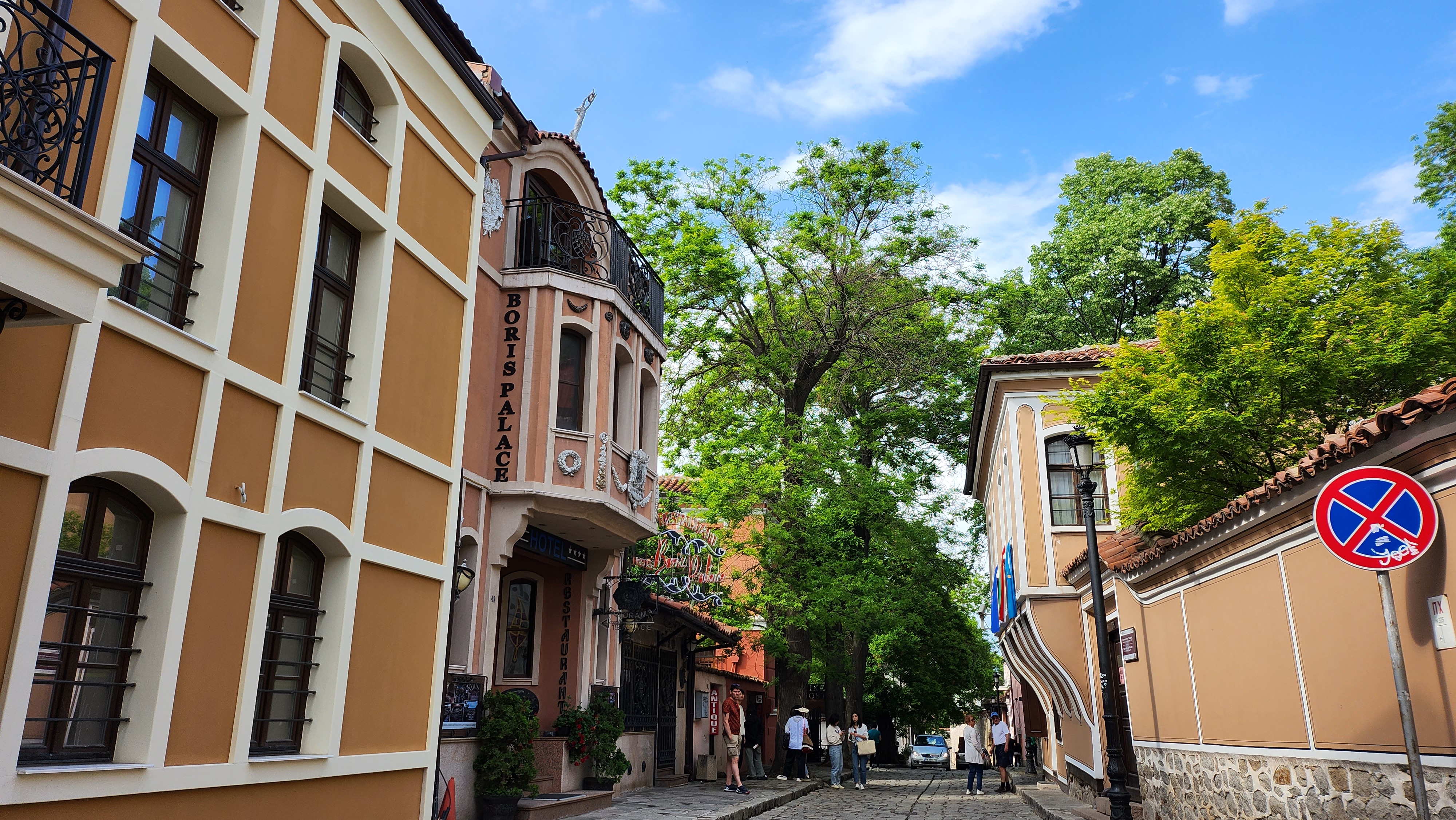
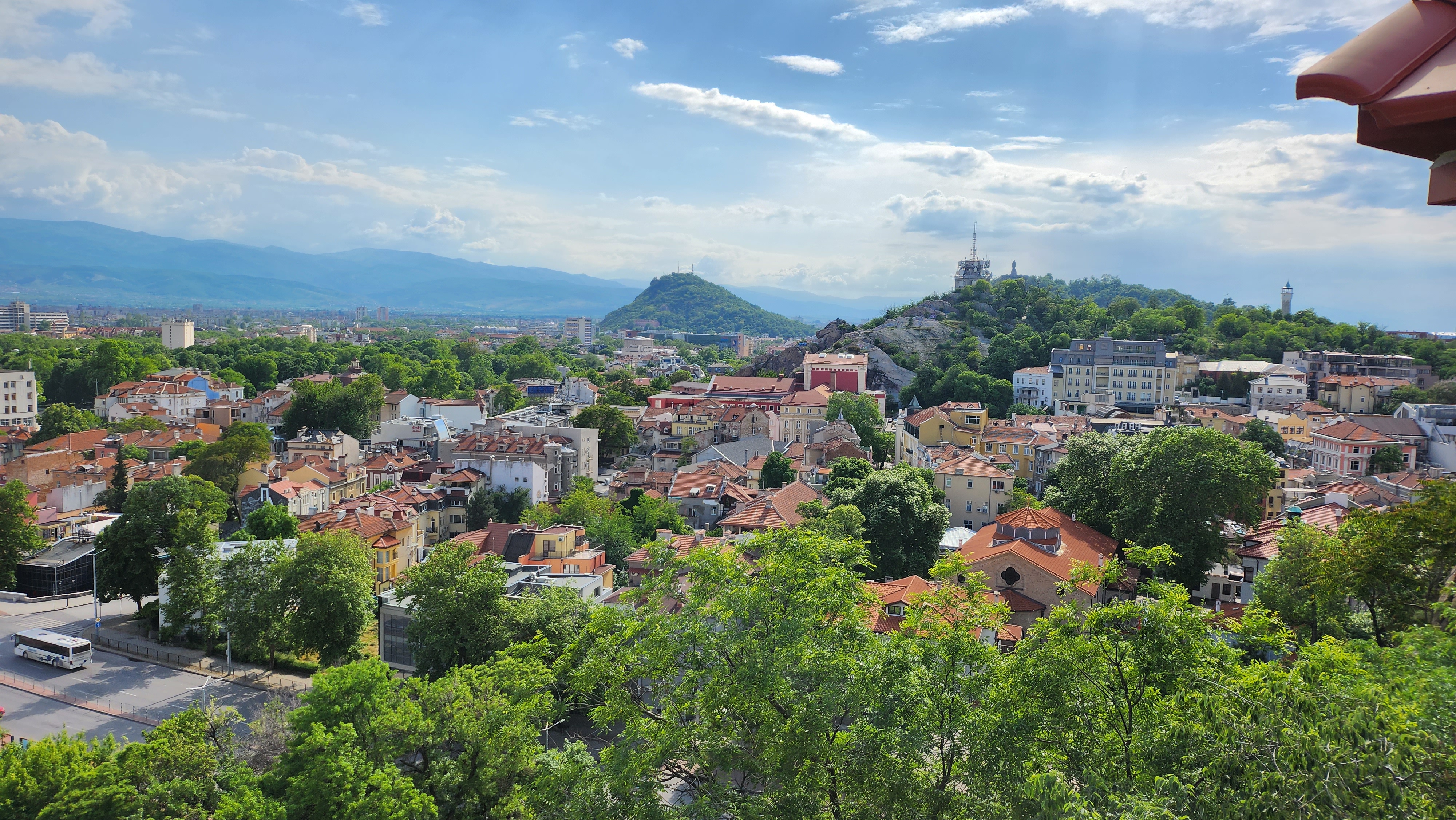
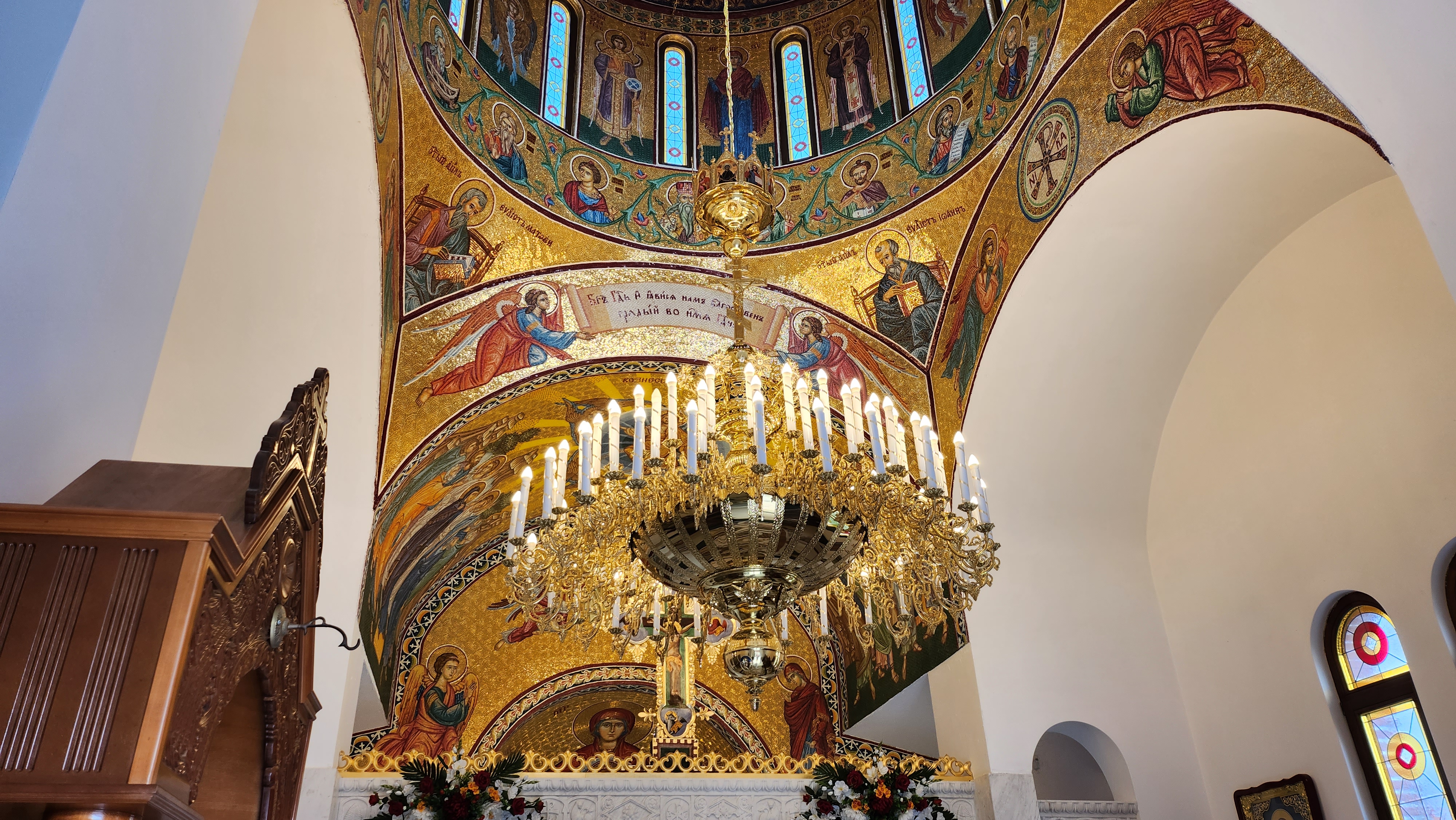
Plovdiv is home to many beautiful, ornate churches; at one of the smaller ones, a woman was offering chocolates to everyone around, and we also learned that this is customary when someone has a birthday, to treat others.

It was time to sit down for a most delectable welcome lunch. Starting with a Bulgarian salad featuring chunky, juicy tomatoes and ending with ice cream topped with candied green figs, the meal was enhanced by wines made from local grapes. One we fell in love with was a white wine of Tamyanka grapes (a variety of Muscat Blanc à Petits Grains)—light yet intense, floral, and fruity.
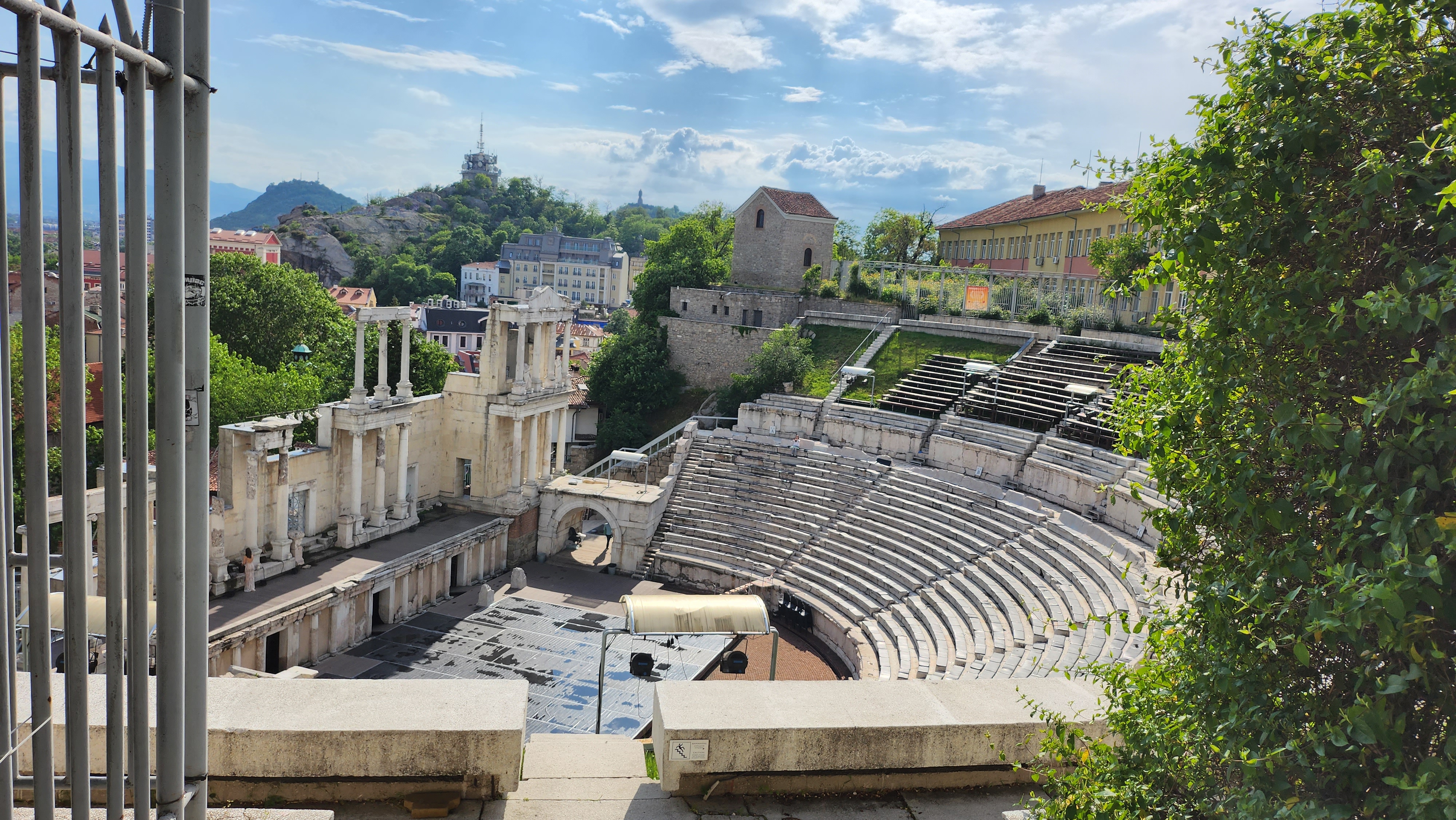
We then visited the ancient Roman theater of Philippopolis, which felt unreal in its rugged grandeur. Some of the stones were marble. A young woman was having a professional photoshoot done on the stage, and I can only imagine how stunning the photos will look.
After another long van ride spent in good conversation, we arrived in Kazanlak (or, phonetically, Kazanluk [Казанлък], pronounced like wishing someone good luck), the heart of the Rose Valley. Once again, we were welcomed warmly with rose and lavender–flavored chocolates and a wine that tasted like chamomile with some spicy notes—“It smells like there’s some eugenol in it” was one of the observations!
By now the jet lag was seriously setting in (Bulgaria is 7 hours ahead of Eastern Time), so after a shower with heavily rose-scented toiletries, I went to bed.
Day 2
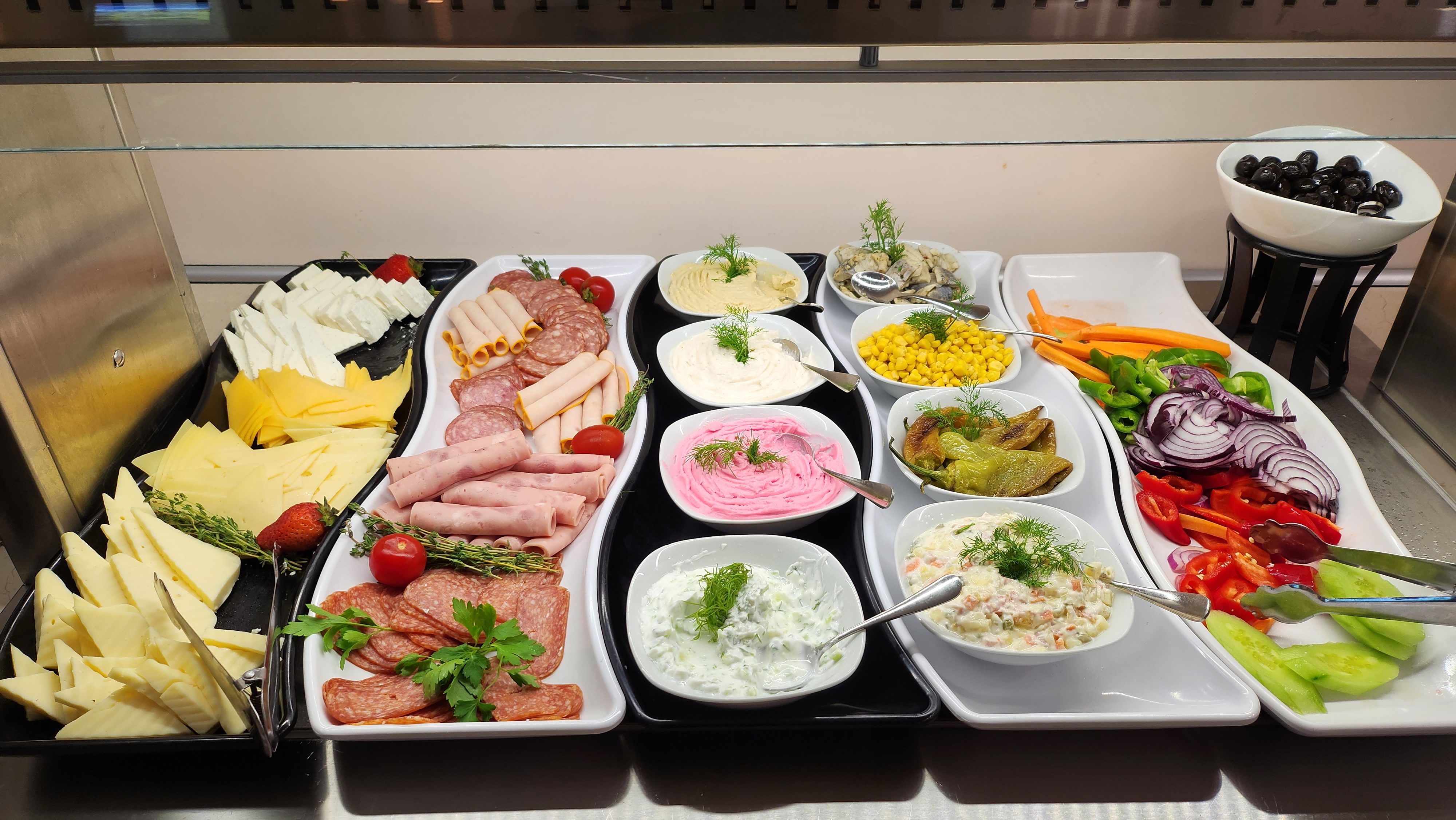
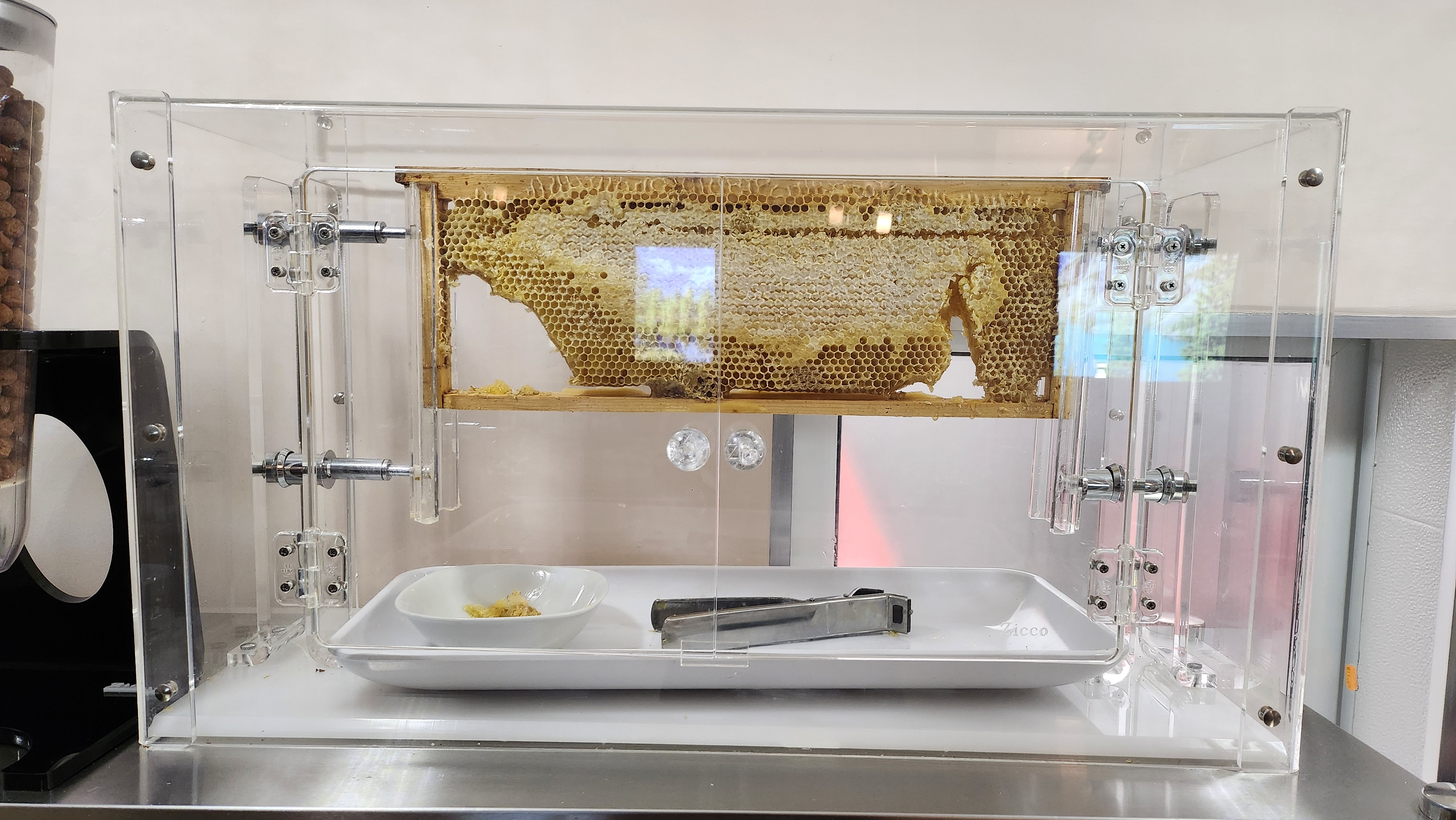
I woke up quite hungry, as I’d been too exhausted for dinner the previous night. The breakfast buffet at our hotel was decent and varied. The roasted long peppers became my new favorite breakfast item.

We all headed out to visit a rose field by a distillery that produces smaller batches of rose oil, located next to a weapons factory. We had learned that Kazanlak is known as the town of “guns and roses” because these are the major exports from the region. Sadly, the former is far more profitable than the latter, but the beauty of roses prevails.

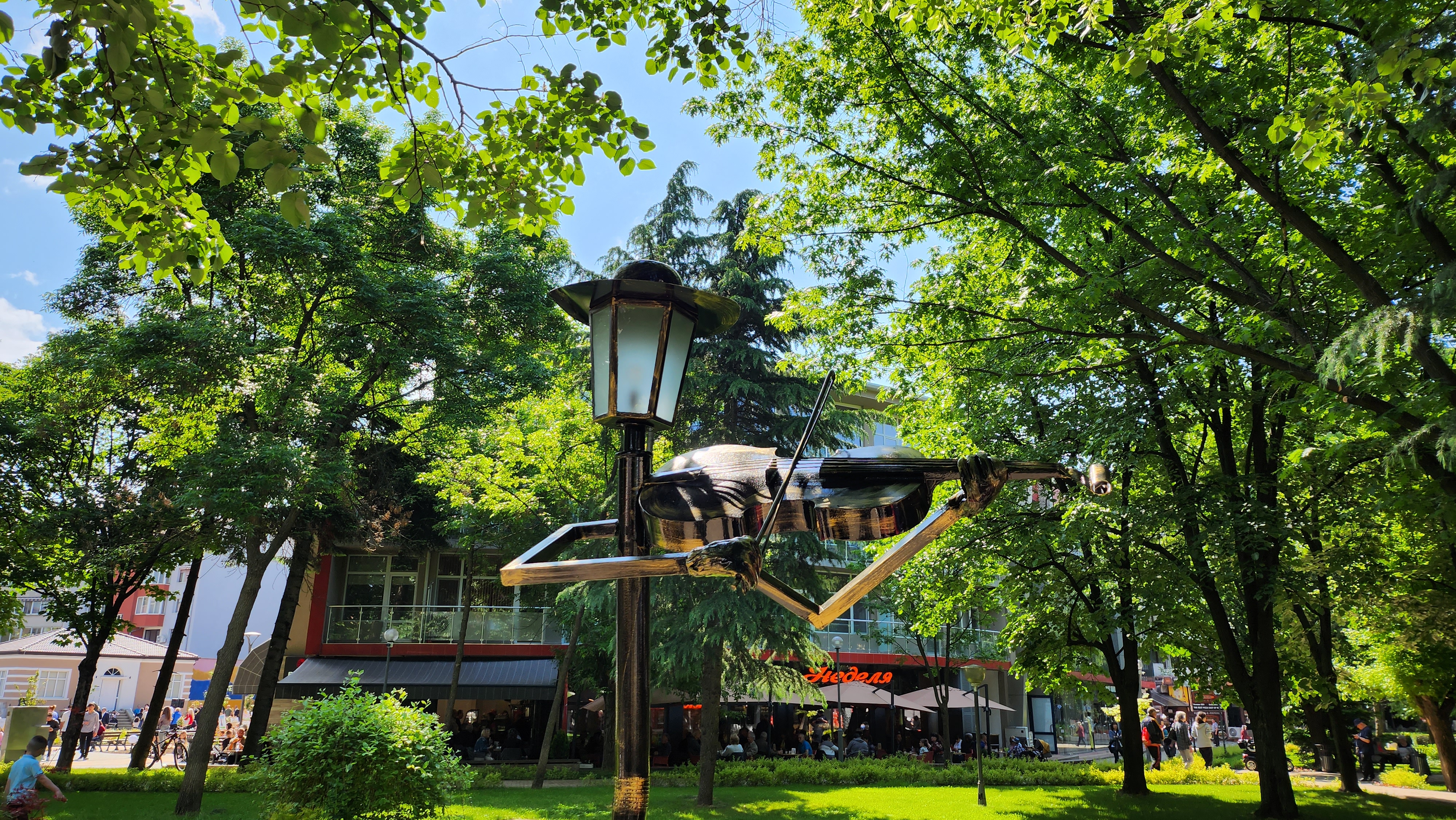
Another product of Kazanlak, at least historically, is violins—from what I read, the craft is becoming rarer in Bulgaria and global supply now comes mostly from workshops in China.
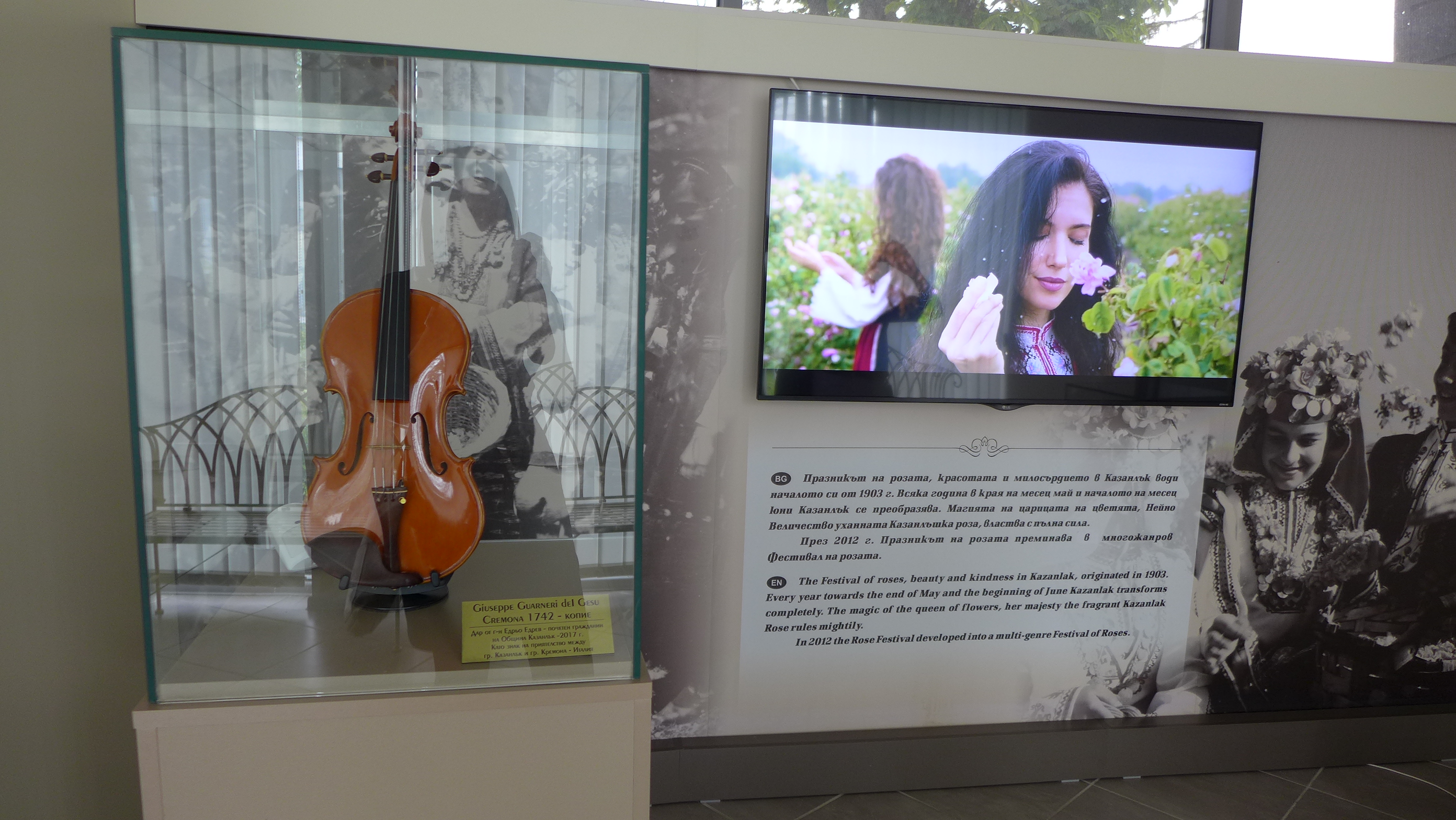
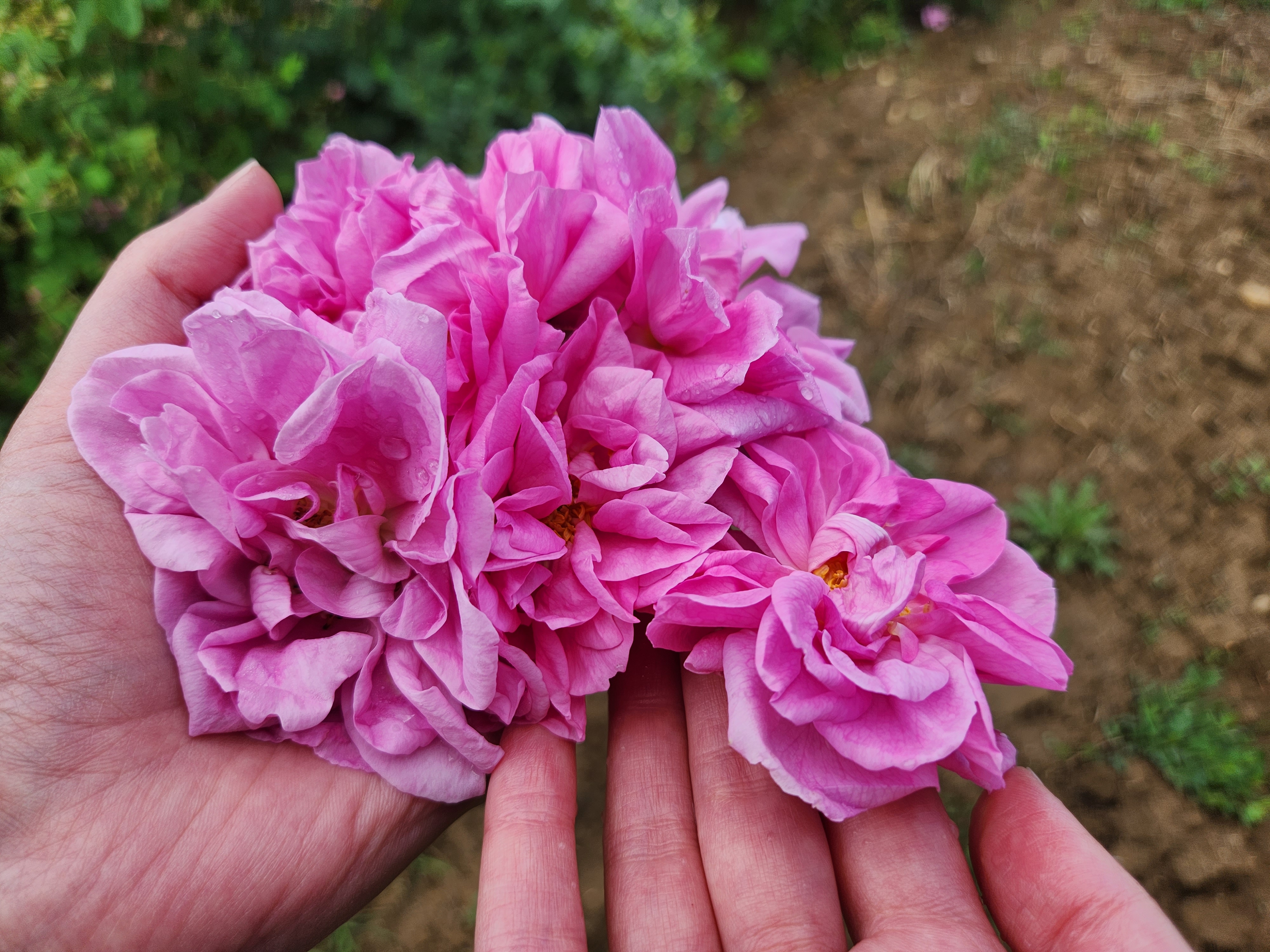
At the rose field, we were shown the proper technique for picking roses: you snap them from the base without pulling them. This way, the whole flower is kept intact, and the green parts go into the vat along with the petals. The temperatures were not as warm as usual for this time of year, so the pink Rosa damascena were not as in abundance as expected, and the harvest was not yet ready for the first distillation run. The white Rosa alba, which is waxier and therefore more suitable for use in skincare products, was even further behind in the bloom season, so only a few were out.
However, we were able to pick fragrant Rosa damascena to our hearts’ content and were joined by a couple of friendly cats.
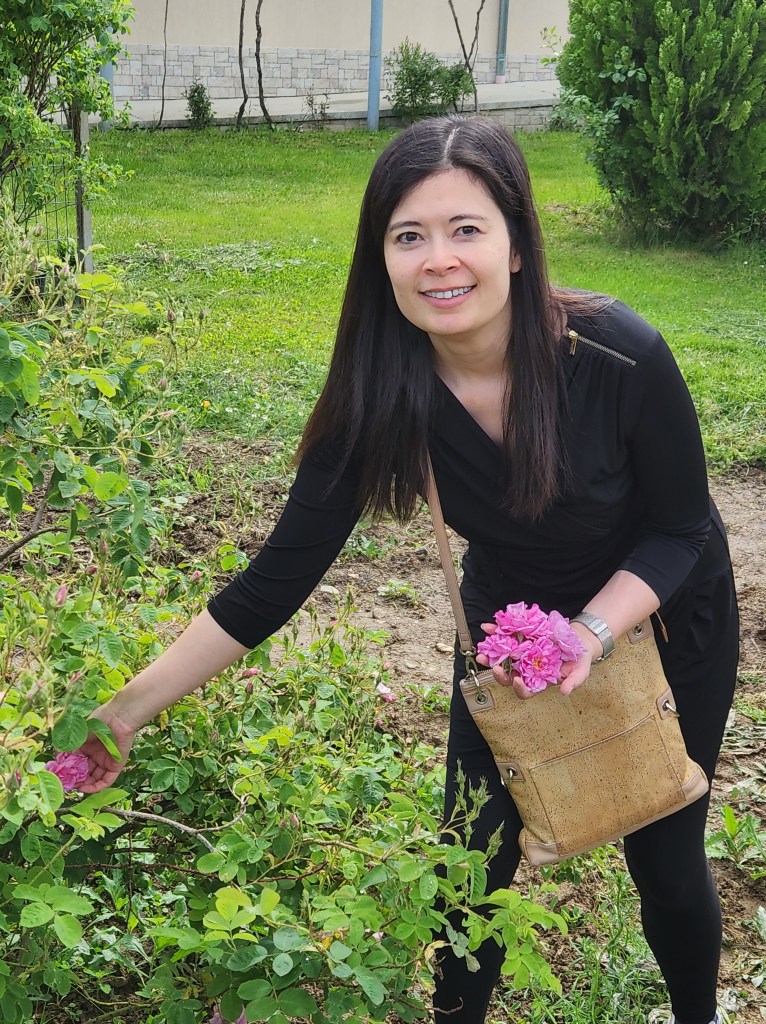
Our spirits high on roses, we moved on to our next destination, the Valley of the Thracian Kings. Here was also the Damascena Ethnographic Complex, which includes the first private rose distillery in Bulgaria. On our guided tour, we learned about a different process of distillation, which is identical for both conventional and organic rose oil production, with the oil yield from organically grown roses being much smaller in volume.
Incidentally, the yield of rose essential oil from the same amount of flowers is much lower than that of solvent-extracted rose absolute, so although the absolute is more concentrated, it is less expensive per kilo than the oil.
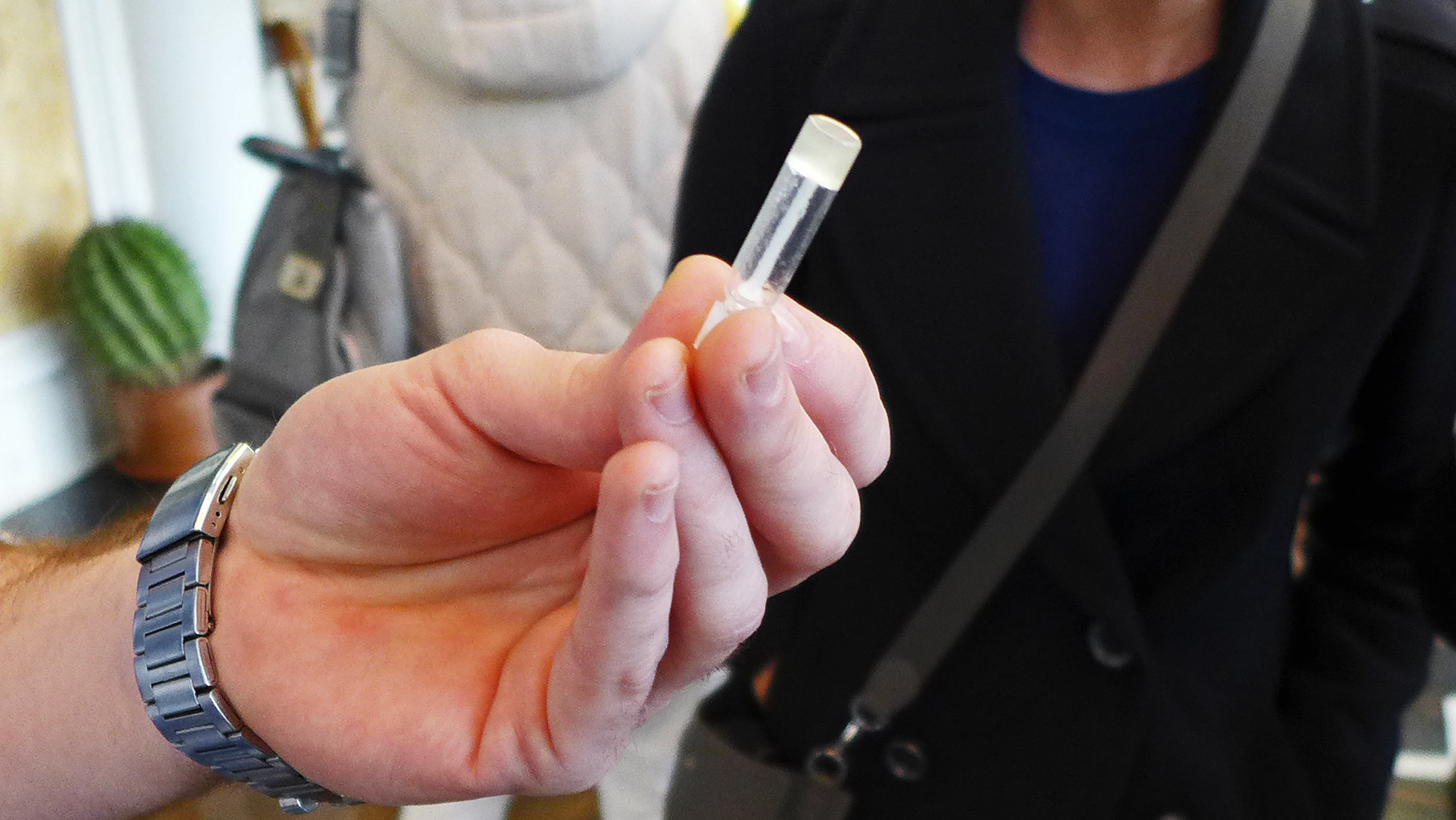
We were shown a “crystal” of pure rose oil, which is formed by cooling the oil to below 18 degrees Celsius (~64 degrees Fahrenheit). This can be used as a simple test of rose oil purity—if it does not congeal at this temperature, it is most likely adulterated.
Now that our minds were filled with education, we exited through the gift shop to enjoy some of the applications of this knowledge. It was a well-designed one-stop shop for rose-centric souvenirs, and I bought rose oil face serum, rakia of roses (a type of brandy), and rose candy to prolong the tangible indulgence long after the retreat.
We were ready for another exquisite lunch with wine pairings awaiting our group. This time, we were introduced to three different Bulgarian white wines, a rosé, and a “snow wine” (ice wine), which was superb. After this attentive presentation, the owner excused himself to attend his son’s prom—a very important event in Bulgaria. Satiated, we headed back to Kazanlak to get a coffee before visiting the Rose Museum in Park Rosarium.
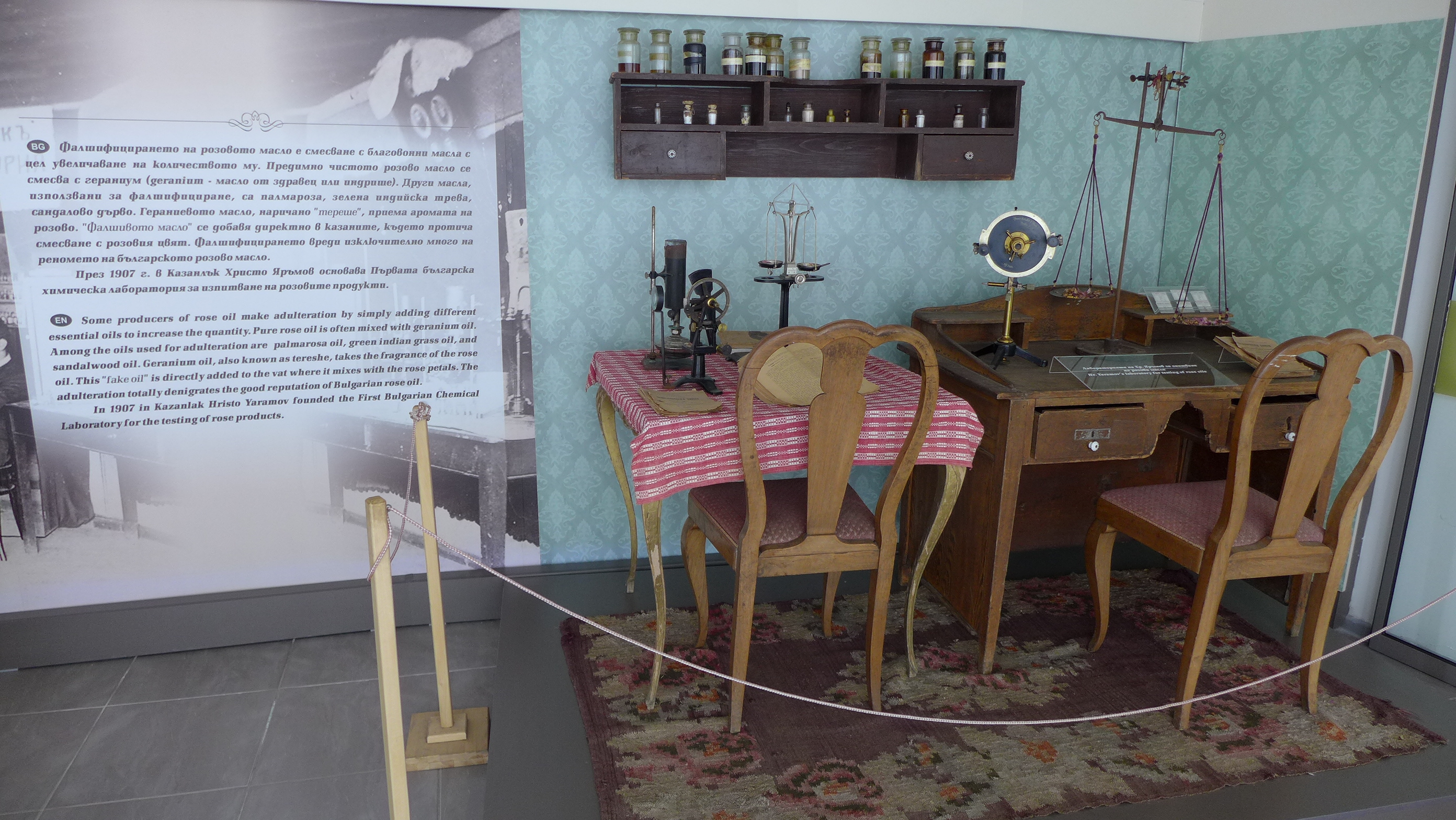
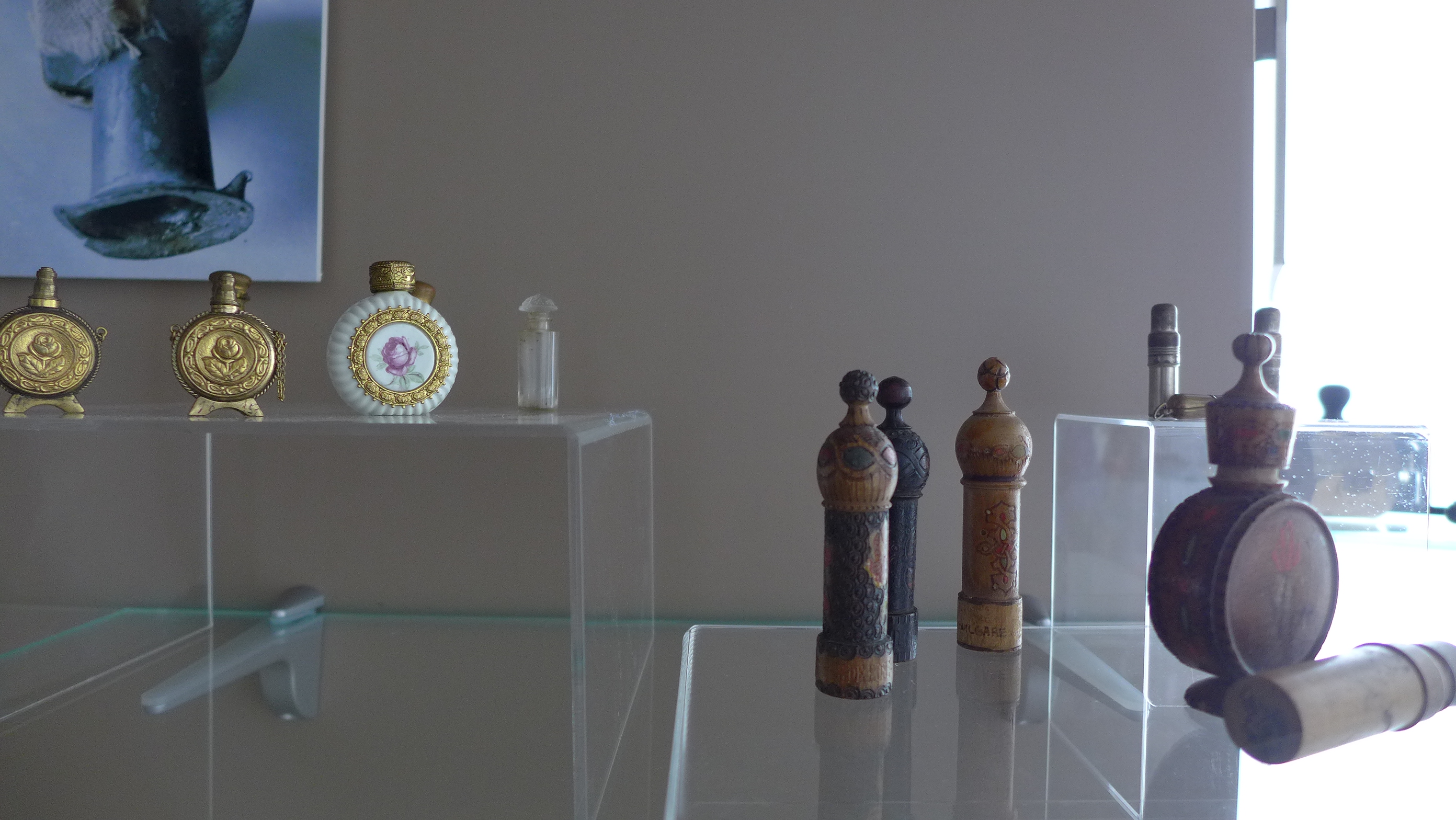
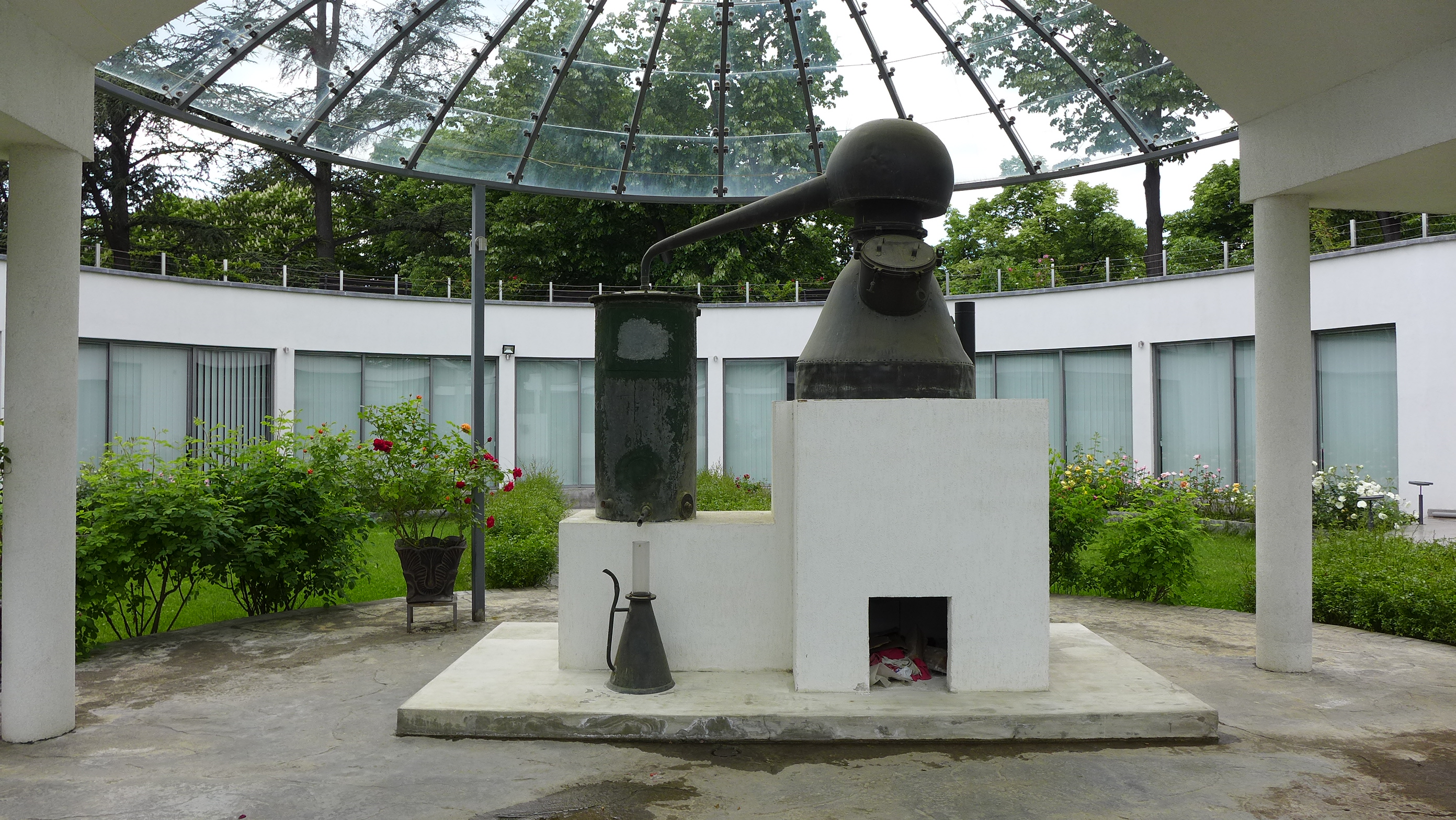
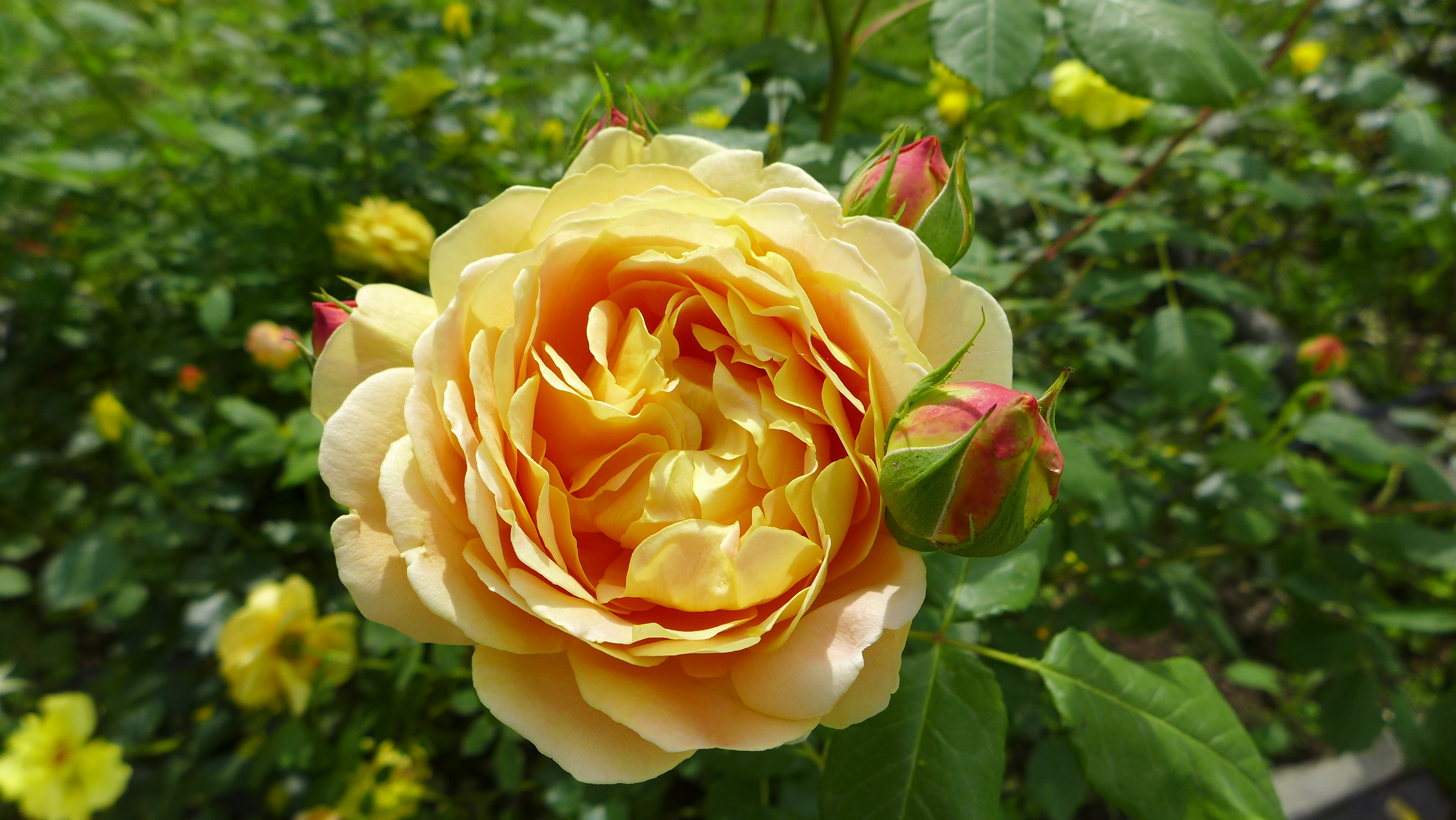
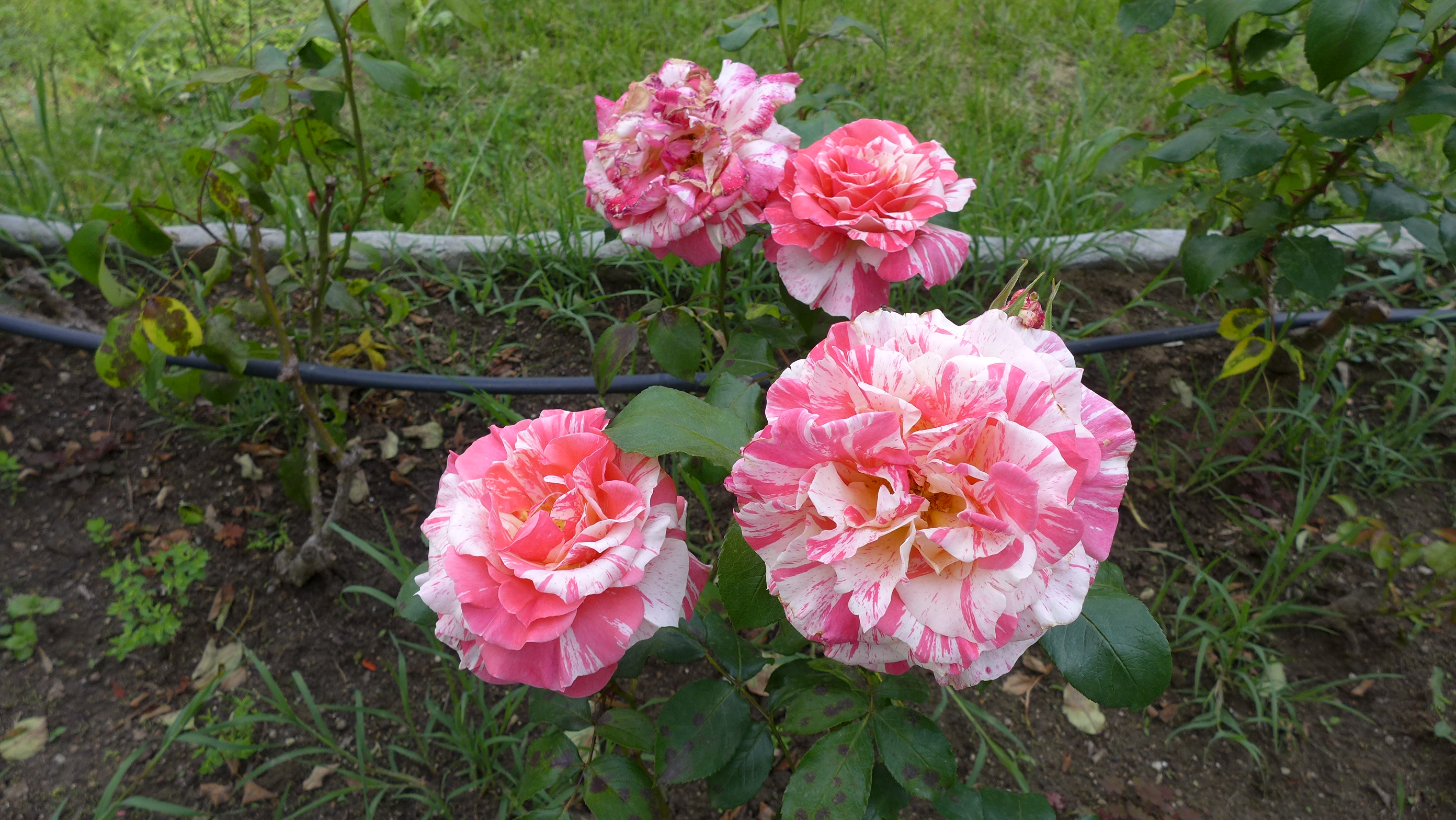
Besides showcases of historical aspects of the rose industry, including laboratory instruments, record-keeping logs, and container vessels, the Rose Museum also has a fantastic garden with many colorful and fragrant hybrid roses. Some are almost as large as a person’s face!
Stay tuned for more rosy activities and some perfume making!
 Nose Prose
I saw this on BdJ as well. Sadly, I’m not in a position to attend. Thank you for letting us live the experience vicariously!
I do have a white Old English rose & a bicoloured climbing rose I’m my garden. Though my preference is to grow fruit & veg. Rose isn’t a flavour I favour.
I do own a few rose scents, Goutal Rose Pompom, Amouage Lyric, OJ Ta’if, Paul Smith Rose & Calligraphy Rose. There are others that include rose but aren’t rosecentric.
The “pink sauce” is what the Greeks call taramasalata & is one of my favourite breakfast & snack foods. It must have been a bit of a surprise if you expected a rose sauce!
LikeLike
Bicoloured roses are fascinating! Like the cards missed a few spots while painting. 😉
Thanks for letting me know about taramasalata. I hadn’t encountered it before, but after tasting it, thought it was similar to a much less brightly pink cod roe paste that many breakfast buffets had in Sweden (about half of it consists of tomato paste) that comes in a squeezy tube.
LikeLiked by 1 person
Eastern Mediterranean & Northern European countries all seem to have a version. The Greek version I first encountered in 85 was traditionally made of mullet roe & not that pink. That came with bread & oil with a very garlicky tzatziki, as a side to Greek salad the salad was just tomatoes, red onion, peeled & cored cucumber, black olives & a little feta, dressed at the table with lemon & evoo. A meal in itself.
Some versions are from smoked roes.
The version supermarkets in the UK is pinkish from female cod’s roe & not so bright pink. M&S version has a very Smokey taste.
I love food almost as much as perfume!
LikeLike
The Japanese have mentaiko, which is spicy cod roe and usually eaten as spaghetti sauce. Delicious.
It’s a wonder that the pleasure responses to food and perfume can be so different (not wanting to eat perfumey flavors or smell foody notes) when so much of taste depends on smell.
LikeLiked by 1 person
There must be lots of papers on that. Without going down the reading rabbit hole it must be a survival instinct
LikeLiked by 1 person
What an amazing trip!!! Looking forward to part two!!
LikeLiked by 1 person
Fantastic! That sounds and looks like a fabulous experience. Thoroughly enjoyable read, and looking forward to the continuation in part 2. Great pictures too!
LikeLiked by 1 person