This month, the Institute of Contemporary Art (ICA) in Boston celebrates the opening of An Indigenous Present, an exhibition spanning 100 years of contemporary Indigenous art. The exhibition runs through March 8, 2026. Concurrently, other exhibitions include the 2025 James and Audrey Foster Prize, works in which “each artist draws on materials that uniquely connect their local and global roots” and recognizes “the internationalism of greater Boston.”
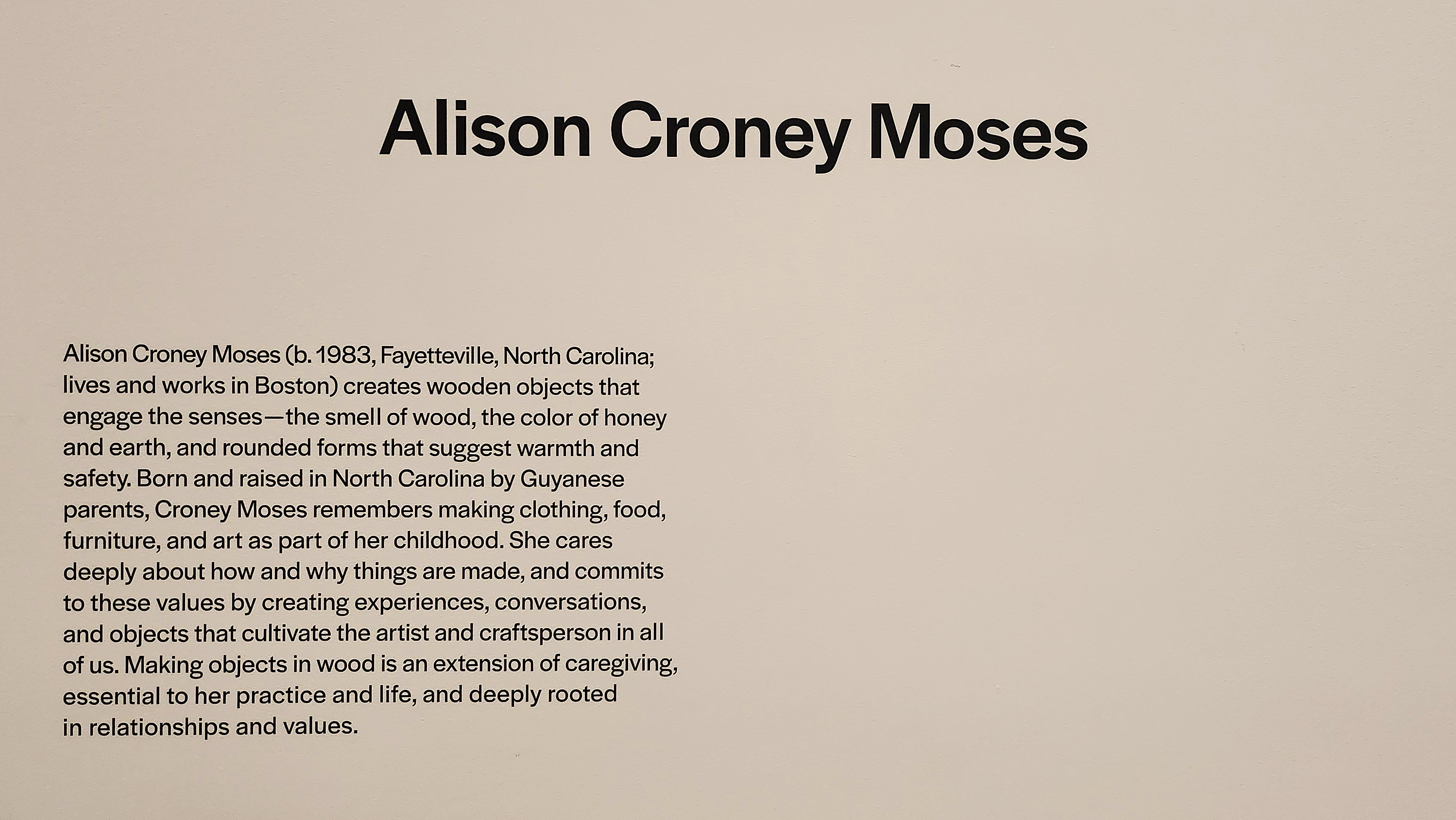
I mention these two not only because of the timeliness of the former, but also because I was expecting the latter to showcase pieces that incorporated scent naturally, per the artist biography:
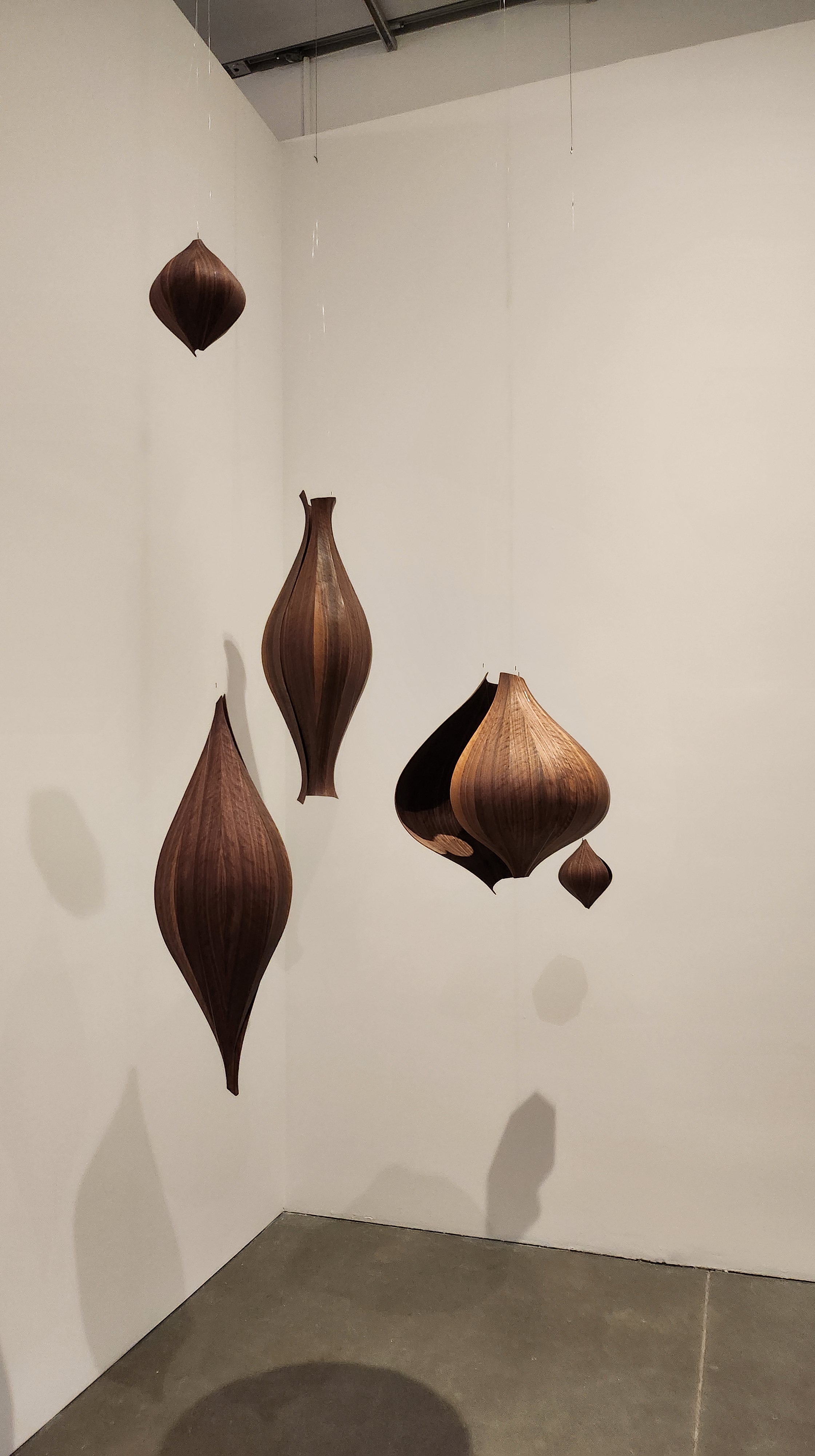
The objects were indeed visually engaging, but lines were drawn on the floor to keep visitors from getting too close. I managed to lean forward and quickly sniff the ones that were mounted on the wall, but could not detect any wood aromas.

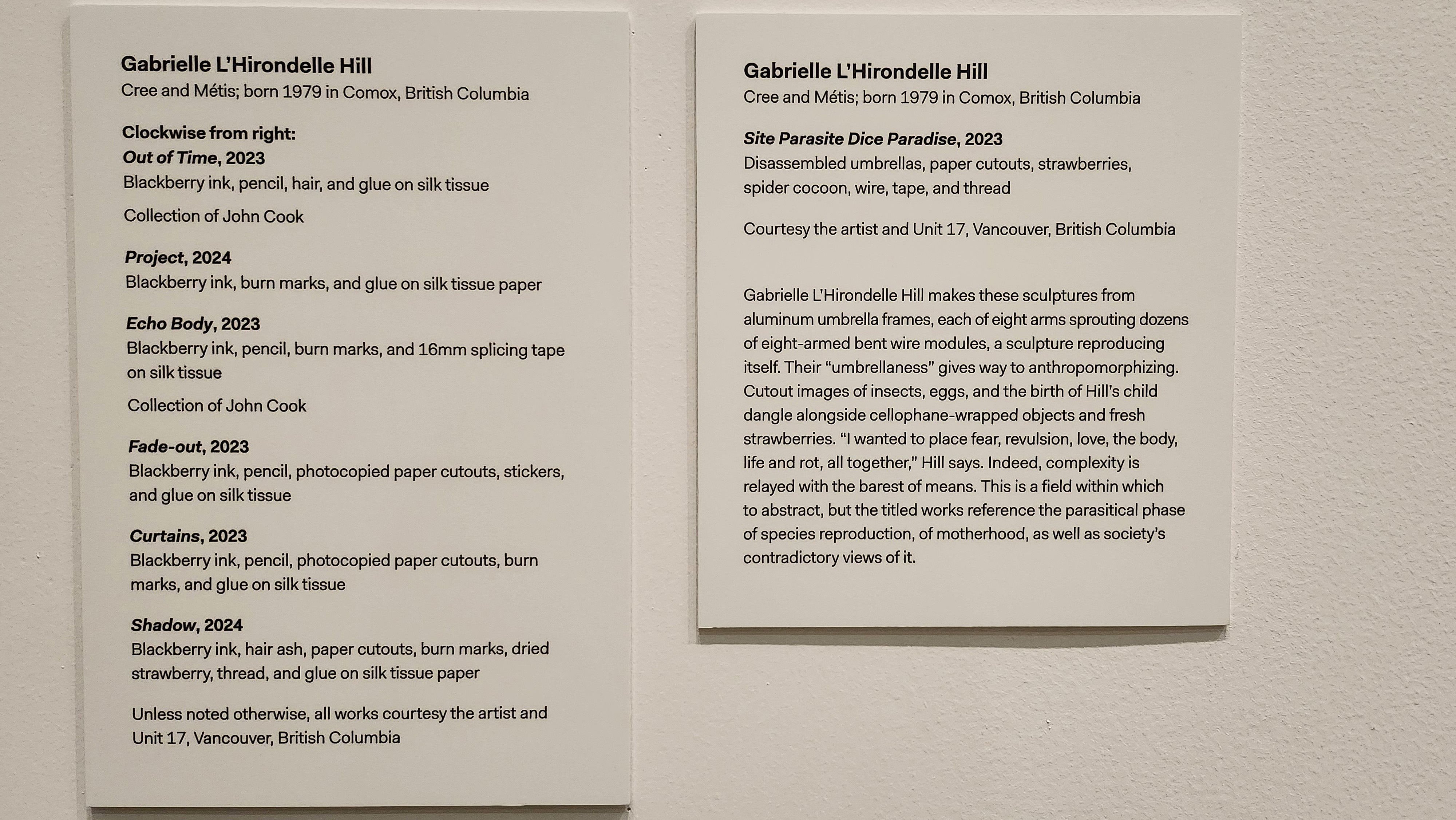
I was also captivated by a room centerpiece by artist Gabrielle L’Hirondelle Hill (Cree and Métis). Multiple items hung from a structure made from umbrellas without the fabric.
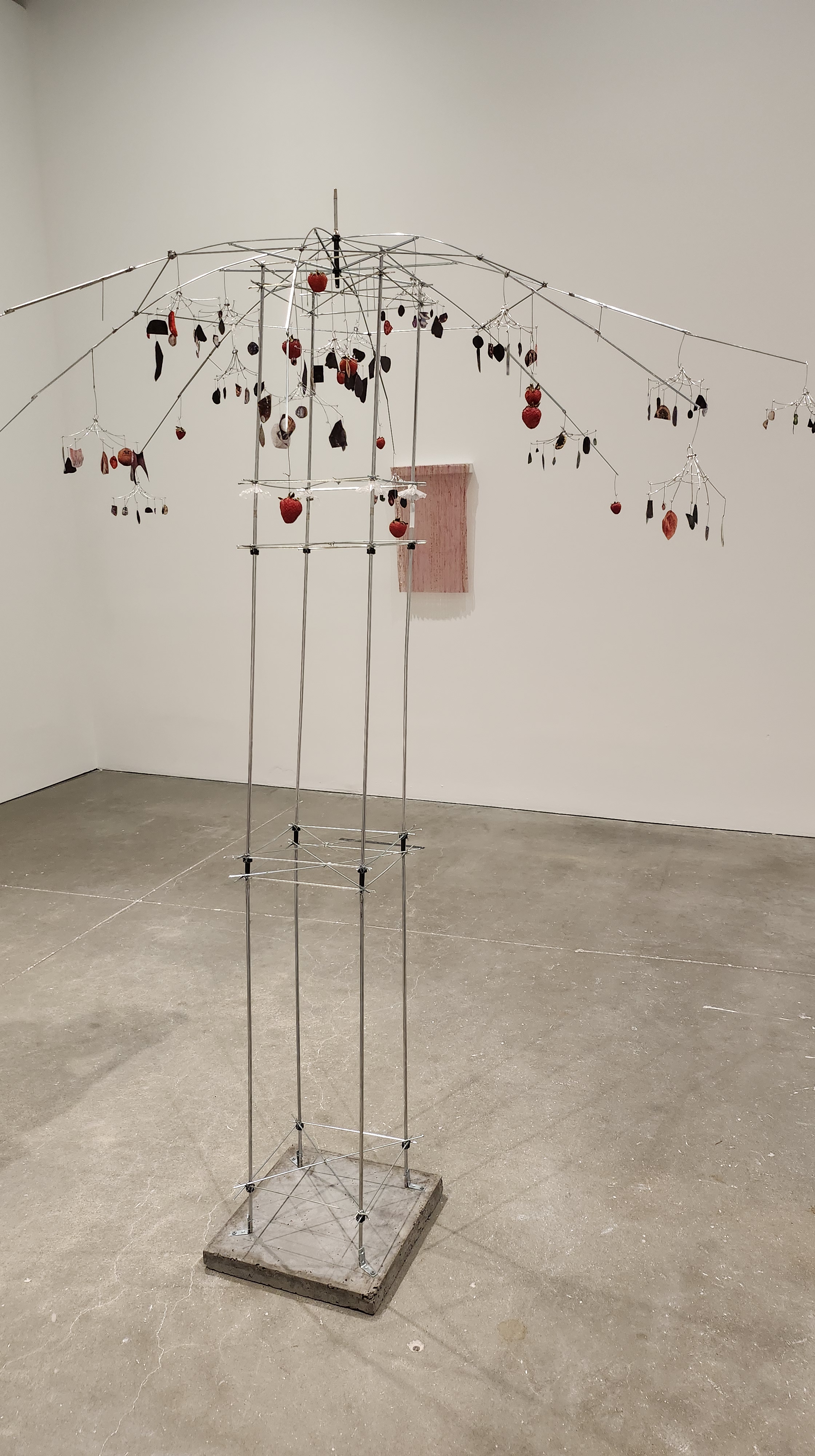
Those strawberries looked real.
I got closer and examined the fruit, and the leaves above… they looked very real.
One way to find out.
I stood next to one at nose level and took a sniff.
It was delicious!!! Sweet, ripe, holding nothing back—I don’t know what I’d expected, but it took me by surprise. “Smell this!” I squealed to my other half, who was also amazed at how fragrant it was. I sniffed several more suspended strawberries, but no one else in the crowd seemed to notice or be curious.
Materials are: disassembled umbrellas, paper cutouts, strawberries, spider cocoon, wire, tape, and thread.
As I was there during the opening reception, I asked a staff member whether the strawberries were meant to decay over time or be replaced with fresh ones—the answer was that they would be replaced.
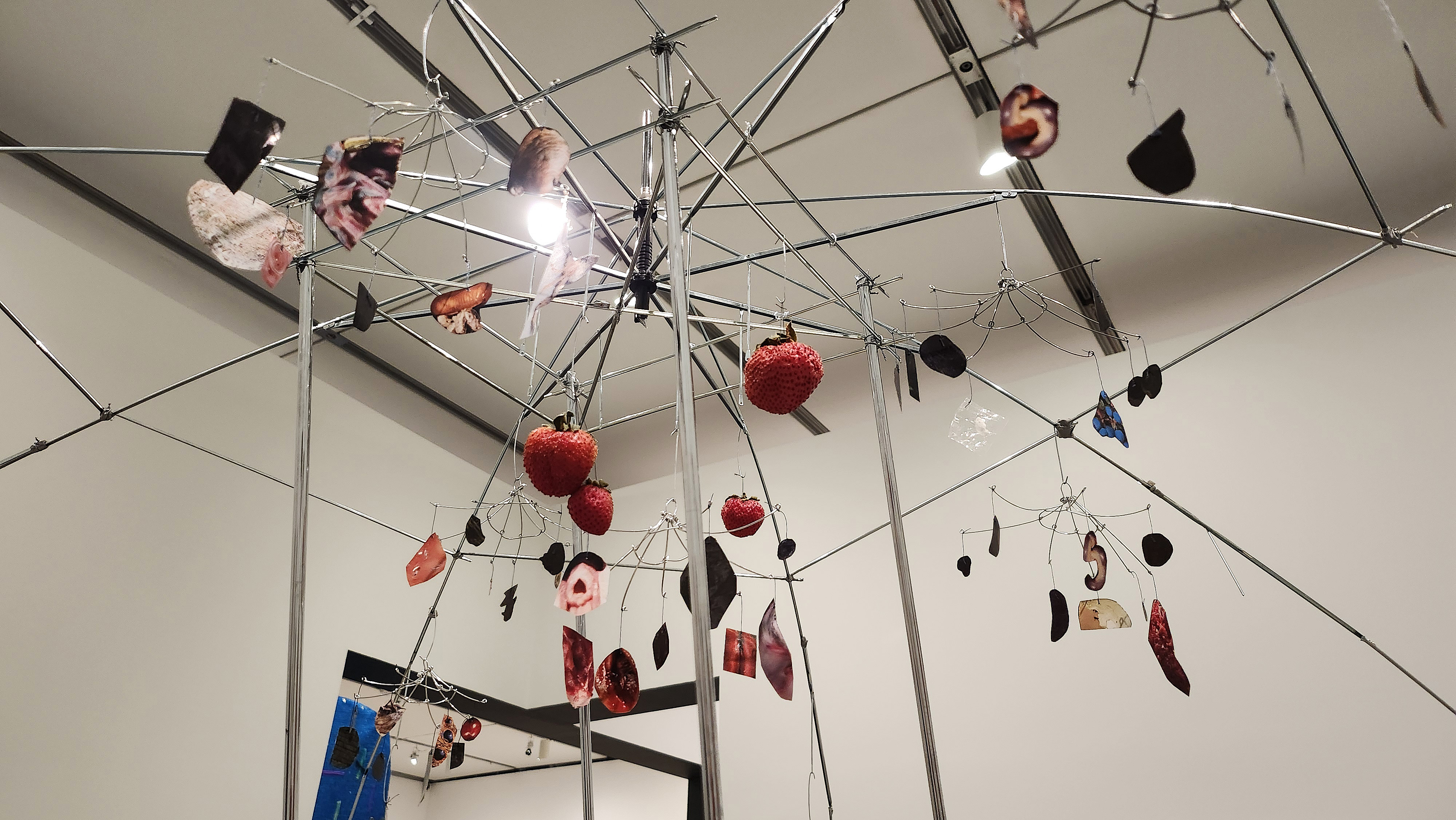
Frankly, I couldn’t make out the other dangling objects very well, but left giddy with excitement at having smelled fresh strawberries at an art exhibition.
Many other works are on view, each with cultural and narrative significance. If you are interested, please visit the ICA website for more information.
 Nose Prose
Looks like a cool exhibition, even if some of the woods were rather muted. I’m sure many of us would have had the same strawberry response.
LikeLike
Yes, I’m sure! Guess I wasn’t in the room with other perfumists at the same time…
LikeLike
Imagine having to replace those strawberries as they deteriorated. Or worse if some got missed! Ewwww….
I wonder if the artist had to do the replacing themselves to maintain the artistic integrity of the installation
LikeLike
I’m not sure if the artist or a staff member will replace them. It wouldn’t be pleasant if they were allowed to rot, as they would probably drip on the floor and visitors’ feet…
LikeLiked by 1 person
These are very interesting, Nose Prose! Thanks for sharing. I probably would have been just as excited as you were to see and smell the exhibits.
LikeLike
It was even more fun because it was so unexpected.
LikeLiked by 1 person
Very interesting, Nose Prose. I particularly like the wood pieces. It might have been more engaging if they had more scent. Sometimes, the environmental conditions need to be just right for wood to naturally emit scent. Thanks for sharing.
LikeLike
You’re right, and they hadn’t promised that these particular wood pieces would be scented! It was just my wishful thinking.
As a side note, I was looking for storage trunks a while ago and came across ones that had a cedar interior with natural scent, which was also supposed to be bug repellent. I ended up buying one without it, but when wood emits scent, it can certainly smell strong!
LikeLike
Cedar can be easily reactivated by a light landing, provided it’s left unfinished. Just a helpful tip.
LikeLike
I’m guessing you mean light “sanding” – indeed a good tip! Thanks for sharing!
LikeLiked by 1 person
👍🏻 Yes, a light sanding.
LikeLiked by 1 person
We have an antique carved Asian trunk made of camphor wood. It’s very decorative & the smell of camphor when it’s open can be an overwhelmingly “mothball”. They were used to ship precious clothing back to the UK with patchouli leaves between layers to discourage moths & other bugs that might damage the fabrics.
LikeLike
The smell of camphor always puts me off, even though it’s very common in closets in Asia. Still better than the alternative of having clothes eaten by moths!
LikeLiked by 1 person