Yesterday we finally got to visit the relocated and revamped MIT Museum in Cambridge, Massachusetts. It was larger than I expected and quite impressive in the variety of collections. I had heard there was an exhibit of the recreated scent of an extinct flower, which of course became my priority. As it turned out, there were not one but two scented displays, both in the Gene Cultures exhibition! (If there were more, I missed them.)
Resurrecting the Sublime, 2019
By artists: Christina Agapakis, Creative Director of Ginkgo Bioworks; Alexandra Daisy Ginsberg; Sissel Tolaas
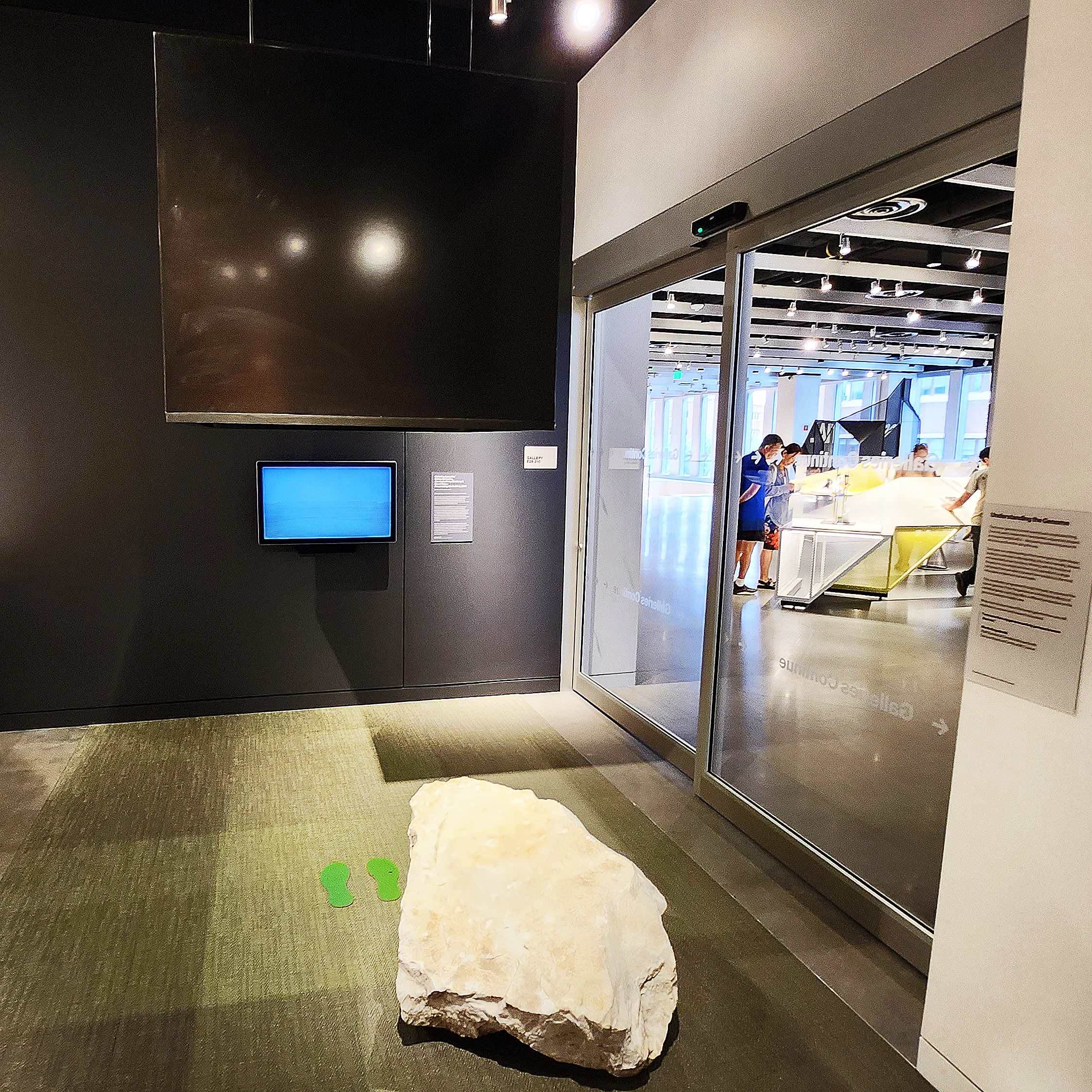
Visitors are invited to stand under a cube (a “smell diffusion hood”) that detects your presence and pumps out scent. While parsing the fragrance, you can fix your gaze on a video that shows the simulated landscape in which the now-extinct Orbexilum stipulatum, or Falls-of-the-Ohio scurf pea, may have grown.
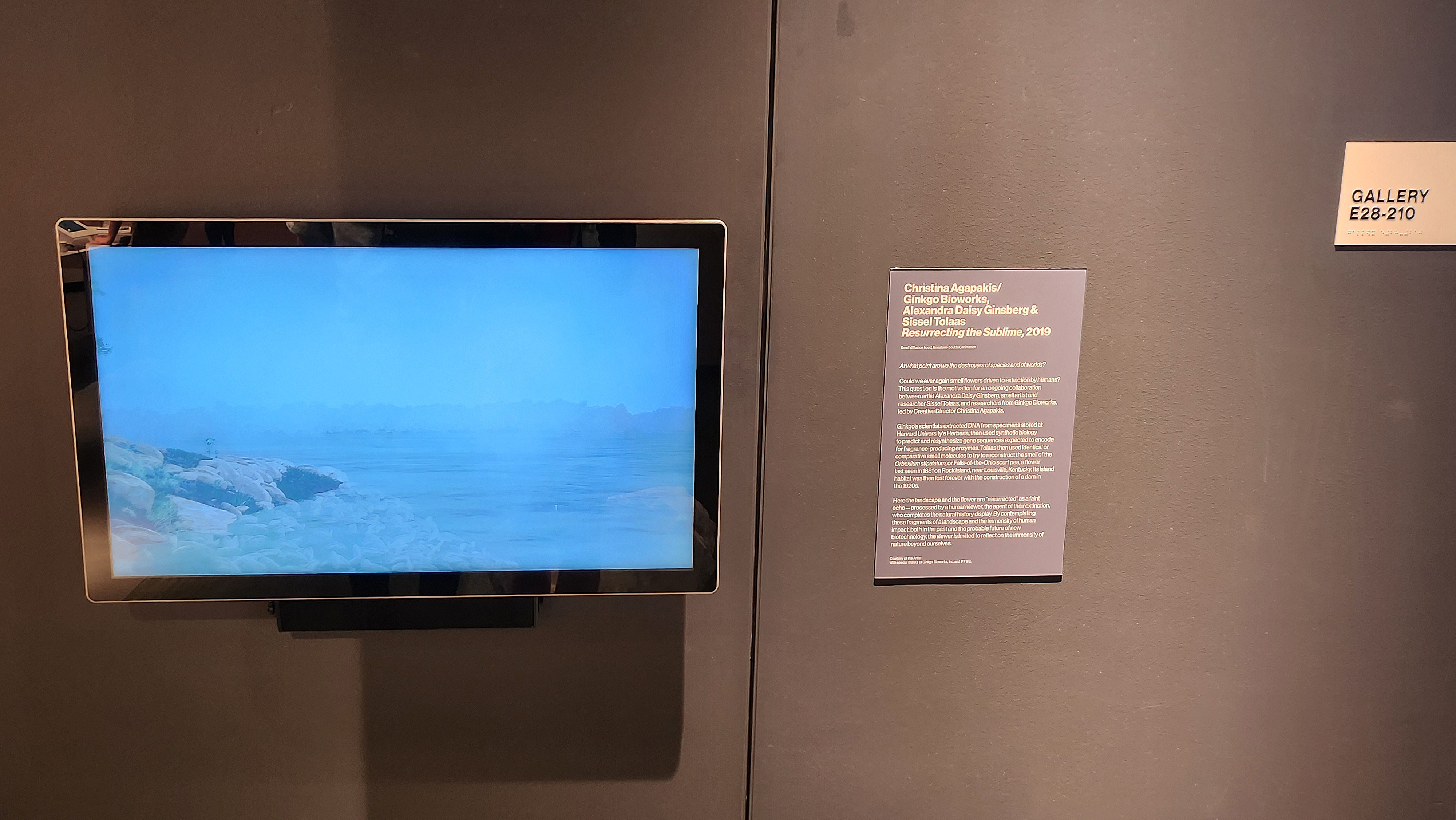
IFF is also credited, so presumably they supplied the ingredients.
The first time I went under the cube, the scent was very faint and yet familiar. Watery green, like lily-of-the-valley… something cool like concrete, maybe… My other half said it was “minty,” which probably explained the coolness. I was ready to settle for the vague impression, but after walking around and seeing the rest of the museum, I decided to go back and smell it again. This time, it was more distinct, and I also picked up notes of ylang-ylang, a very dry and astringent cedarwood (like Cedramber), and possibly orris or at least ionones.
It was challenging to imagine all of these notes emanating from a flower, but perhaps that in itself makes a point about the abstraction.
Supermarket Mutants, 2013
By: Center for Genomic Gastronomy
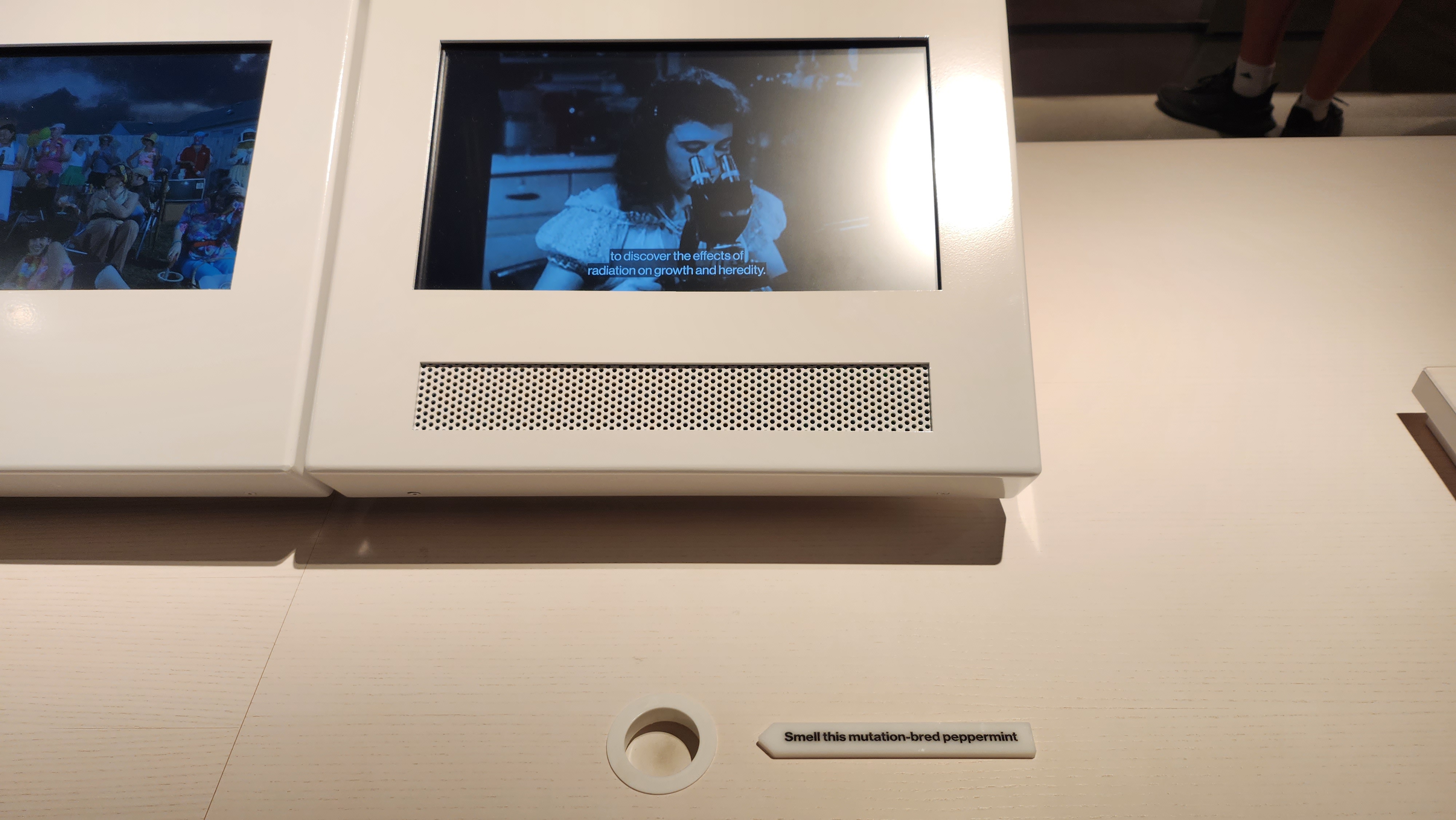
I did not know about this one in advance, but was instantly drawn to the arrow labeled “Smell this mutation-bred peppermint” pointing to a circle. This particular display is titled Mutagenic Mint and is part of a “triptych” of works on mutation breeding.
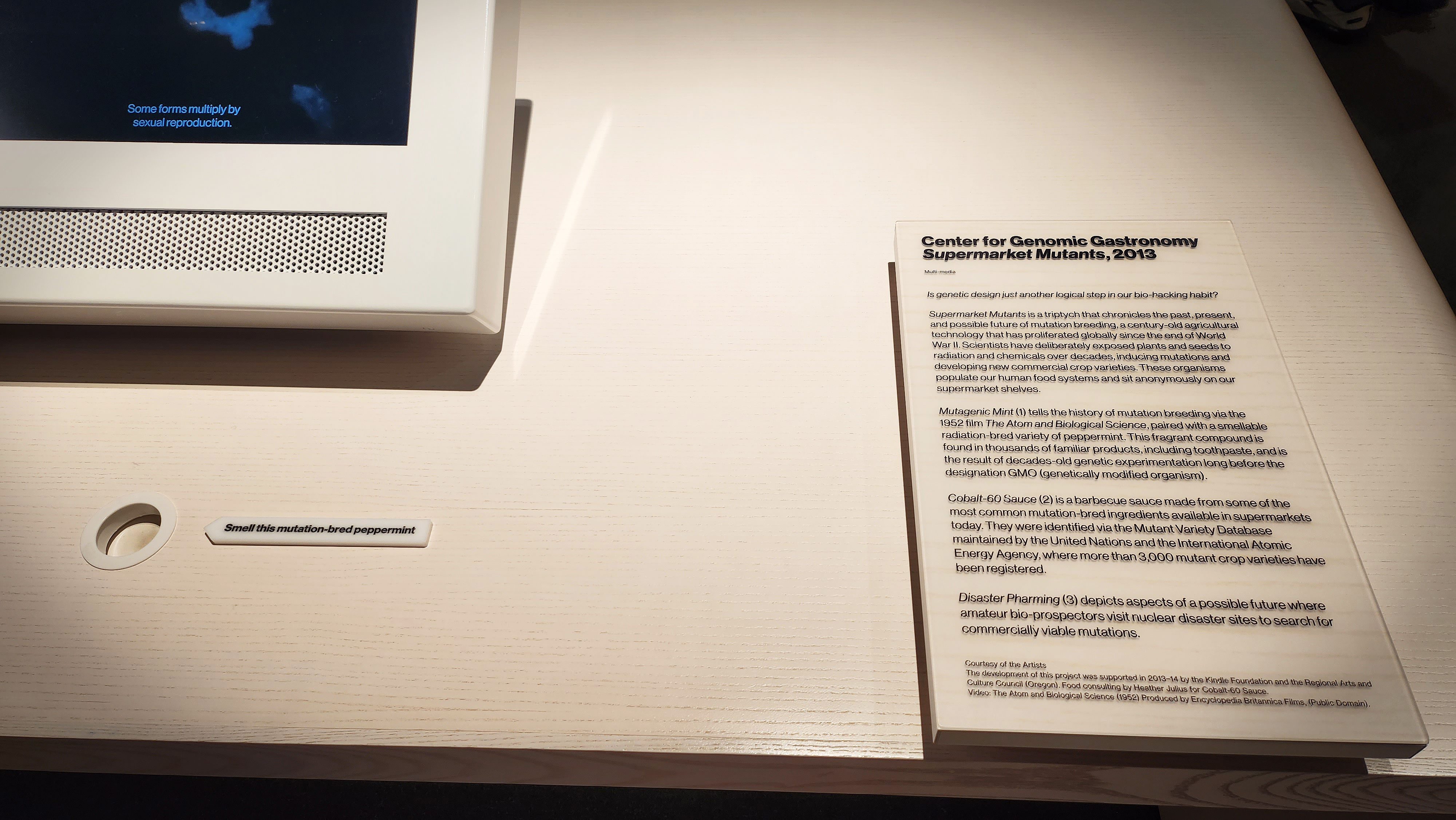
Sure enough, the radiation-bred variety of peppermint smells just like your typical toothpaste or chewing-gum mint.
No surprises there… which to me, subconsciously, might have been a surprise.
 Nose Prose
This is my first time hearing of a scent exhibit. Very cool stuff. Thanks for the post.
LikeLiked by 1 person
Fascinating!
I meant to ask for a while: do you attend many different exhibitions, events, museums and just happen to come across those perfume-related ones, or do you seek them out? If the latter, how do you do that?
LikeLike
In this case, a coworker who knows I’m into scent told me about this exhibit, although I would have gone to the MIT Museum at some point anyway as it’s relatively local to me. If I’m going to a major city like New York, I might look up whether there are any scent-related events or exhibitions. Some I learn about from other blogs. I’m also subscribed to Olfactory Art Keller’s newsletter and it regularly includes lists of current olfactory exhibits in various countries. Nez magazine lists some too, but they are usually in Europe…
What about you? Do you have other methods of finding them?
LikeLike
Fascinating! Thank you for letting us “visit” vicariously.
LikeLike
My pleasure! There are many, many more (non-scented) ones worth a look as well.
LikeLiked by 1 person
What fantastic exhibits! I wonder if the new interest in the sense of smell after C-19 will mean an increase in these sorts of exhibits in future?
I guess breeding for certain traits initially from ‘natural’ mutations has been going on for centuries.
Hairless cats & Brachycephalic dogs?
LikeLike
I hope we’ll see more scent exhibits! Agree… I looked into “teacup” dogs once because they look so cute, and it didn’t take much reading to put me off.
LikeLike
That looks very intriguing. Looks like something I’d love to attend. Thanks for sharing.
LikeLiked by 1 person
Especially when scent exhibits are still few and far between, they stand out even among the many visually stimulating ones.
LikeLiked by 1 person
Very interesting, Nose Prose. Our sense of smell is such an amazing gift.
LikeLike
Agree, and one for which I’m very grateful!
LikeLike
Interesting
LikeLiked by 1 person