Ever since returning from the Rose Retreat in Bulgaria at the end of May, I’ve been wanting to work on another rose perfume. In June, I learned about Guerlain’s campaign to reimagine the bee bottle through artificial intelligence (AI) from its creation in the year 1853 to 2193. My favorite interpretation was of “positivism” in the 1880s, with one of the images created in an engineering blueprint style. The prompt was “The Guerlain Bee Bottle inspired by the iron structure of the Eiffel Tower, in the style of an old engineering blueprint and technical studies, sepia colors in the style of 1900 illustrations“.
Of course, their combination of AI platforms was trained with proper images of the Guerlain bee bottle, and had the help of human curation to generate the final output. The iconic bottle was depicted in a scaffold structure but maintained the integrity of its shape and cap design.
I decided to challenge myself to make an olfactory sketch of a filigree rose. I had also bought some new ingredients to play with, and received some others as samples with the purchase. The one I was most excited about was Sichuan pepper SCO2 extract, which I thought could add spice and fizz without relying on aldehydes. Also Symroxane, a woody aromachemical to “increase radiance and elegance,” and rum ether to add a boozy top note for lift.
The idea was to create a metallic impression without resorting to rose oxide. Rose would be the hero, but it had to feel structural and wiry, not solid. It’s quite difficult to avoid combining materials into a dense, flat mixture; I thought that airiness would help the peppery, woody notes feel like more defined lines.
After 5 mods, though, it just wasn’t working, and I shifted to an even drier, deliberately “sugar free” direction. I added the aldehyde and the rose oxide, as well as juniper berry SCO2 extract. No more musks. Later, I also introduced Haitian vetiver, drawing on the visual analog of the rooty, enmeshed structure.
The rose note I used was Dorinia SA, which is a synthetic base. It is fresh, bright, and a bit soapy—more on the pink register. It also smells heavy in damascones, which impart a fruity sweetness. In the mixture, this seemed to turn a bit green, so eventually I also added rose absolute.
Rum ether and Symroxane were hard for me to gauge and I removed them after more than 10 mods.
In the meantime, I decided to try my hand at an AI-generated image of a rose instead of a bee bottle in a similar style. After a couple of failures, with DALL-E taking the word “scaffold” too literally and including construction scaffolding next to sketches of roses, I got as close as I thought I would get:

Frustrated and starting to become skeptical, I entered Guerlain’s prompt verbatim, and got this:
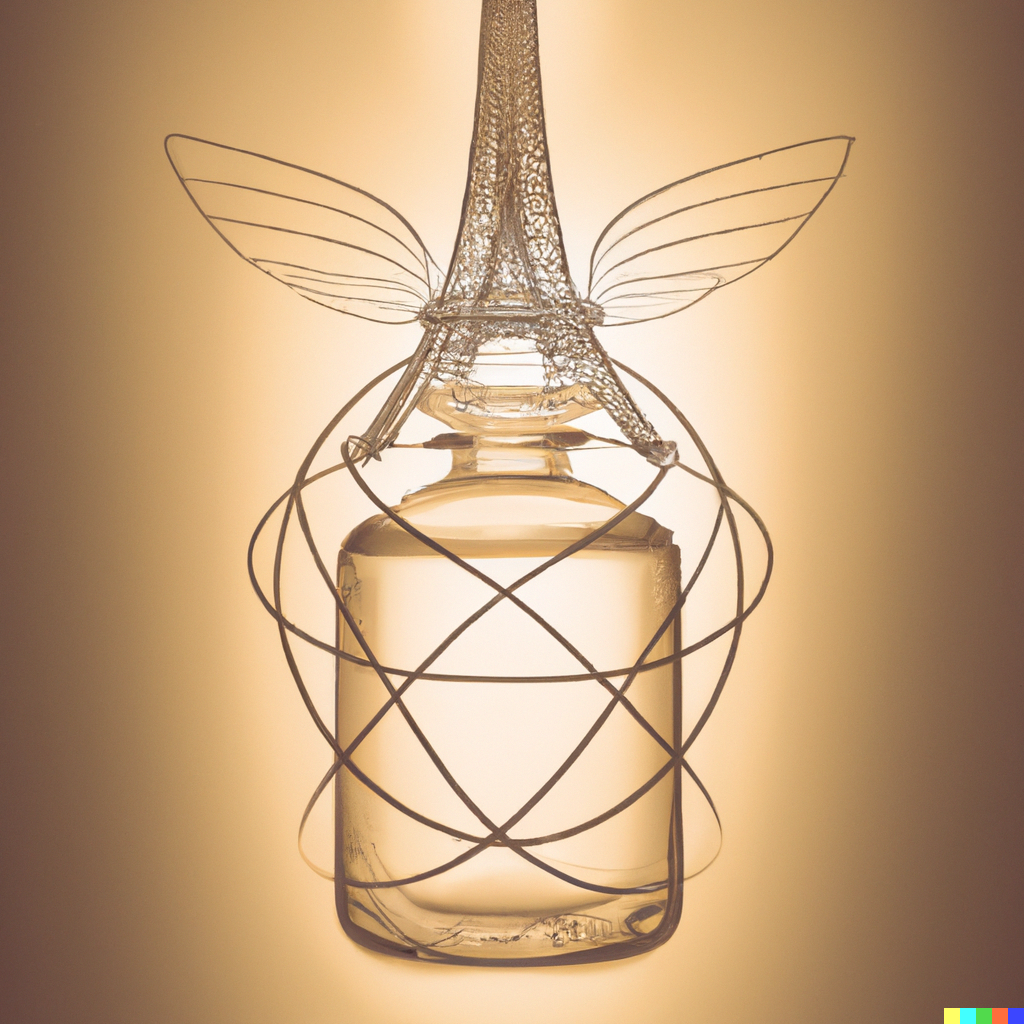
…a far cry from the brand’s result!
Back to the perfume sketch—the aldehyde was the right call, because it helps to create an opening akin to a fizzy drink and adds a hint of citrus. Cashmeran lends a woody, powdery aspect to the pinkness of Dorinia. For the first few seconds, I get a porous softness. All this is vaguely possible only with the diffusion from a nozzle spray; not with a dab. Ethyl linalool adds to the pinkness but also adds a bit of roundness, which is needed because otherwise the rose is too delicate.
Too soon, the metallic note of rose oxide makes itself known, and along with pink pepper and Sichuan pepper, the scent feels tough and not so easy to get along with. Because of the powdery aspect, the overall feeling is of mesh rather than filigree. The next phase is green in an outdoors way—not the forest, but rather a sparse land with gritty stones and dry grasses. The pink veil seems very mismatched with these surroundings and takes on a coarse quality. Any structural elements feel very bare. I added Edenolide for some gloss, but the overall effect is still too vegetal.
- Rose facet: Dorinia, rose absolute, ethyl linalool, damascone delta, raspberry ketone
- Filigree facet: aldehyde C12 MNA, rose oxide, pink pepper SCO2, Sichuan pepper SCO2, juniper berry SCO2, Haitian vetiver EO
- Musks/diffusers: Hedione, Cashmeran, Edenolide
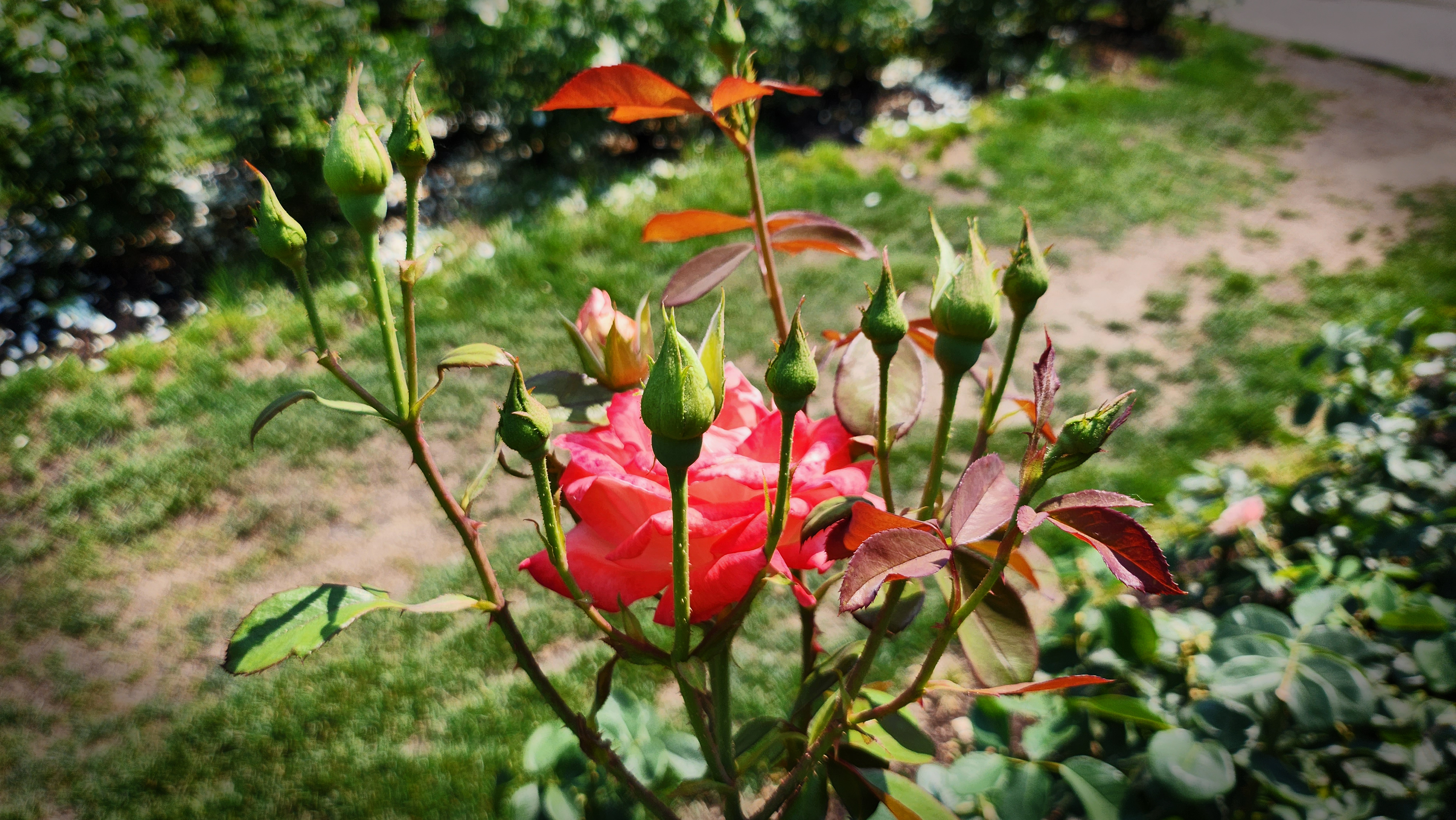
I’m calling an indefinite time out on this perfume experiment, but wanted to end on a high note.
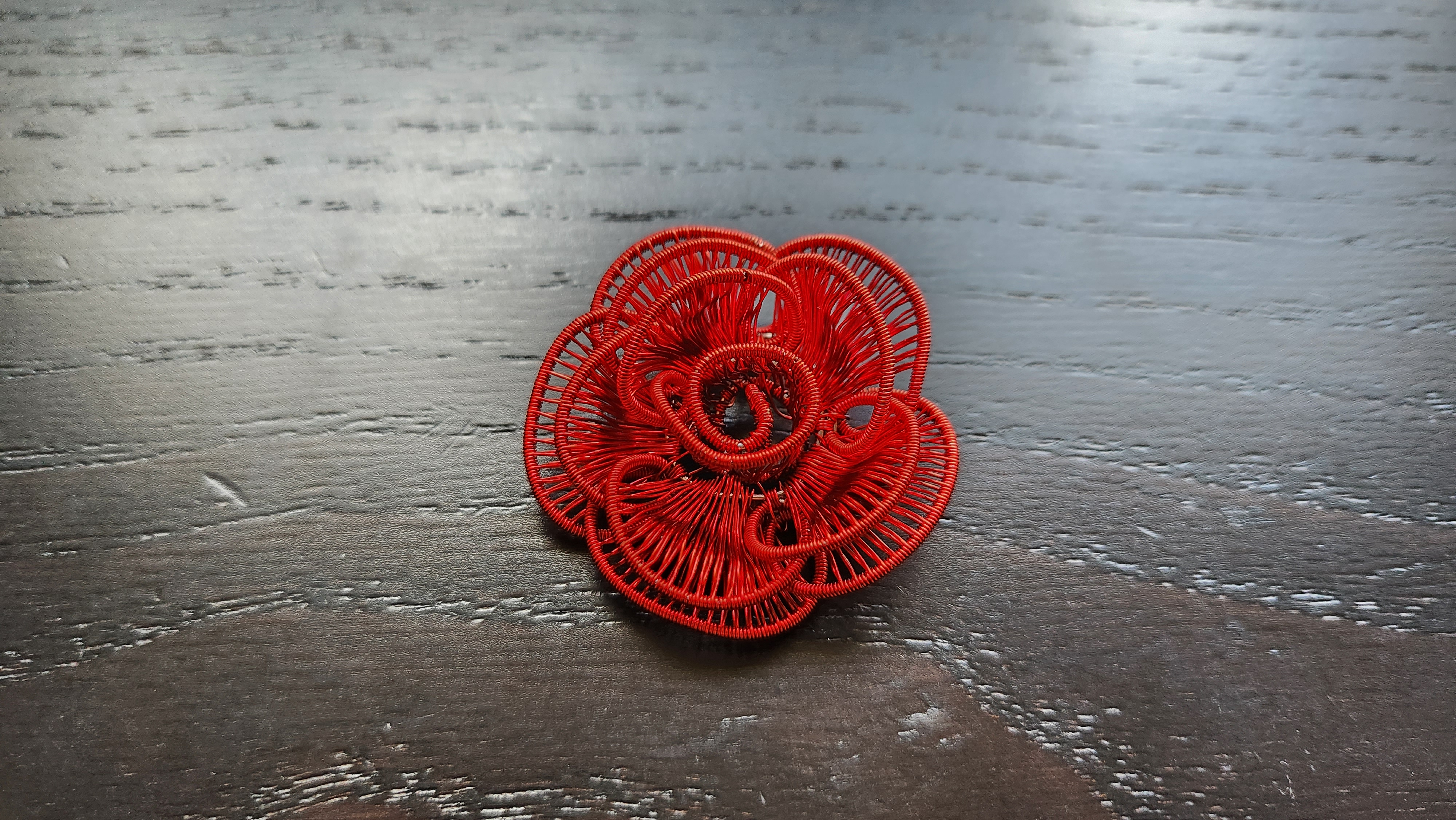
About a month ago, I looked for tutorials online on how to make a wire rose, and found this excellent one by Lan Anh Handmade on YouTube. It requires only 2 sizes of wire, a pair of nose pliers, and a wire cutter (or scissors will do). Following the steps, which are reasonably easy to learn, it took me about 5 completed roses to really get the nuances of making it well.
The literal interpretation of Rose Filigree, unlike my olfactory one, is something I’m happy about!
 Nose Prose
Very cool!
LikeLike
Thanks!
LikeLike