
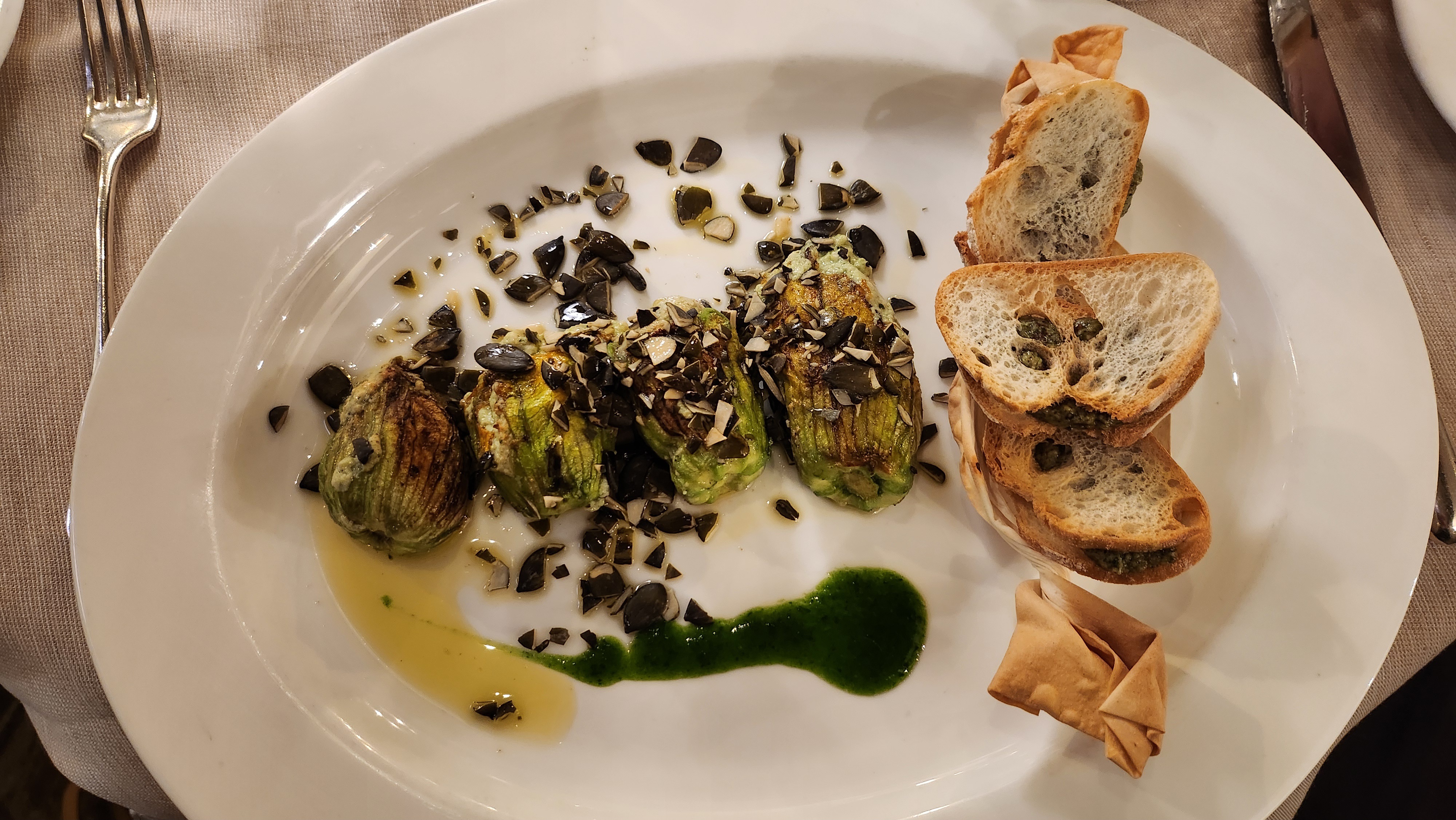
After a whirlwind exploration of Rome, we took a plane and then a boat into Venice, where temperatures were palpably cooler and a light jacket was warranted. We were exhausted from walking over ten miles the previous day and grateful to sit down at a nice restaurant and decompress our feet. Here, I discovered zucchini flowers stuffed with ricotta cheese, which I hadn’t known was an Italian classic dish. They were quite delicious.
Venice is a hub of visual aesthetic stimulation, with a kaleidoscopic variety of masks and multicolored glass trinkets everywhere one turns. The compactness and density of the shops and narrow streets also brings it all closer, making the dazzle more concentrated. I loved every bit of it.
Notable scents were of the canals and star jasmine. The water smelled salty and occasionally fishy, but only when close by.
I could say once again that perfume is everywhere.


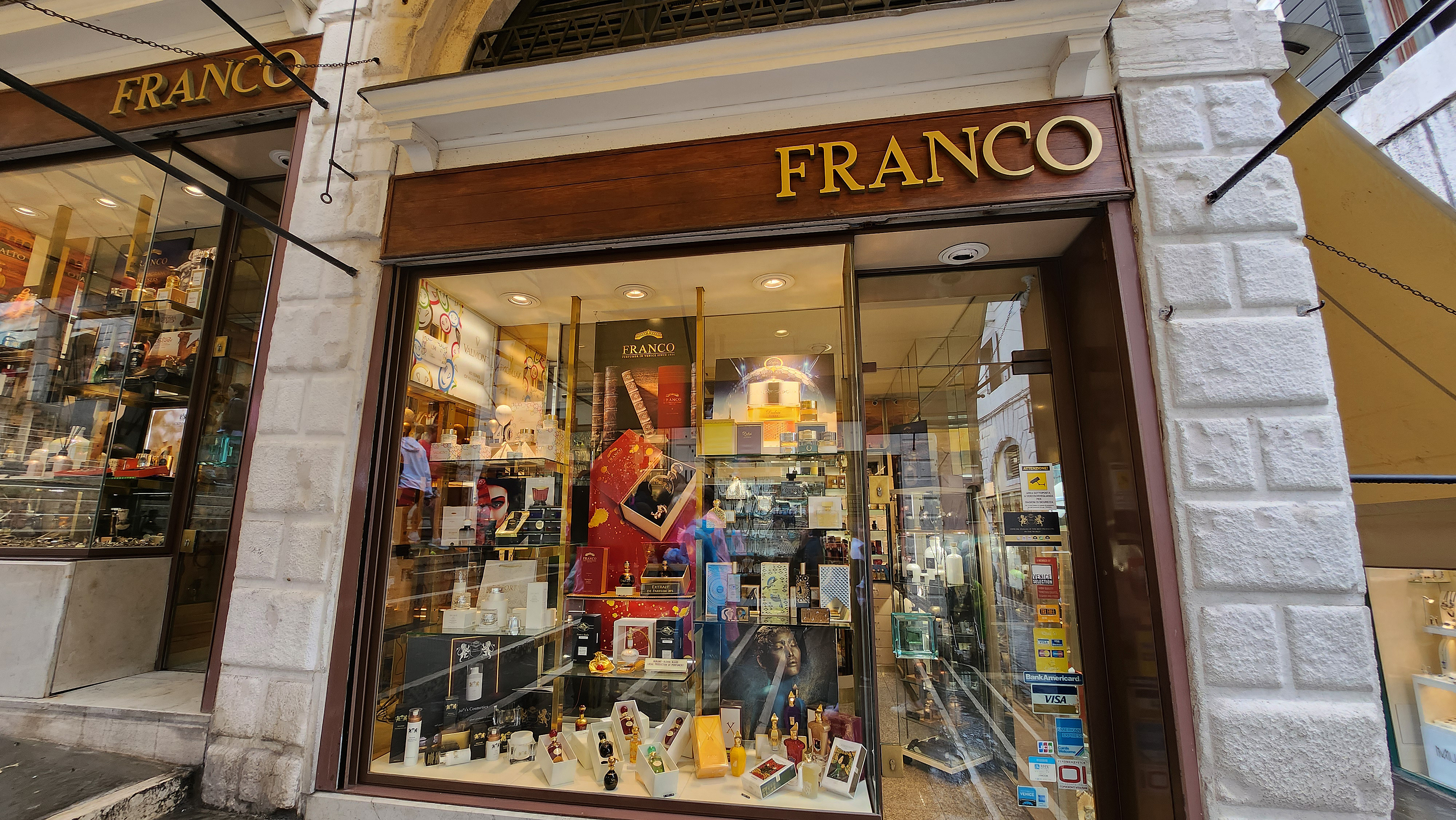
The perfumery Franco is right on the busy Rialto bridge, and their own line, Ponte di Rialto, is bottled in Murano blown glass.
Speaking of glass, our first full day was spent on the islands Murano, famed for glass making, and Burano, where handmade lace products can “cost more than a Rolex, madam,” as I was told by a souvenir shop keeper. (He seems to have exaggerated, but a doily can command more than USD$10,000.) We watched a glass making demonstration at a factory and browsed a few showrooms, where I admired several elaborate chandeliers and other statement pieces under the watchful eyes of the proprietors.
Then a visit to the Murano Glass Museum, which I found worthwhile—a good balance of historical art, contemporary art, and educational elements.


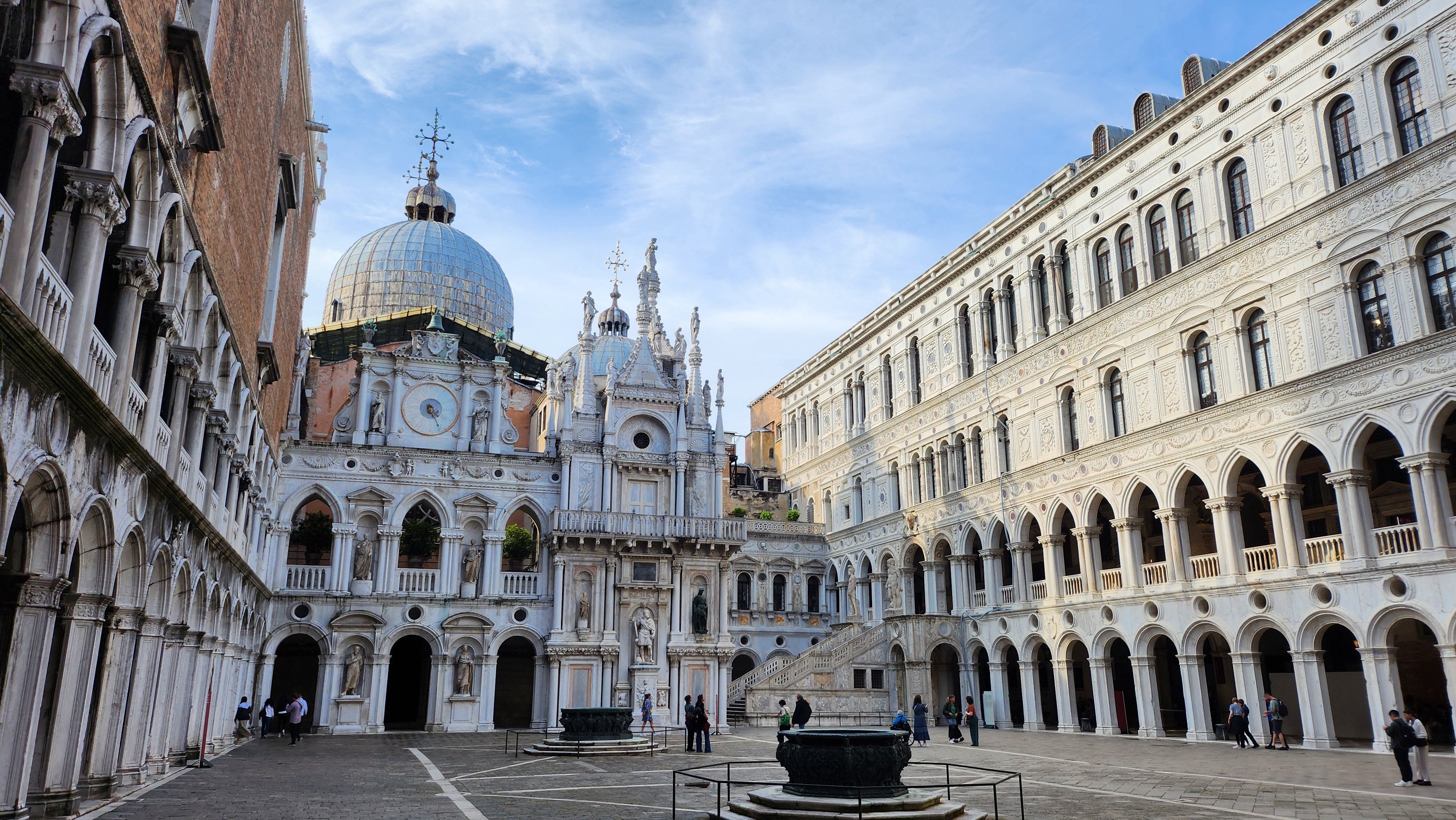
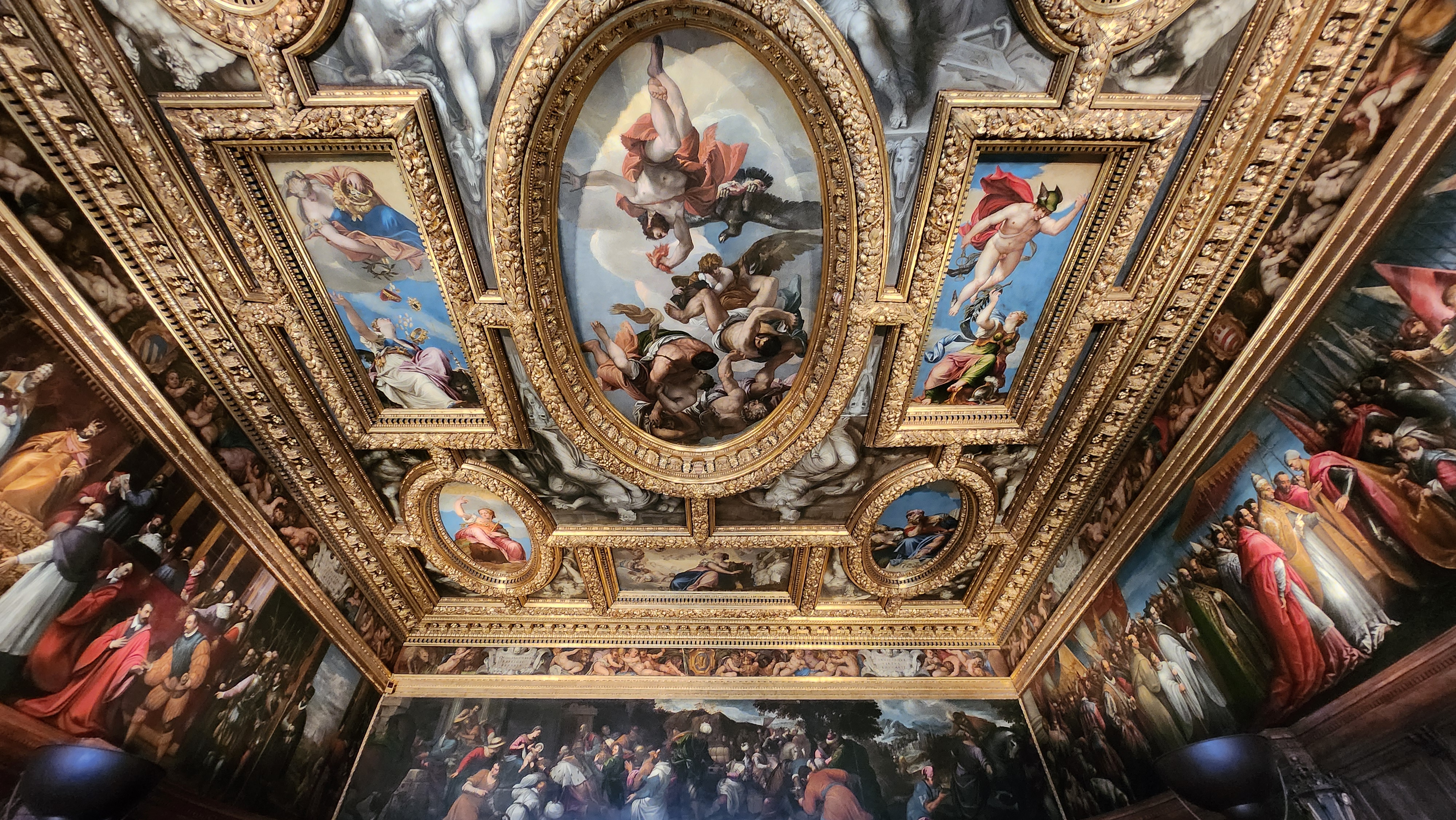
The Palazzo Ducale, or Doge’s Palace, is a lesson in grandeur and intricacy. Room after room of gilded ceilings and paintings of power and chaos. A proliferation of domes when viewed from the outside.


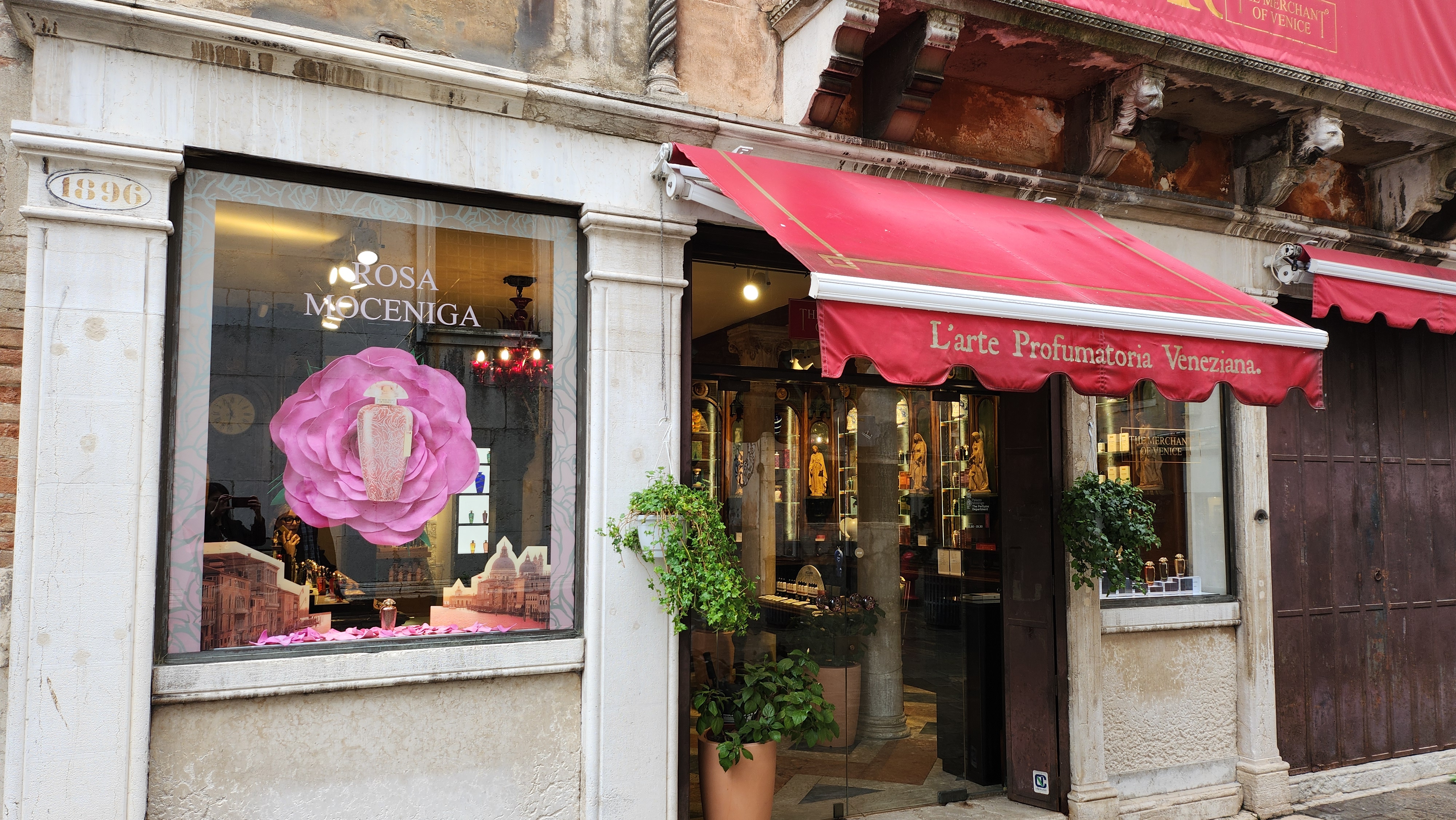
The flagship store of The Merchant of Venice happened to be very near our hotel, so we were the first ones in when it opened one morning.

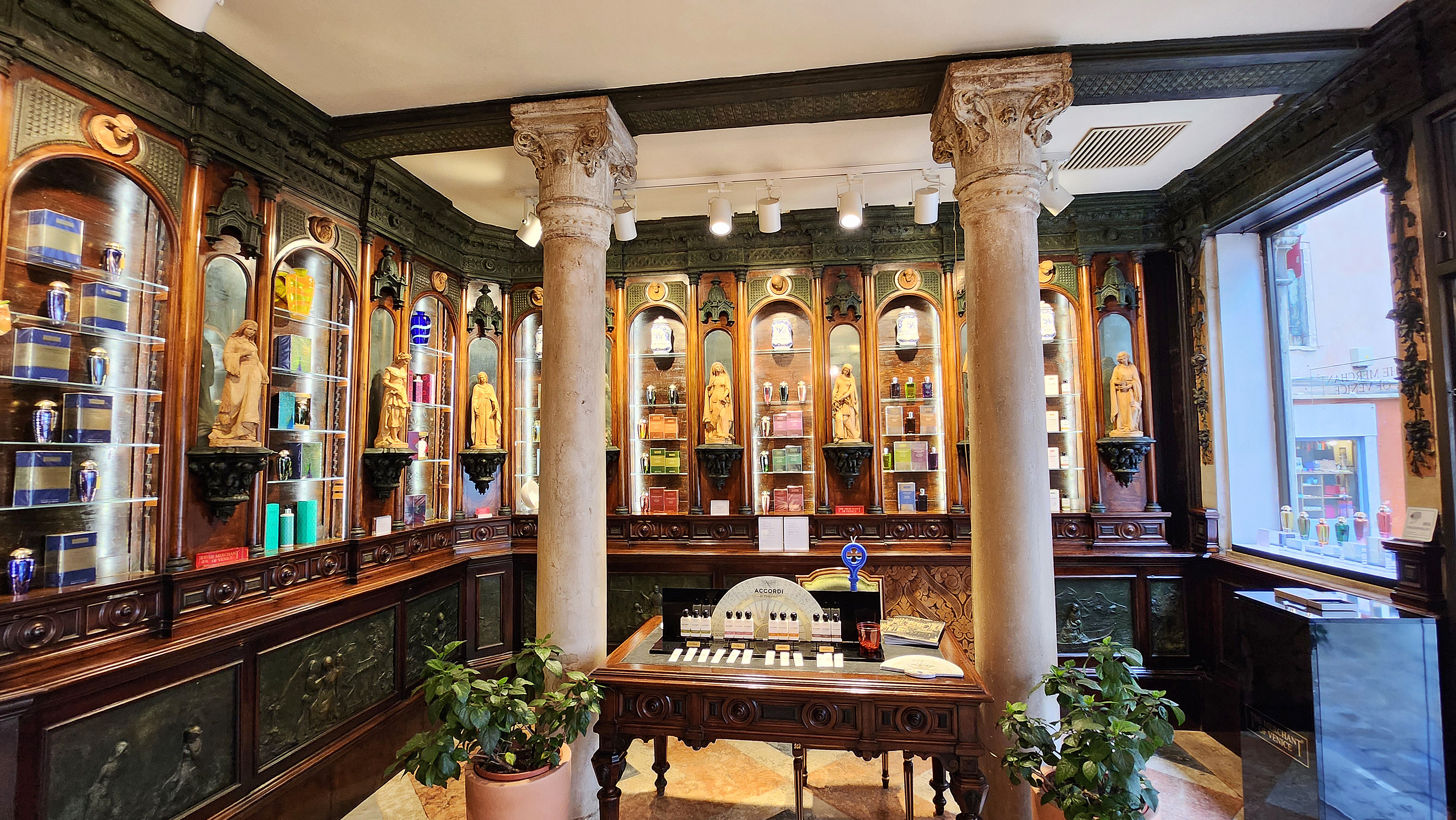
The interior of the store is decorated like a museum in its own right, with pensive statuettes and vessels of Venetian glass complementing the arrangement of elegant perfume bottles along the walls.
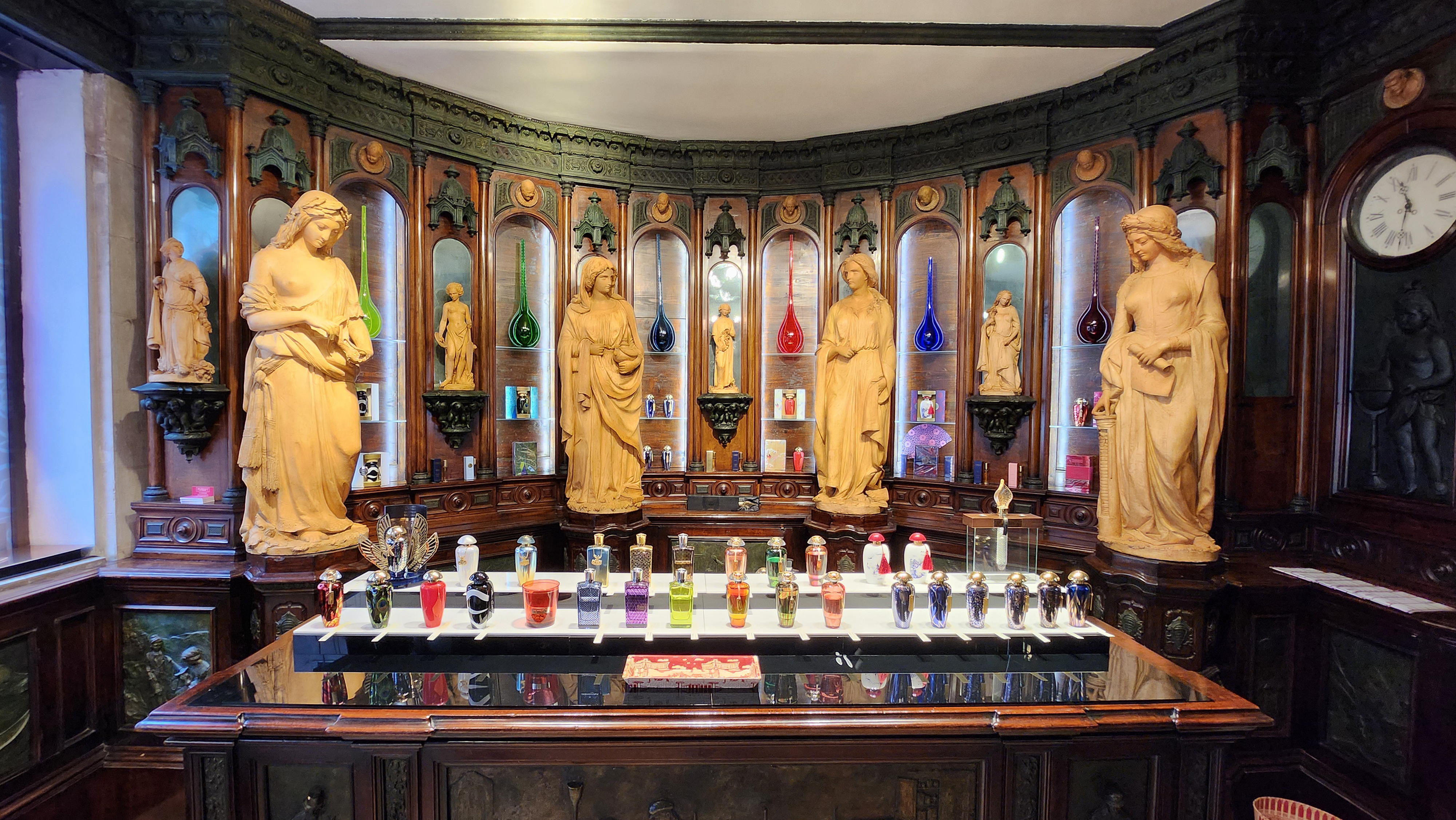
I’d already had it in mind to buy Rosa Moceniga on this visit, as I’d smelled and liked it before. The bottle with the rose outlines is my favorite design—at least, a close tie with the peacock feathers of Imperial Emerald, a white floral. I was surprised to learn that the tassels on the 50-mL bottles have been replaced with the same gold tags as on the 100-mL bottles, although I prefer the tag, so it works out.
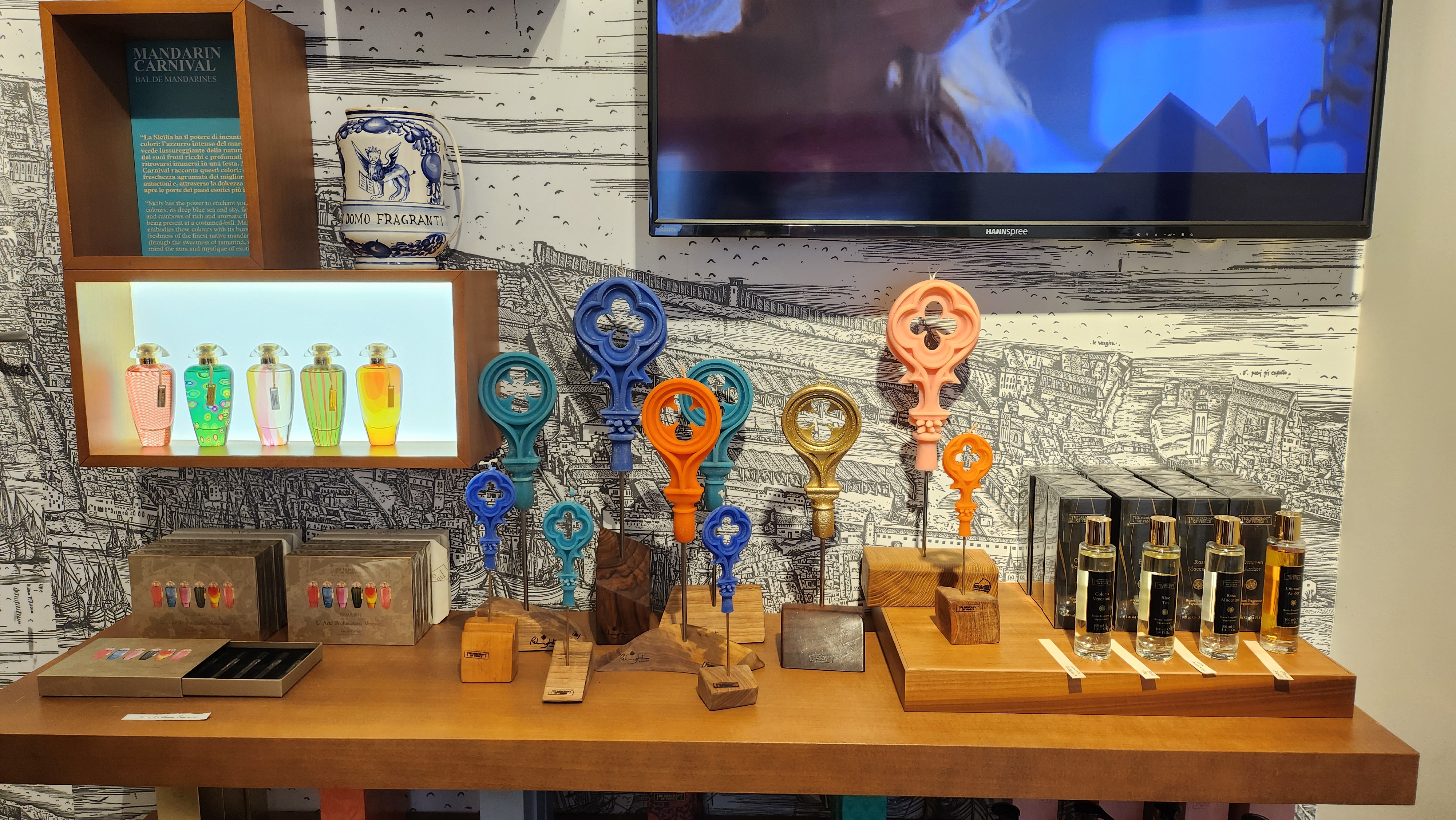
Other fragrances that drew me in were Byzantium Saffron, a leathery saffron, and Maria Callas, a vibrant orange-neroli-cedarwood creation launched last year in celebration of the 100th anniversary of the opera singer’s birth.
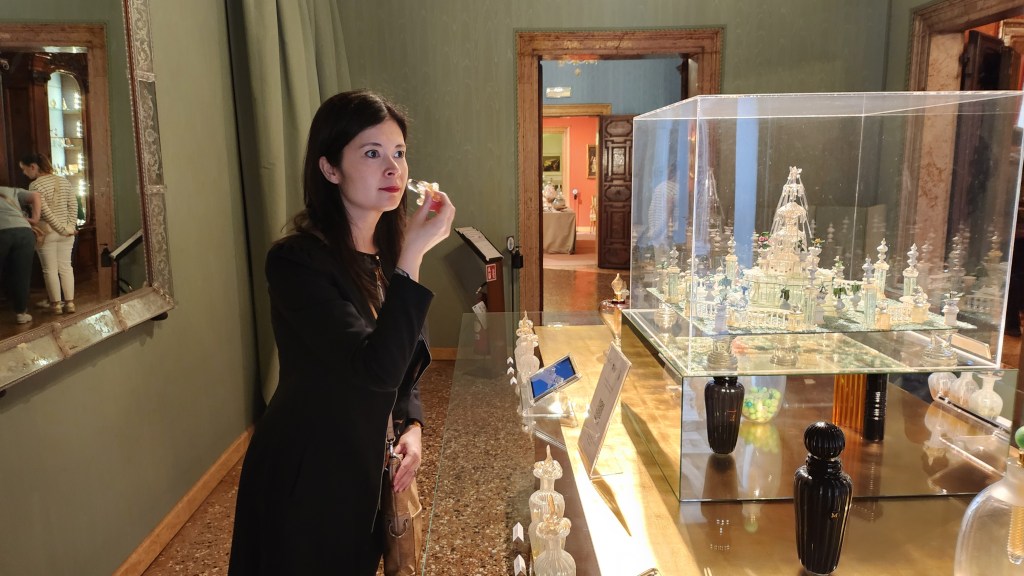
Saving the best for last… The Palazzo Mocenigo is one of the world’s few museums with a large part dedicated to perfume. Each of five rooms (six if you count one showing a video) focuses on an aspect of perfumery, from fragrance families to raw materials to extraction techniques and historically significant perfume specimens.
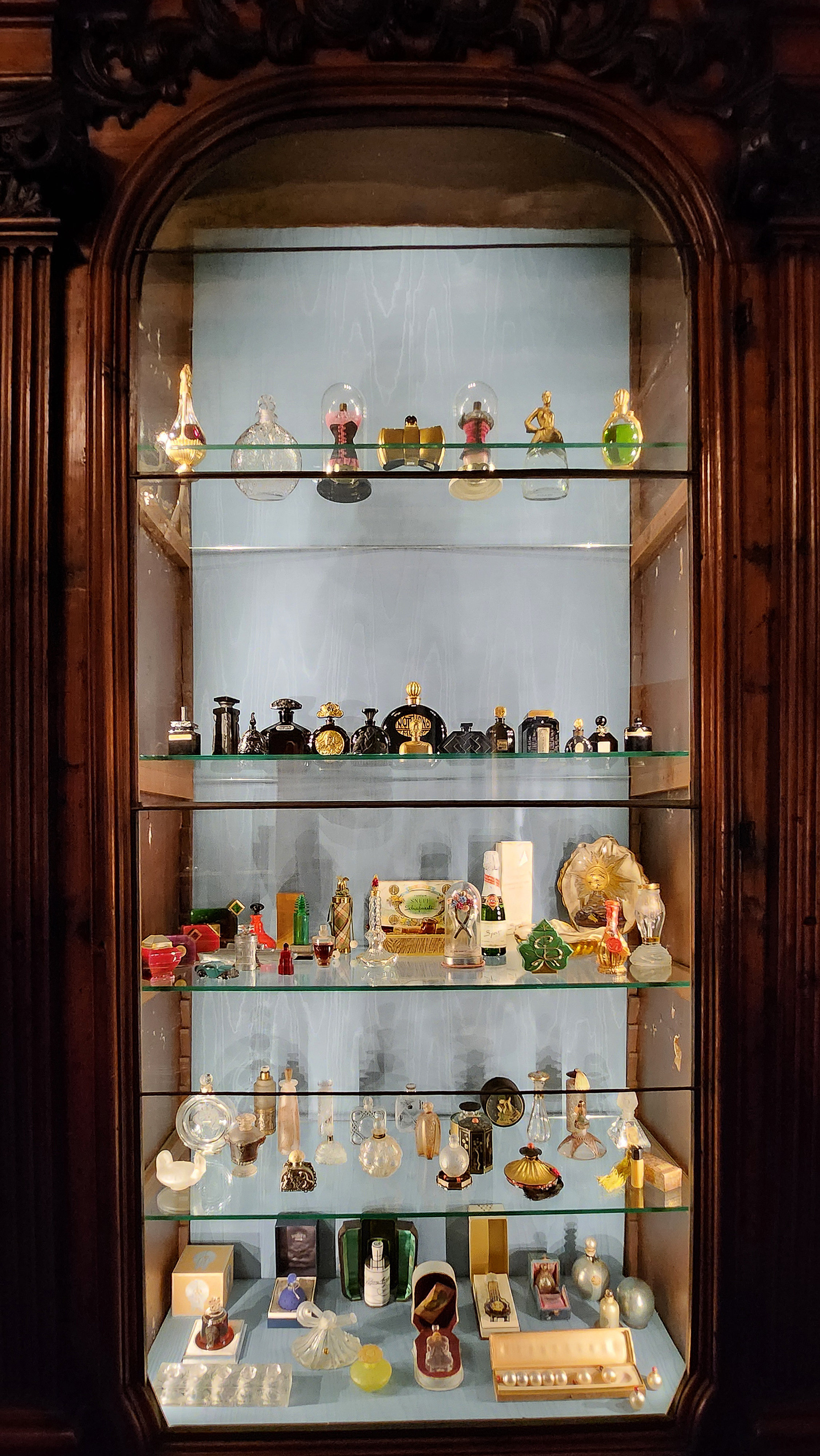
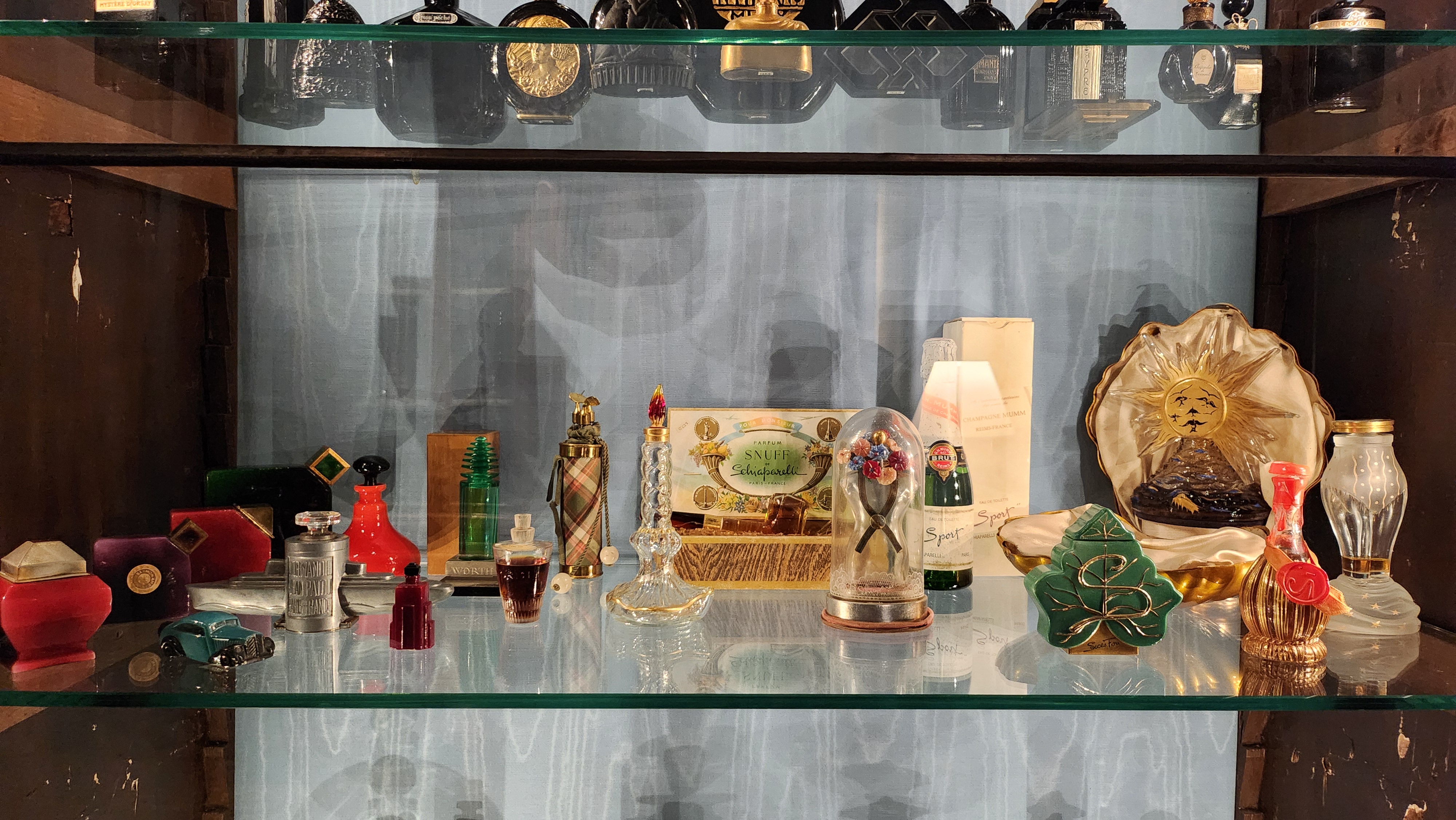
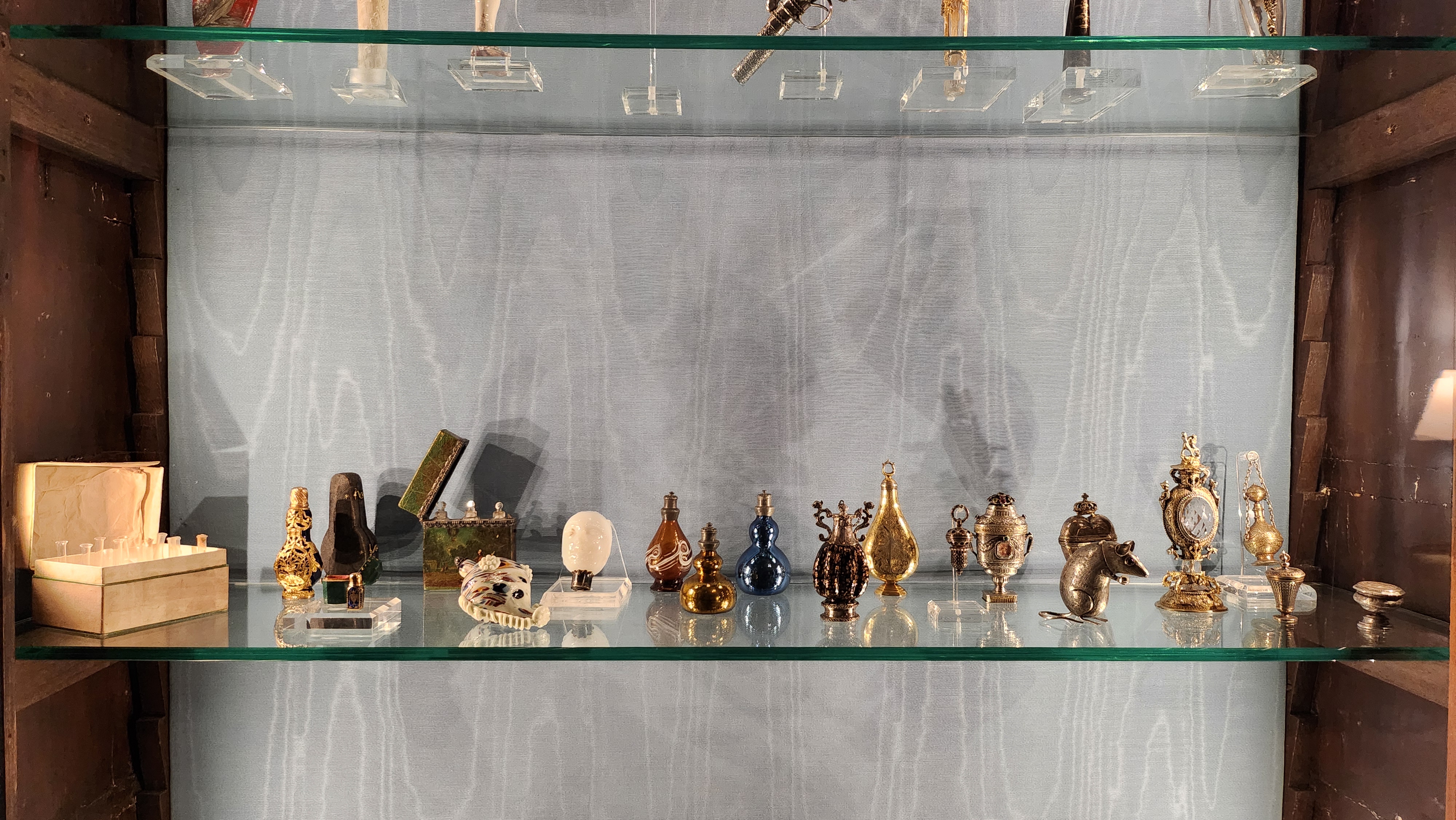
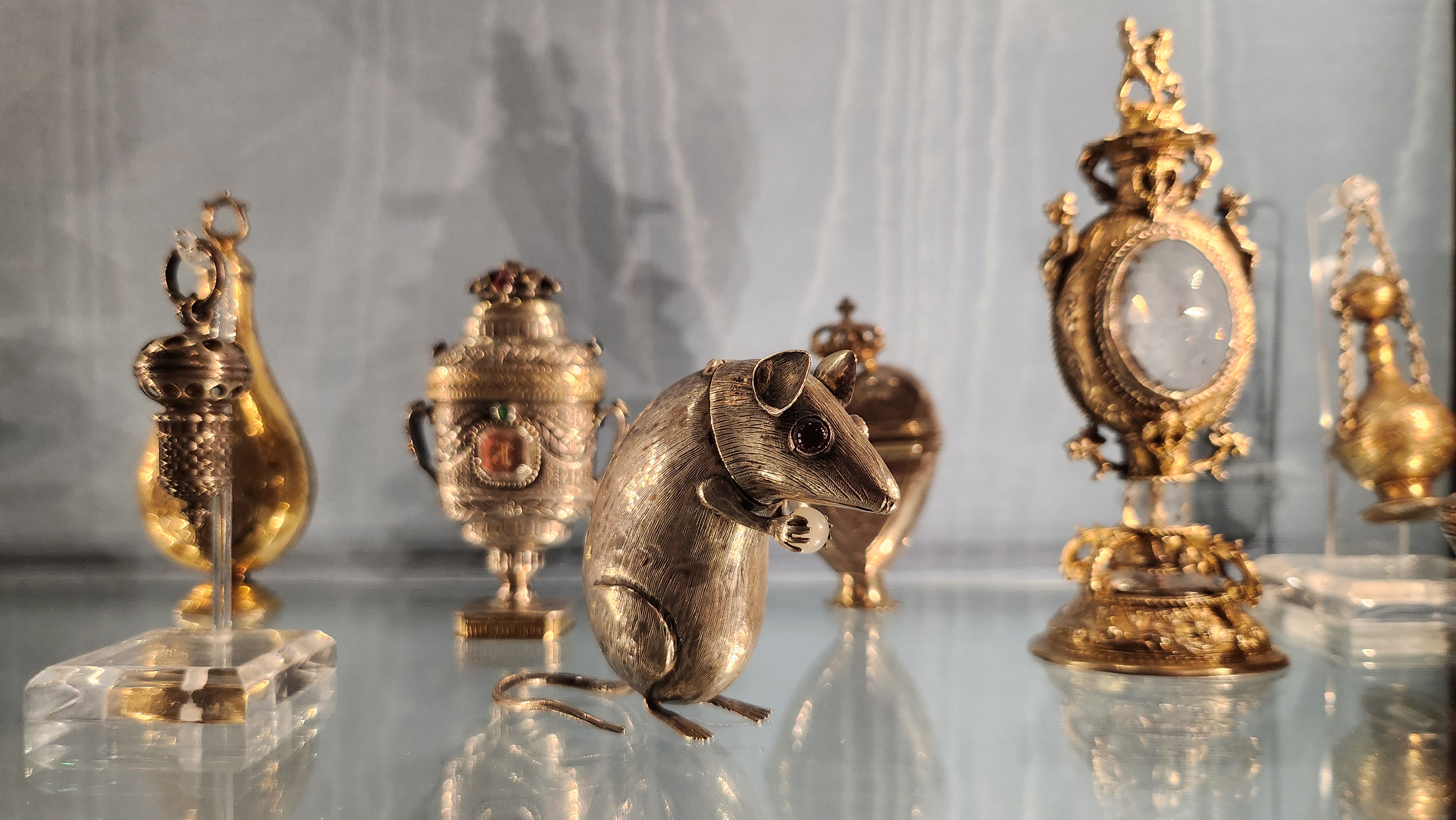
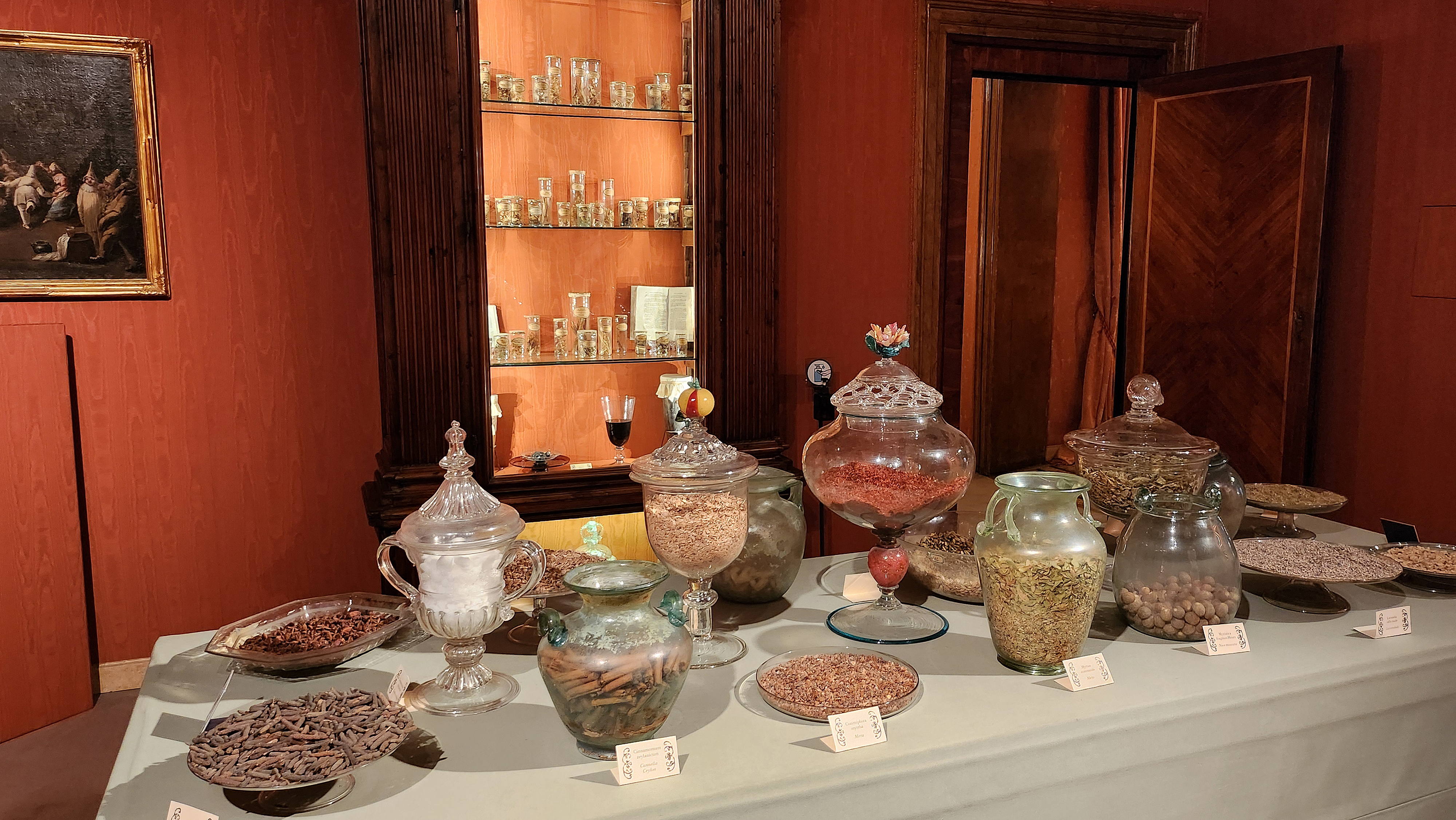
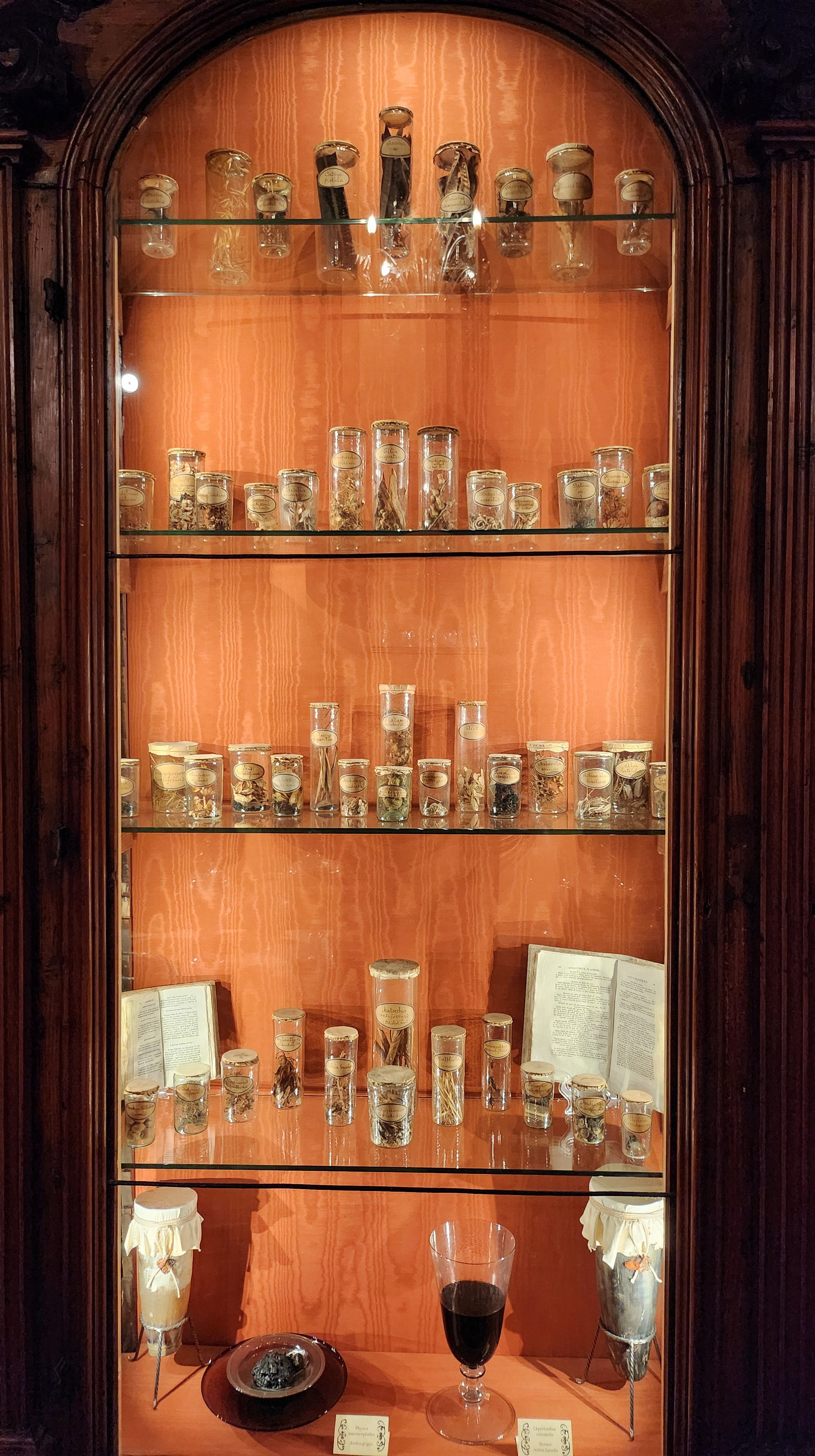

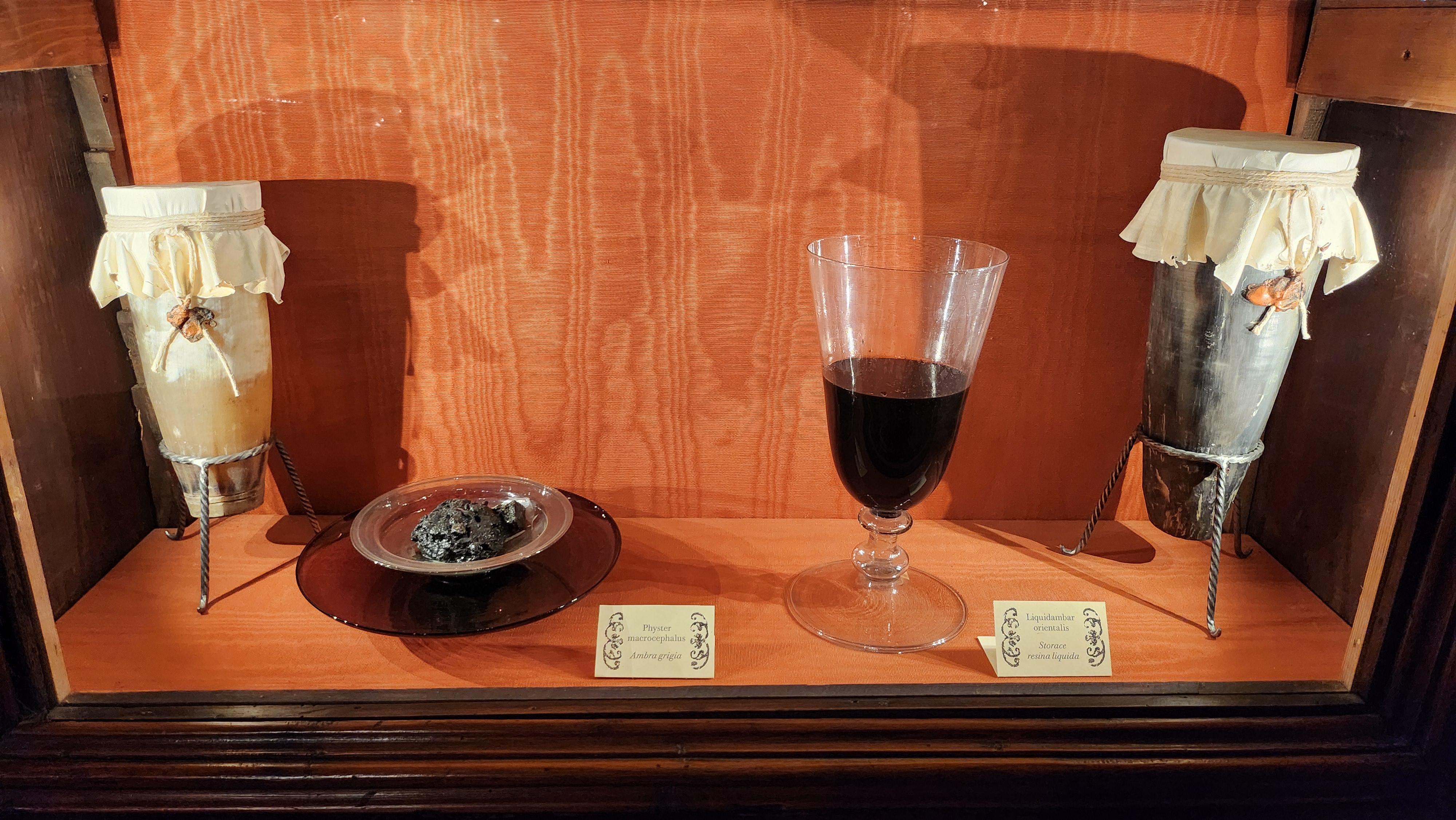

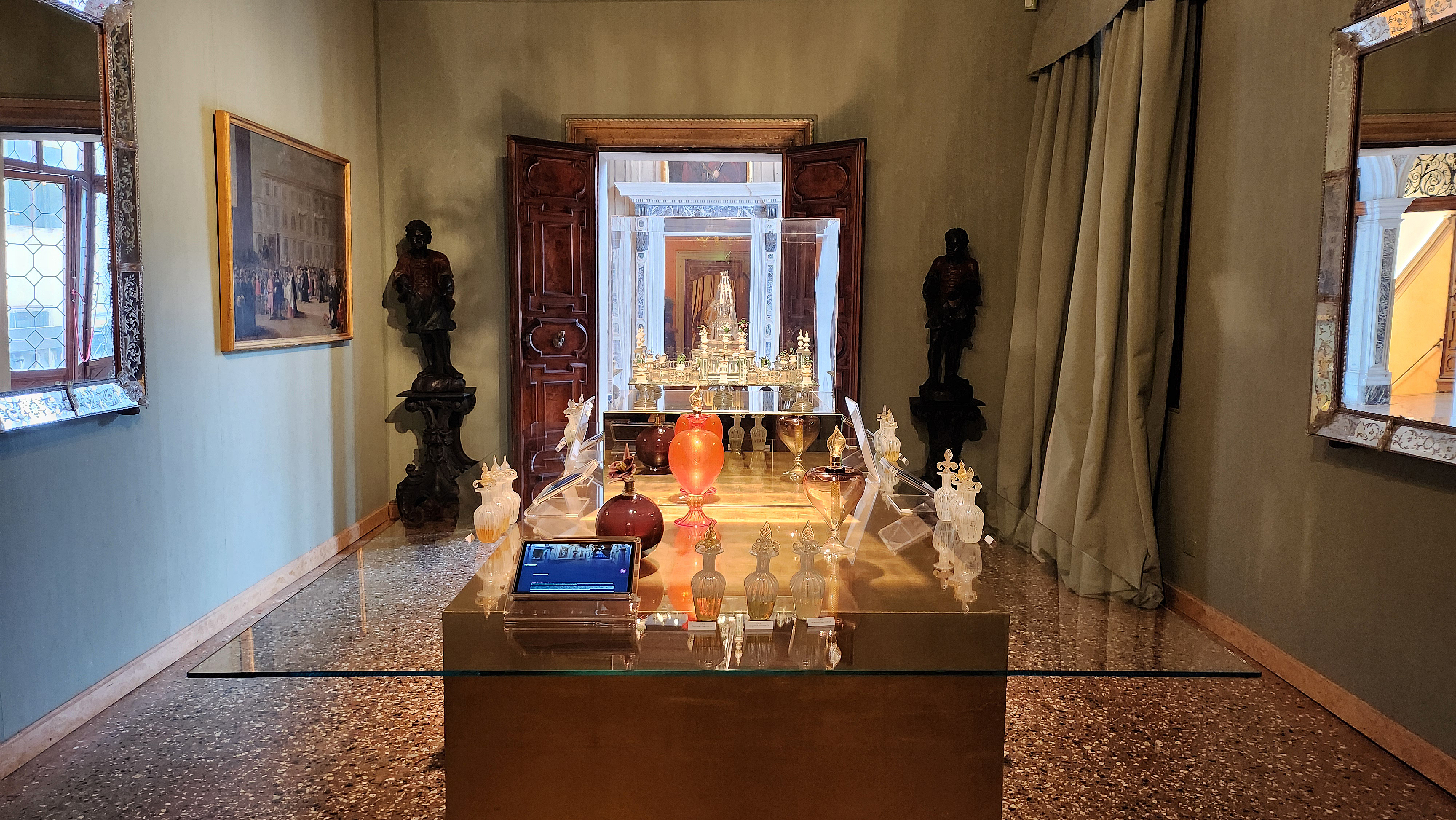
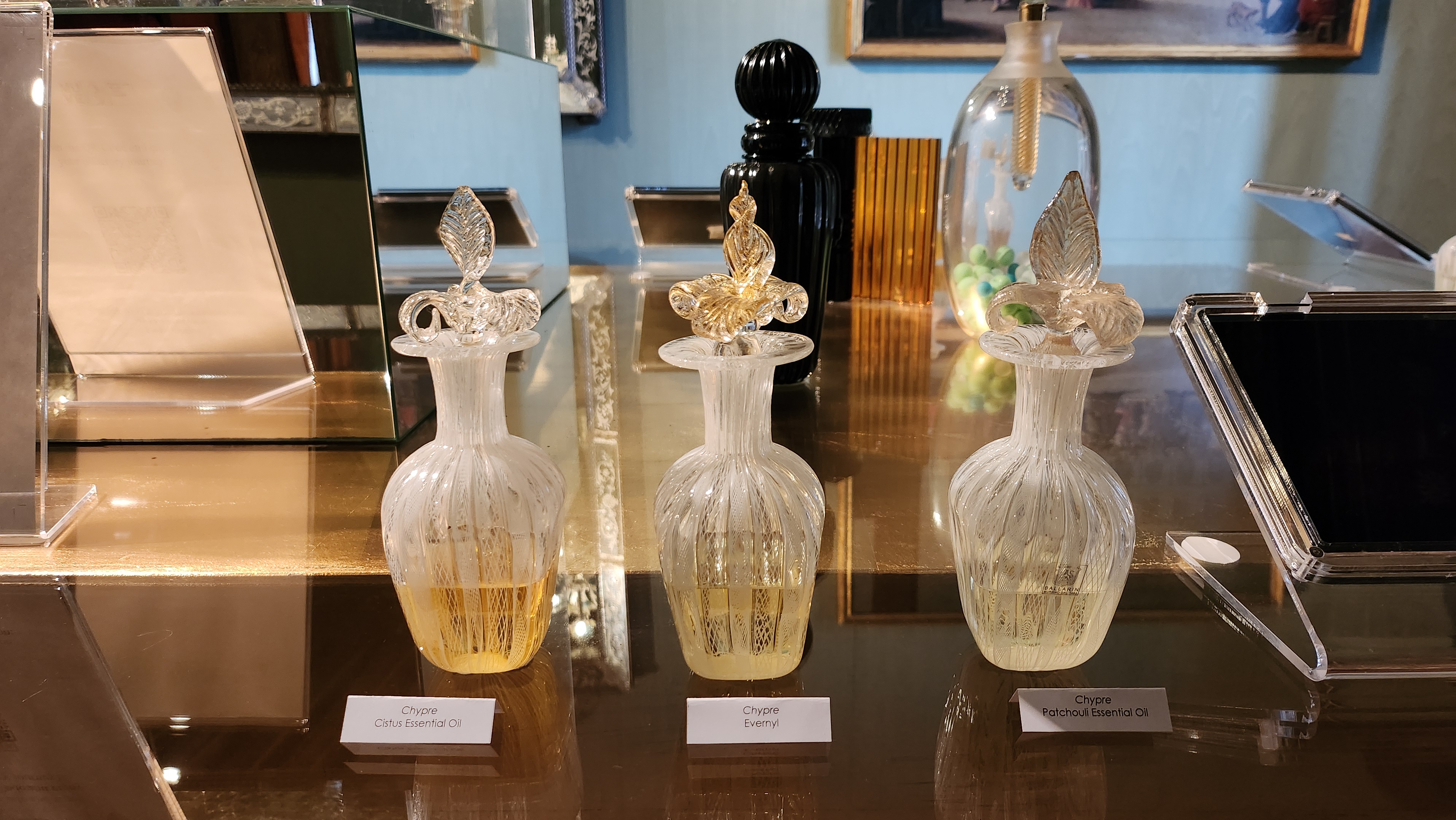
In this room dedicated to an interactive experience of the main olfactory families, visitors are encouraged to scan a QR code to access the same information provided on digital tablets next to each family. The flacons are only lightly stoppered, as we are invited to smell the featured botanical and synthetic elements of each fragrance family.
- Woody: cedarwood essential oil, sandalwood essential oil, vetiver essential oil
- Chypre: cistus essential oil, Evernyl, patchouli essential oil
- Fougere: lavender essential oil, coumarin, sandalwood essential oil
- Ambery: cistus labdanum absolute, vanillin, benzoin resinoid
- Floral: rose essential oil, jasmine absolute, orange flower extract
- Citrus: bergamot essential oil, mandarin essential oil, petitgrain essential oil
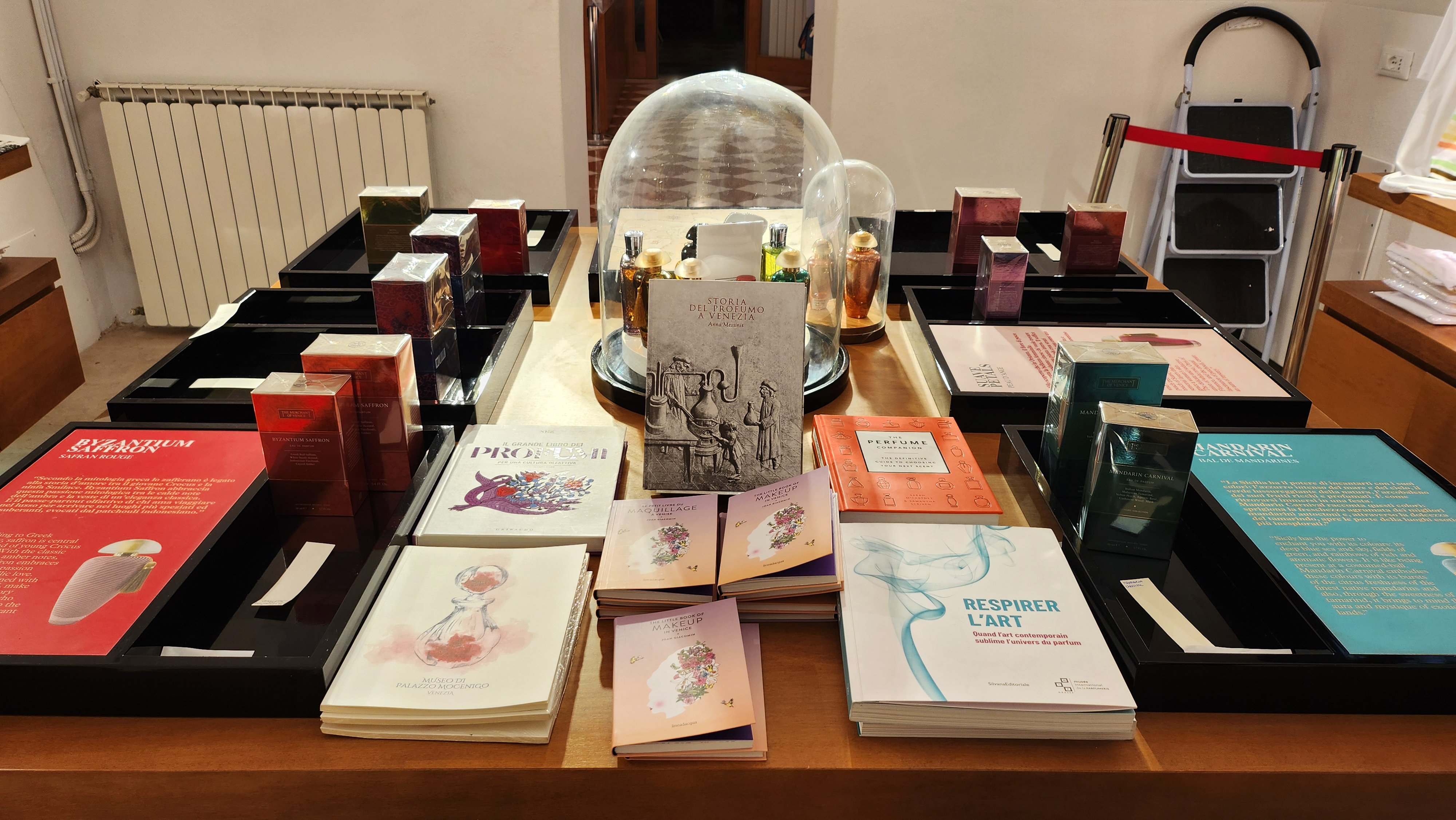
The gift shop was well stocked with perfumes and other fragranced products from The Merchant of Venice. I was also happy to see books by some of my favorite perfume authors: The Perfume Companion by Sarah McCartney and Samantha Scriven and Perfume: In Search Of Your Signature Scent by Neil Chapman (translated to Italian), among other, more Italian-focused offerings.

I could have spent much longer in the Palazzo Mocenigo, taking in more details with each look—and sniff. For now, I have my photos to remind me, and surprise me… and transport me back to the Floating City.
 Nose Prose
Thank you for taking me along on this magical journey, Nose Prose. It looks wonderful, and the perfumes don’t seem bad either. 😉
LikeLike
My pleasure! It’s always better shared, even via 2D media.
LikeLike
Your wonderful post takes me back to my last visit to Venice, a long, long time ago. Next time, I’ll have to visit the fragrance destinations you mention and even enjoy the olfactory fishiness.
LikeLike
Venice has so much to offer, doesn’t it? Glad you enjoyed a trip down memory lane, and hope you get to visit again soon.
LikeLiked by 1 person
I’m so glad you went to the Palazzo Mocenigo! We went there when we visited Venice in 2019 and I loved it.
LikeLike
It’s a treasure! I hope it reminded you of good memories as well.
LikeLiked by 1 person
Looking forward to it
LikeLike
Merchant of Venice was quite a hit & miss brand when it launched in the UK. It didn’t help that they launched on QVC in the UK. That always causes snide snobbery here
LikeLike
I didn’t know they launched on QVC! I’d always thought the brand presented with its own snobbery, lol. They certainly seem quite polished.
LikeLike
They did in the UK dunno about the US.
Beautiful bottles.
Did you go to Florence to complete the grand tour?
LikeLike
Yes – still organizing that post!
LikeLiked by 1 person
Great write-up and shots, Nose Prose. It all sounds brilliant, especially the museum with the perfume section. It’s been years since I tried the Merchant of Venice line, and I’ve only tried one, Venetian Blue. It is/was an Aventus clone and I must admit I dismissed the brand after that experience. However, your endorsement of a couple of their perfumes has piqued my interest.
LikeLike
Thank you! It’s one of those that’s easier to show than tell. With brands like The Merchant of Venice, the visual aspects and the story are at least half the charm for me.
LikeLiked by 1 person
it has been years since i visited venice. glad you enjoyed it
LikeLike
I hope it brought back some good memories for you!
LikeLike