As part of our first trip to Türkiye, we spent a few days on a guided tour in Cappadocia (Kapadokya), a semi-desert region in the central part of the country. This segment began very early in the morning, as we arrived at the Sabiha Gökçen International Airport on the Asian side of Istanbul before sunrise to take a domestic flight to Kayseri. The namesake of this airport is recognized as the world’s first female fighter pilot.
Another hour and a half or so on a shuttle bus to Göreme, and we were able to check into our cave hotel. As one of our tour guides would later explain to us, it was easier to carve dwellings in rocks than to build them up, so until as recently as the 1980s, some people still lived in caves. The natural structure allowed people and their food supplies to stay cool in hot summers and warm in freezing winters. When the government moved everyone into modern housing, the former cave dwellers were allowed to convert their caves into hotels (with some exceptions) as tourism increased.
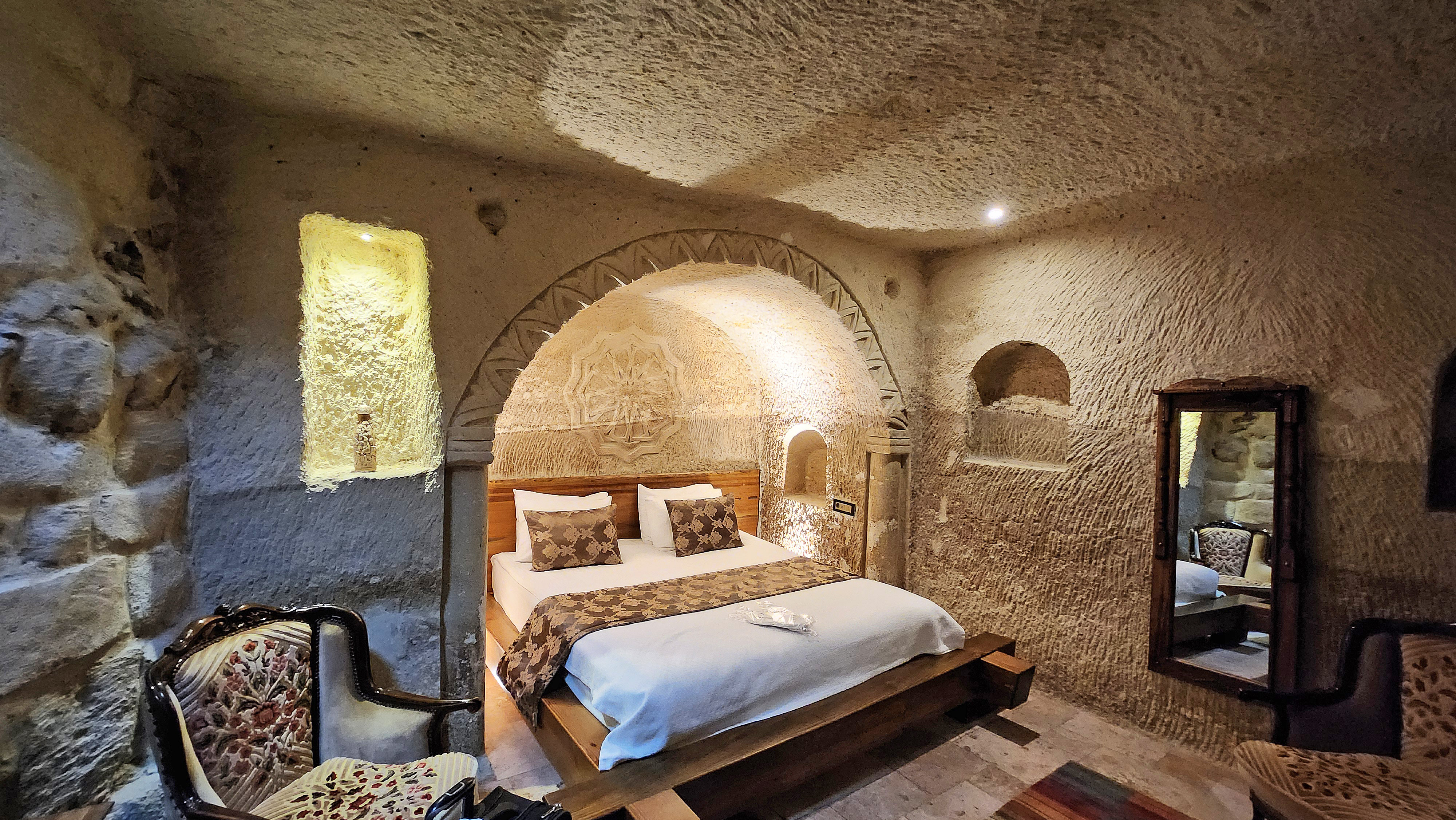
After a short walk around the neighborhood, exploring cave structures of all shapes and sizes now supporting shops and cafes, (and a nap to recover from the early wake-up!) our first activity was a sunset ATV tour. This dusty ride was a great way to familiarize ourselves with the landscape, characterized by “fairy chimneys” and punctuated by horses and the occasional camel.
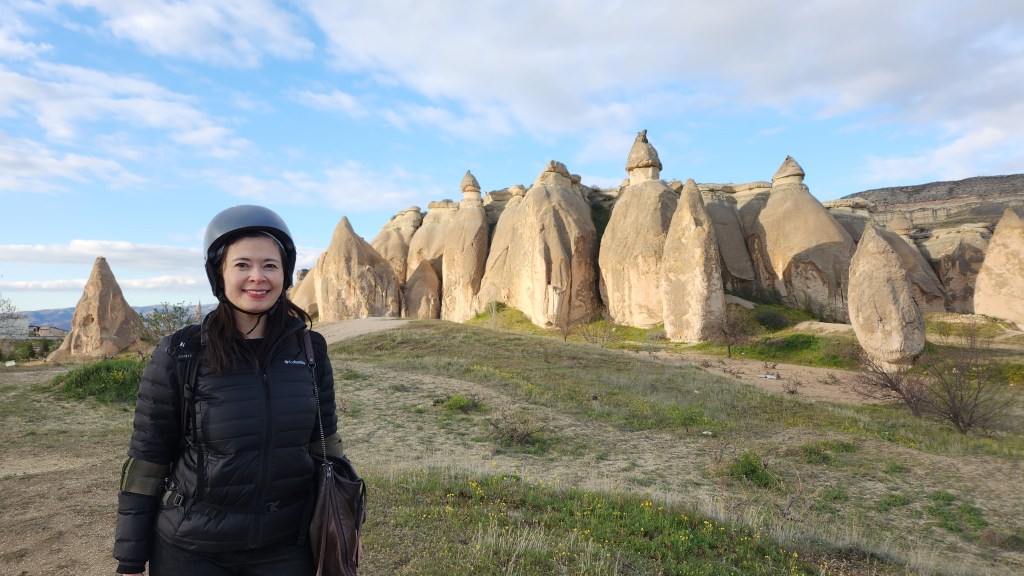
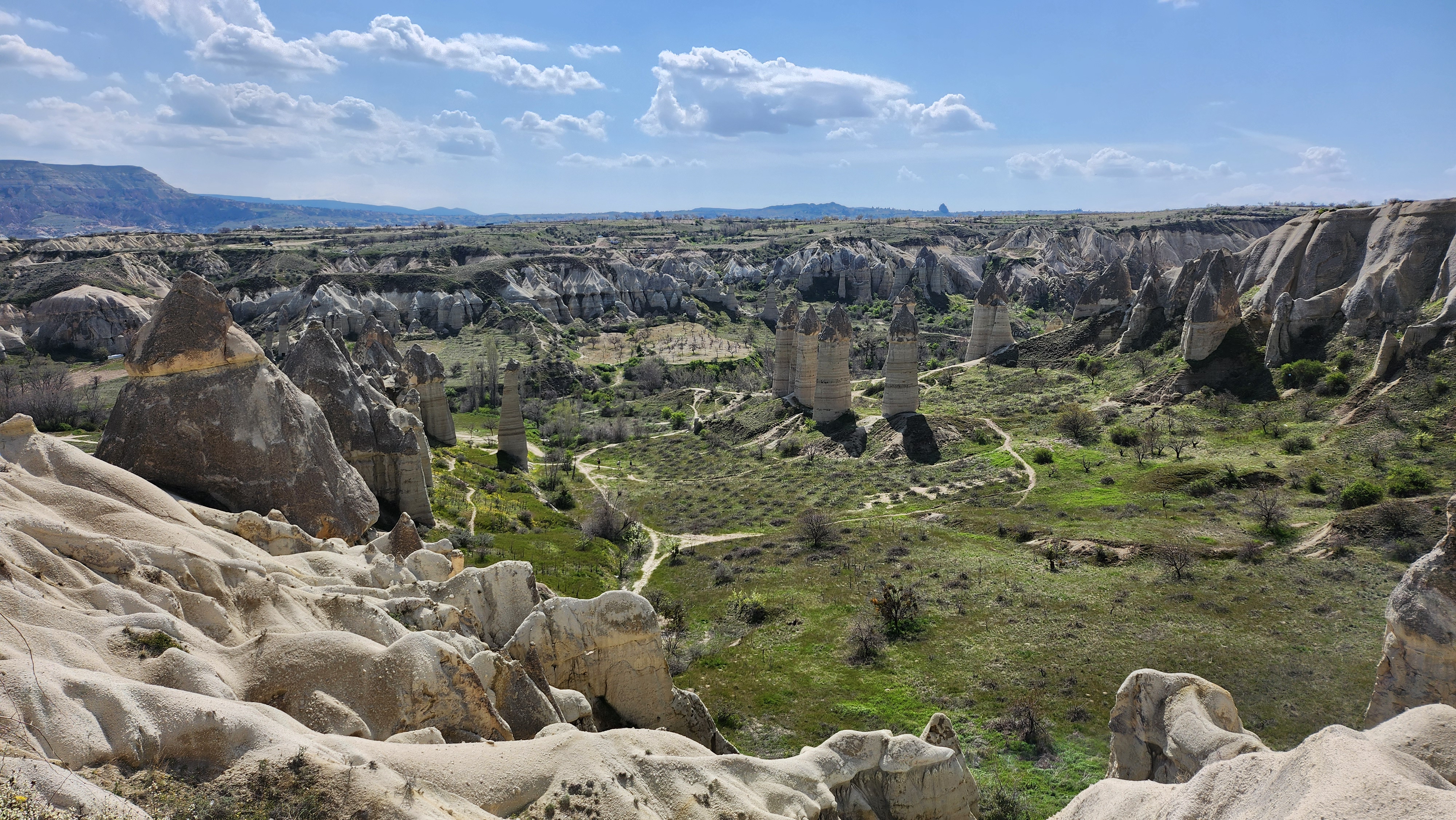
We would revisit some of the same scenic spots by shuttle bus on our tours, such as Love Valley in Göreme National Park, a UNESCO World Heritage Site.
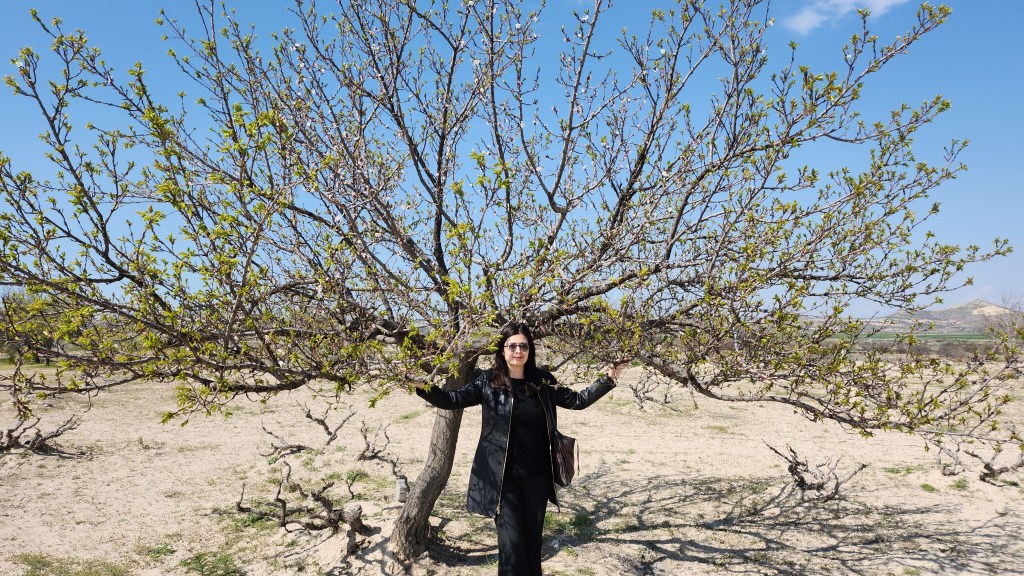
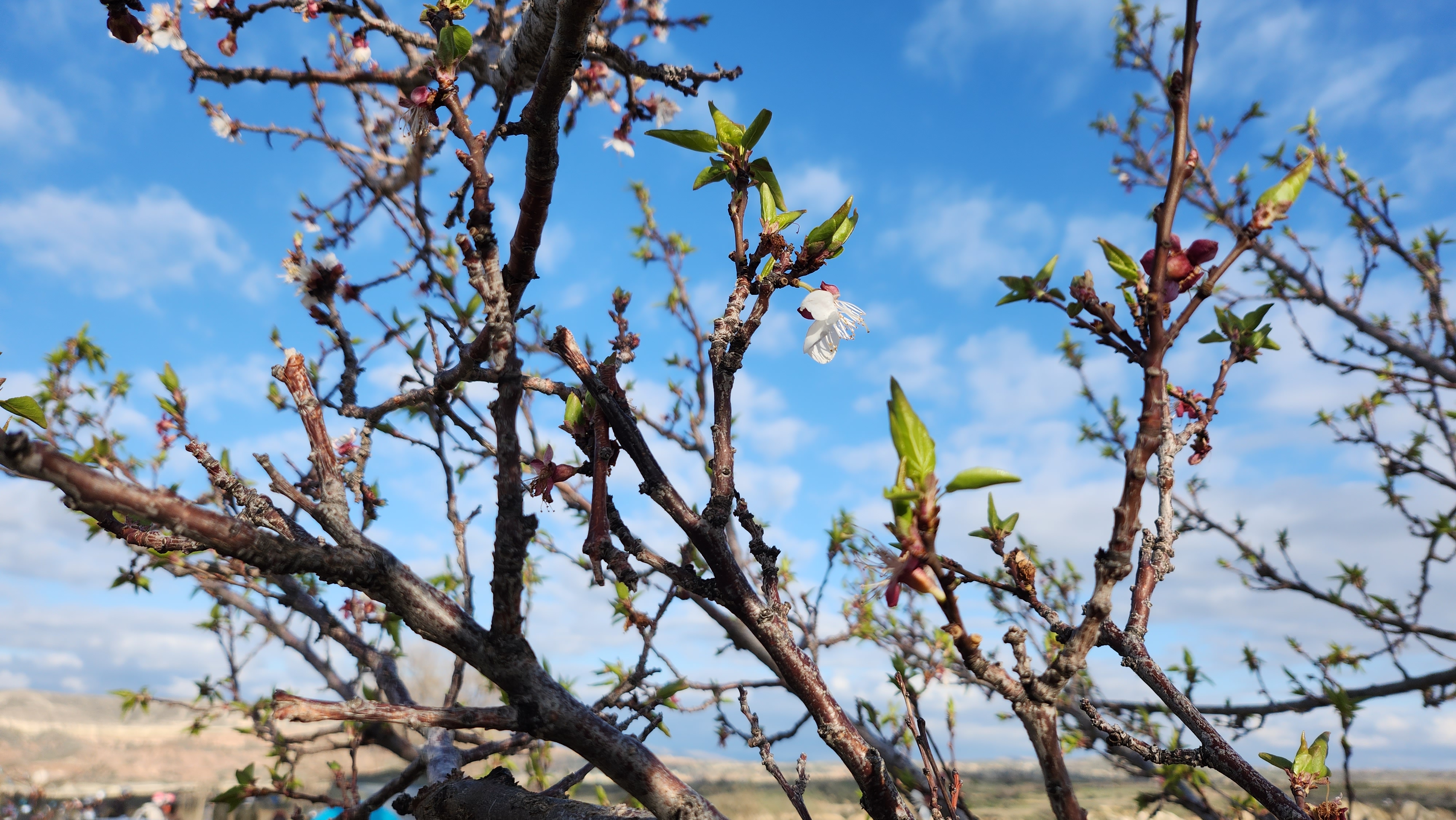
It was here that I first encountered a small tree with pinkish and white flowers that smelled oddly like fish at times, especially if there were few blooms. (Larger clusters were more delicately floral, with the fishy scent lurking at the back of the nose.) The thicker branches produced a gooey, orangey-brown sap in abundance, which surprisingly had no smell that I could detect. I asked about the tree and learned that it was zerdali, or wild apricot; the fruit is often used for making jams as they are tart compared with cultivated sweet apricots.
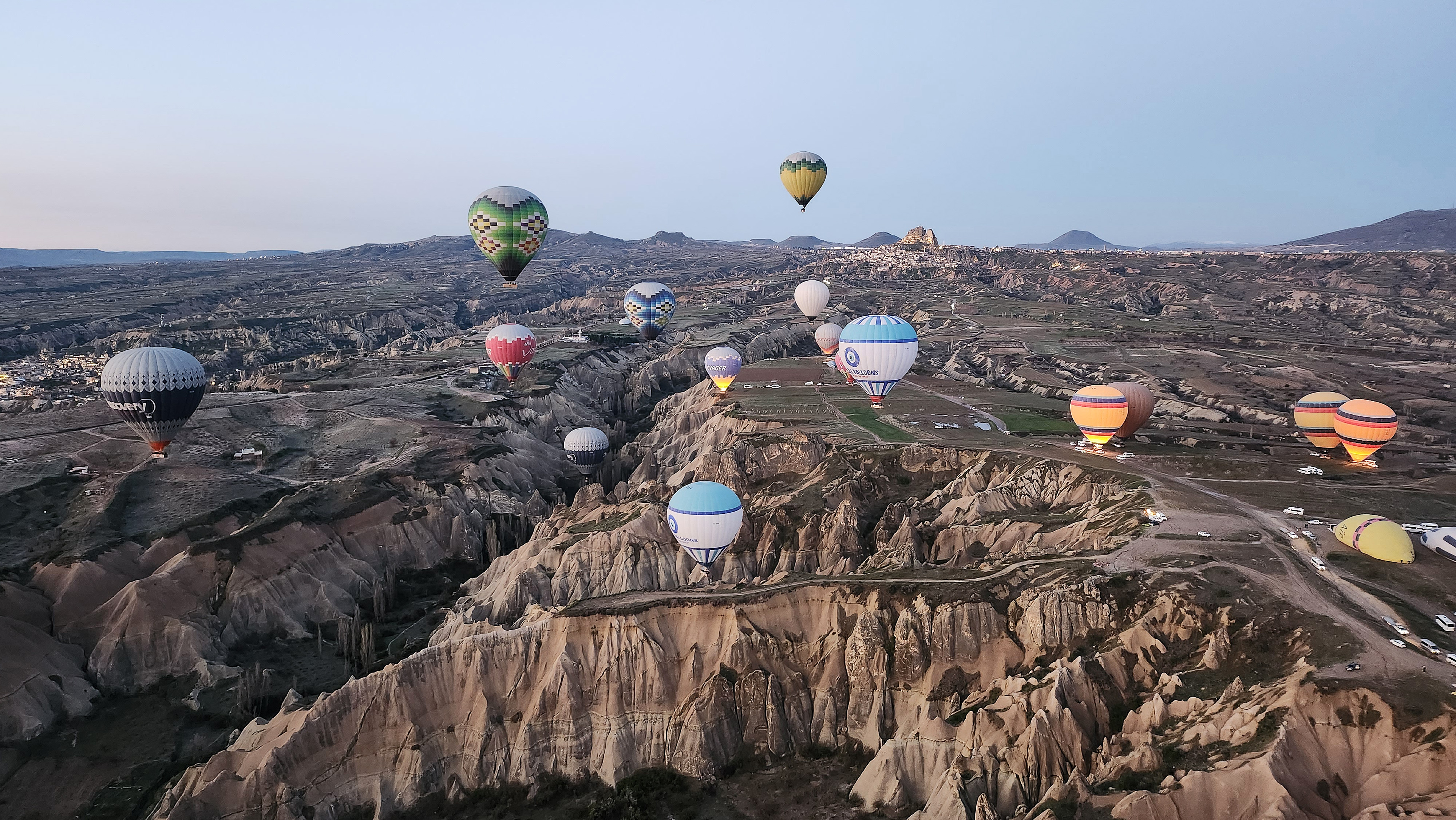
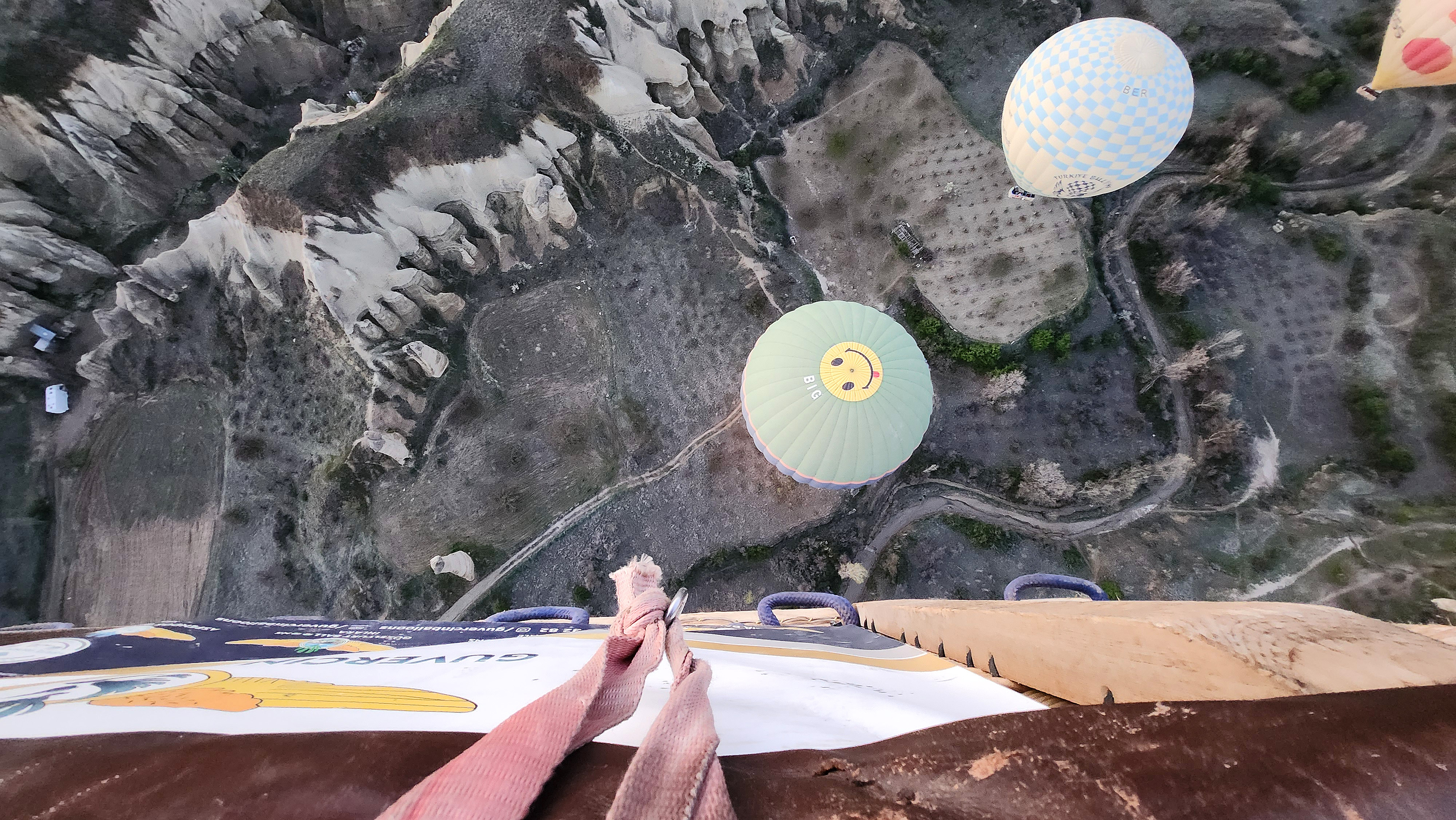
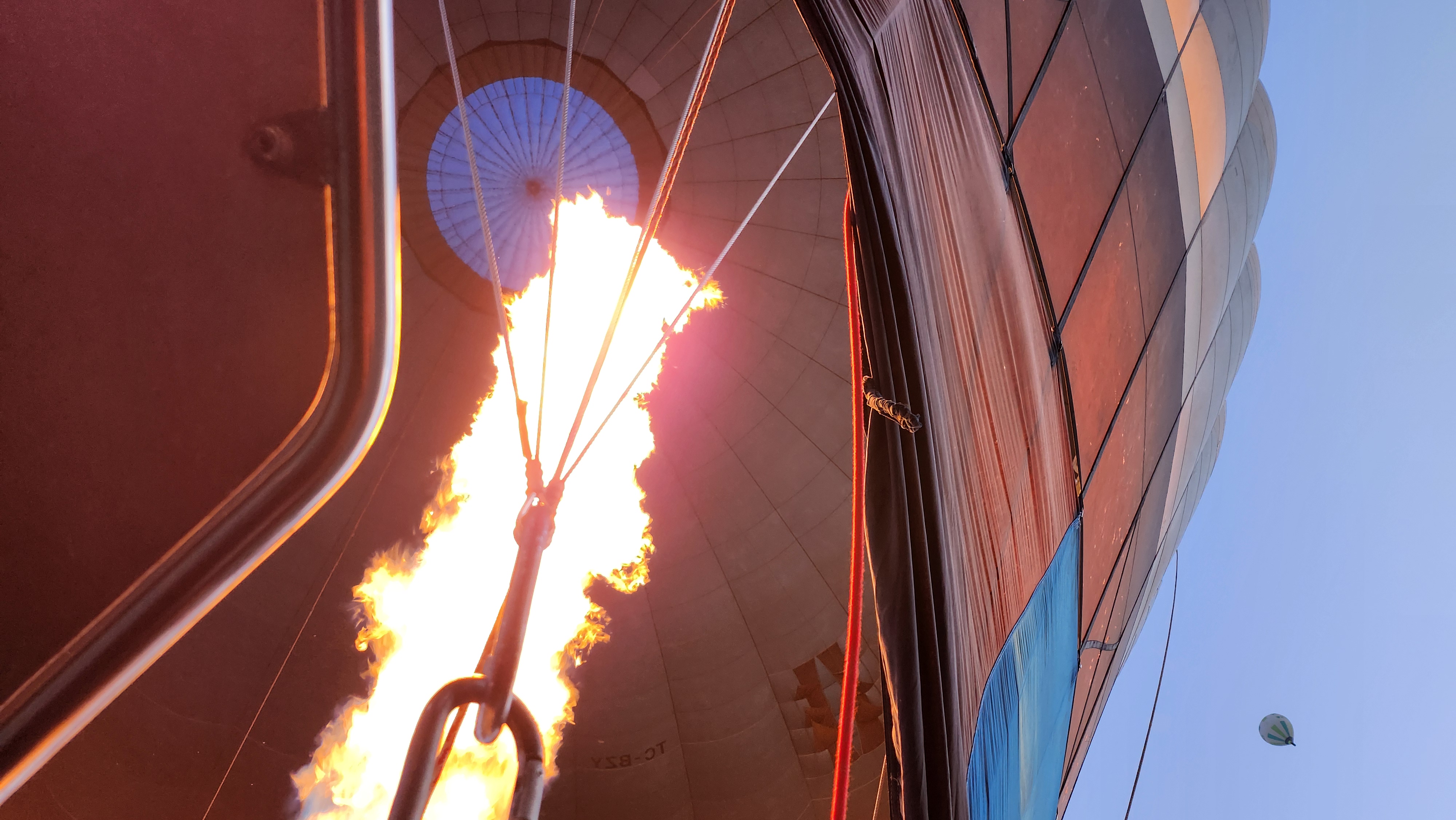
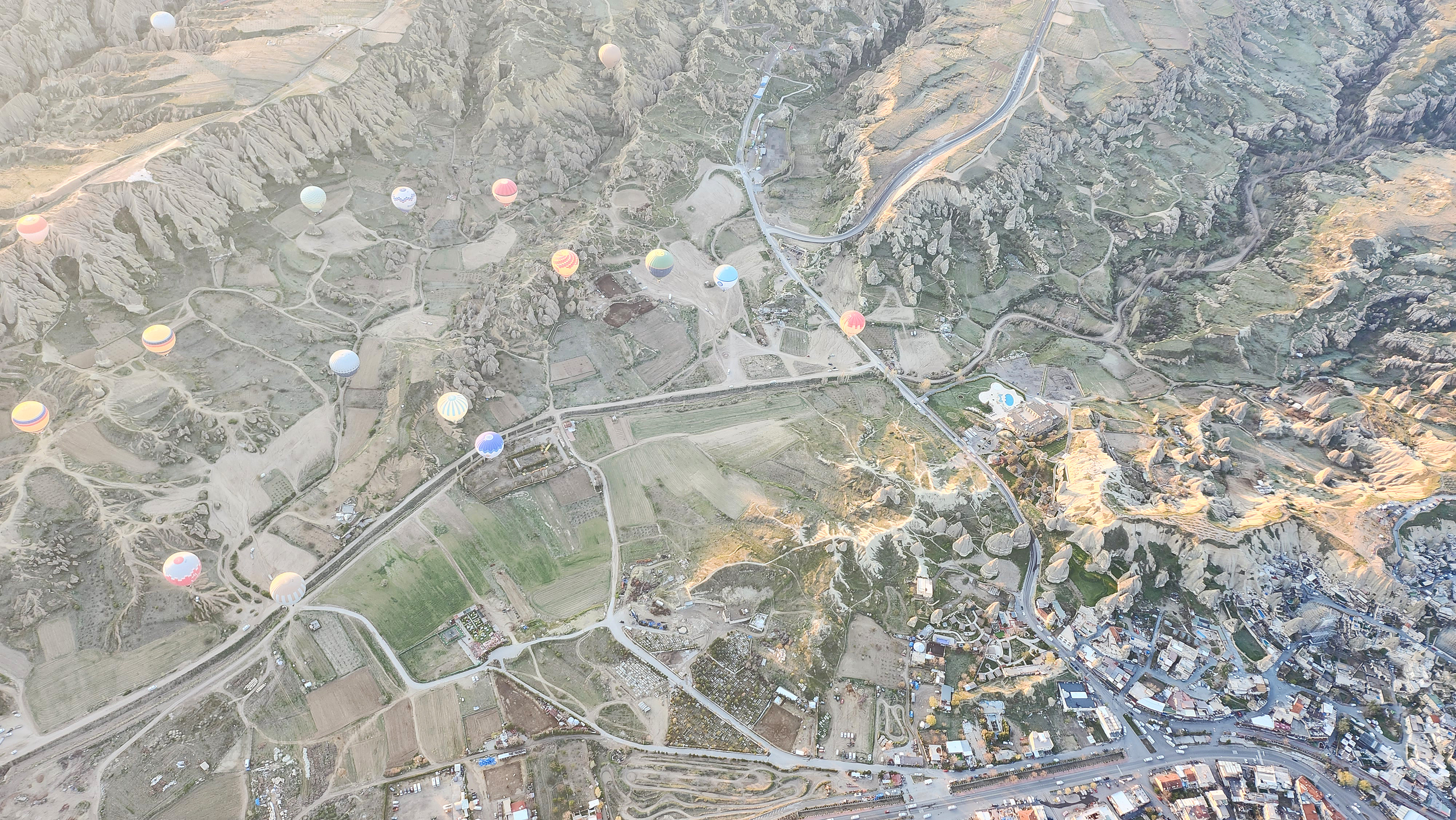
The most amazing view of Göreme National Park, without exaggeration, was from a hot air balloon at sunrise. This was really the impetus of our whole trip, planted as a seed of inspiration in my mind more than two years ago by a fantastic video of the German DJ Ben Böhmer performing a set from a balloon over Cappadocia for Cercle, which you can easily find on YouTube. Once again, we rose very early and got to see some other balloons being set up before ours was ready to go. Climbing into the basket was the trickiest part—the ascent was very smooth and the entire ride, just over an hour long, was comfortable (albeit crowded in a shared compartment).
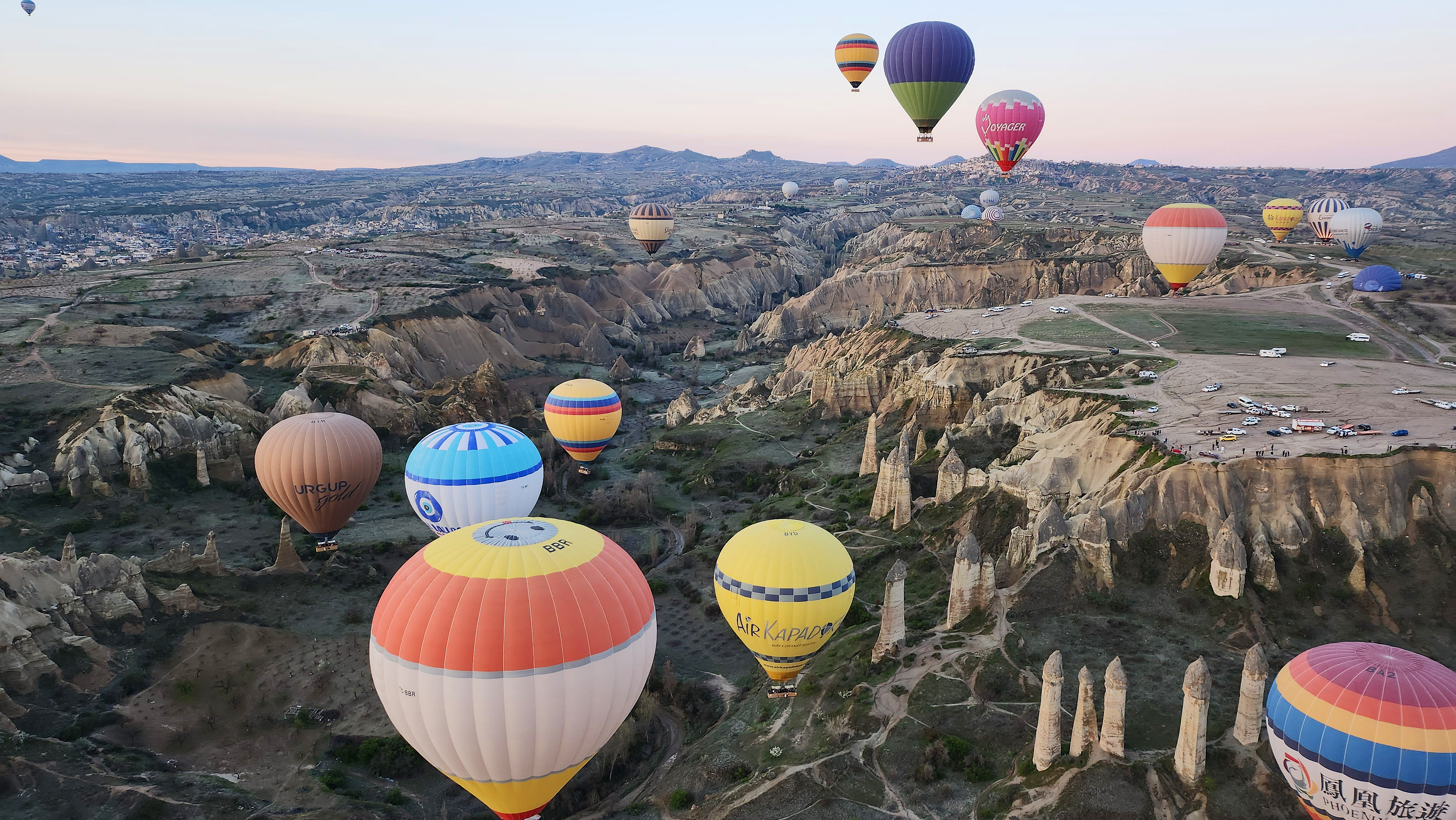
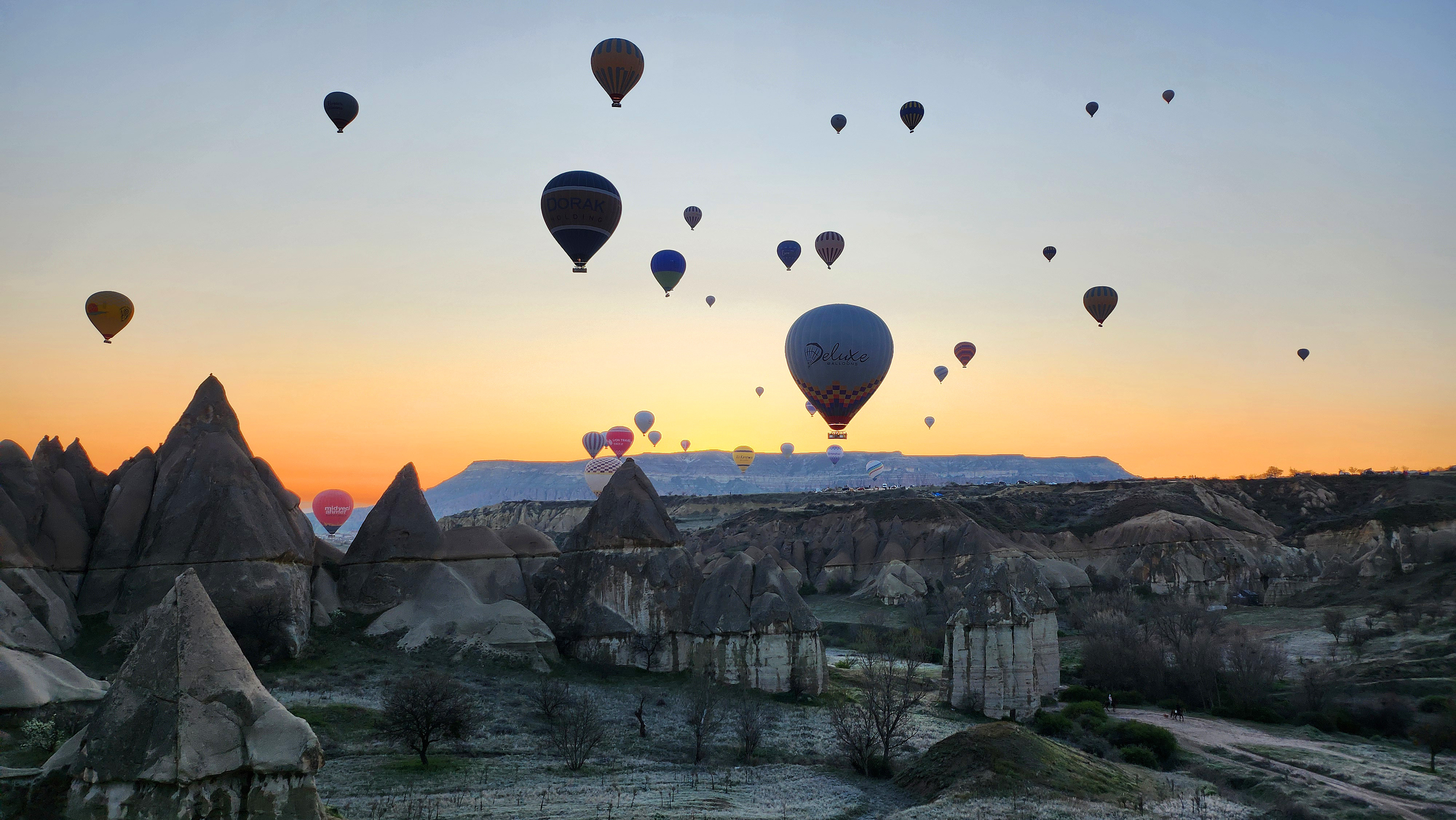
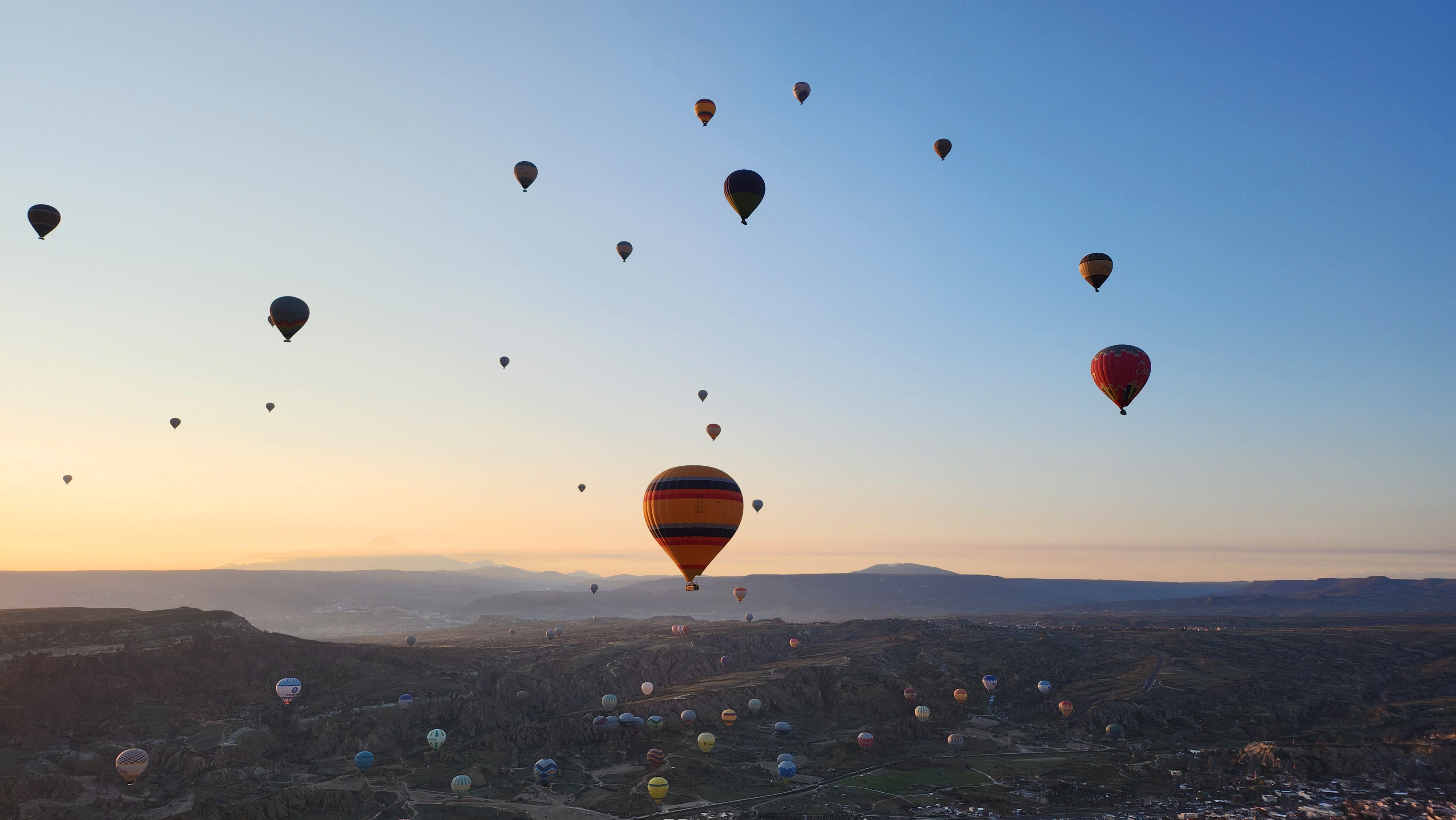
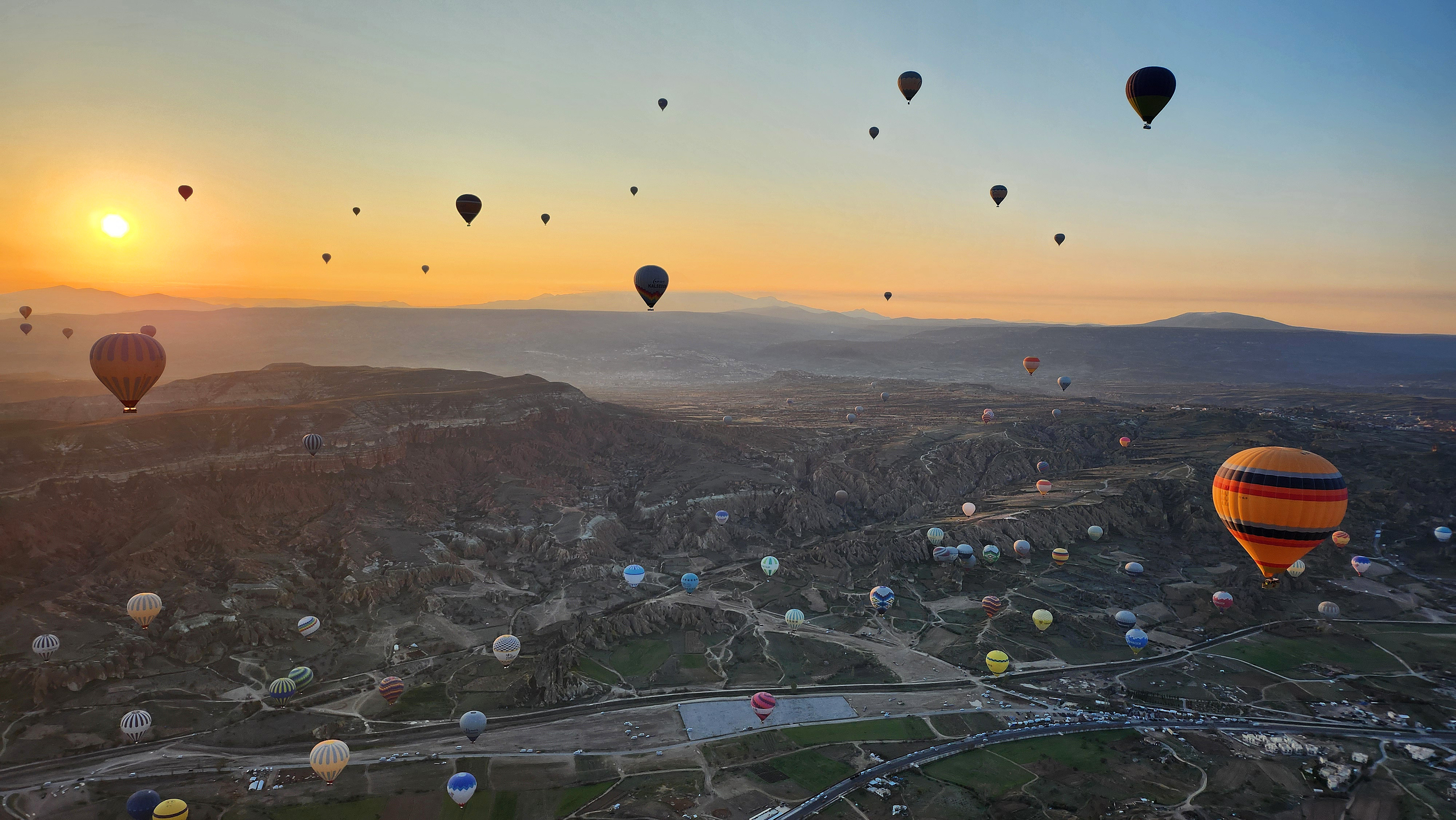
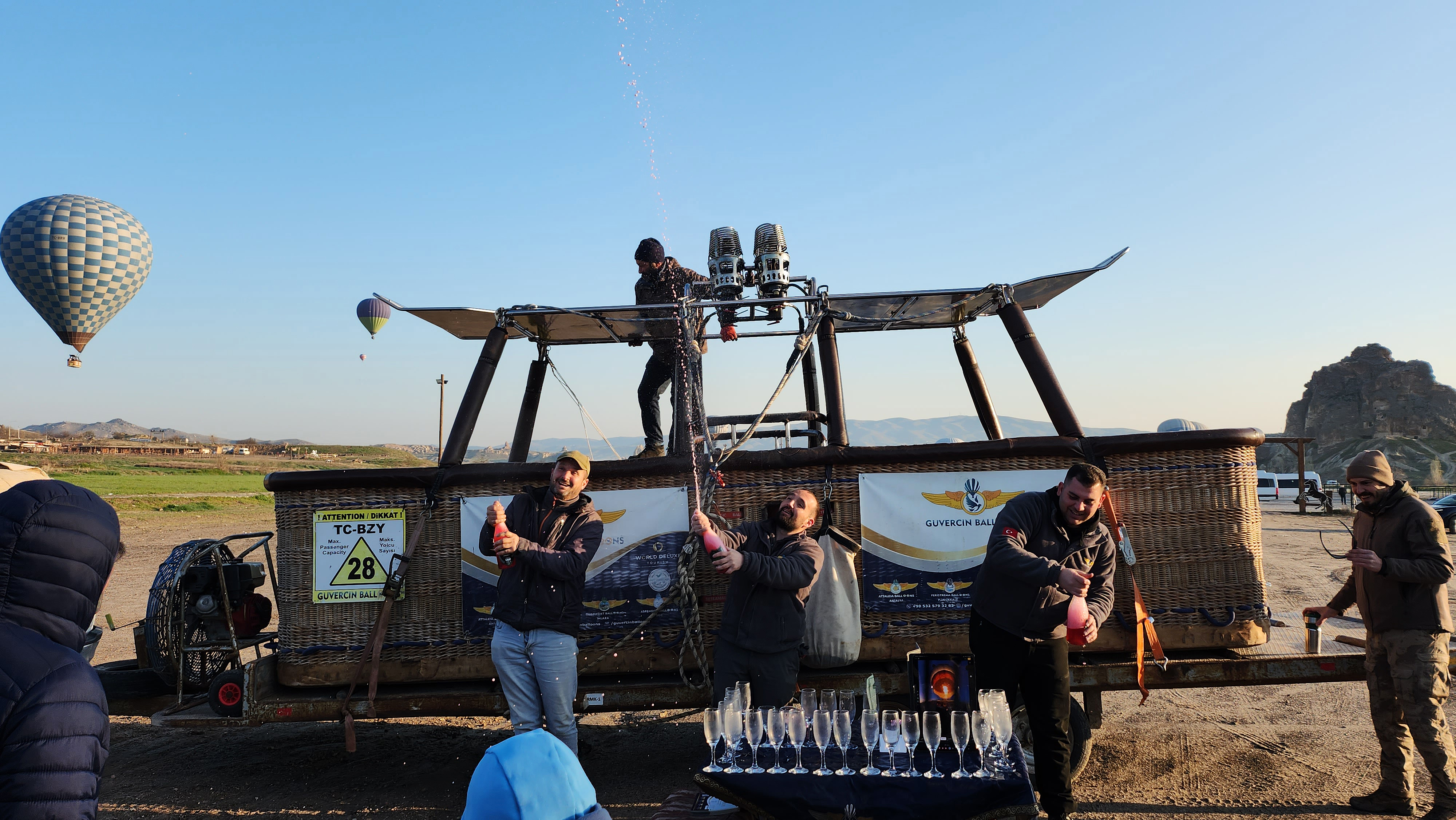
All good things must come to an end, and thankfully we had a safe landing onto a trailer (for easy transport of the balloon back to its home). Still giddy from the wonder of the experience, we were offered what the pilot described as “I want to say champagne, but it’s not—it’s something sparkling with lots of sugar.”
While the balloon ride was the climax, we still had sights to see and caves to crawl through, so after breakfast and a short rest, we headed back out. One of our stops was Derinkuyu Underground City, a vast network of tunnels and rooms carved from solid rock where people lived, birthed, and died. It remains a feat of ancient engineering with unsolved mysteries. After that, we stayed above-ground and explored several valleys with unique features.
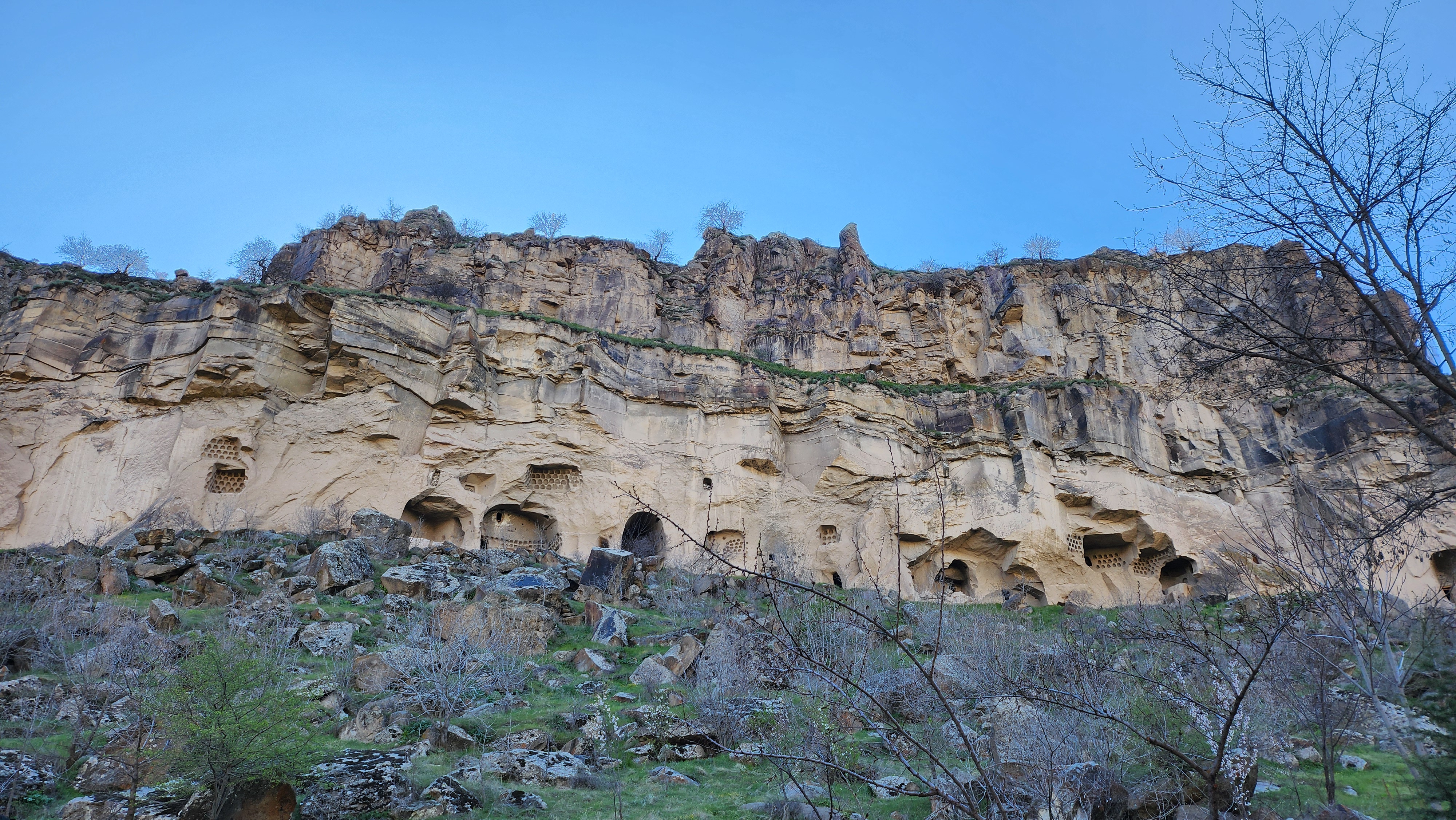
Cave structures were carved not only to house people, but in many cases, pigeons as well. These birds were important in Cappadocia as their droppings were collected for fertilizer, and their eggs were useful as a food source and as an ingredient in plaster for frescoes. People placed seeds in each regularly spaced “pigeon house” to ensure the birds returned consistently.
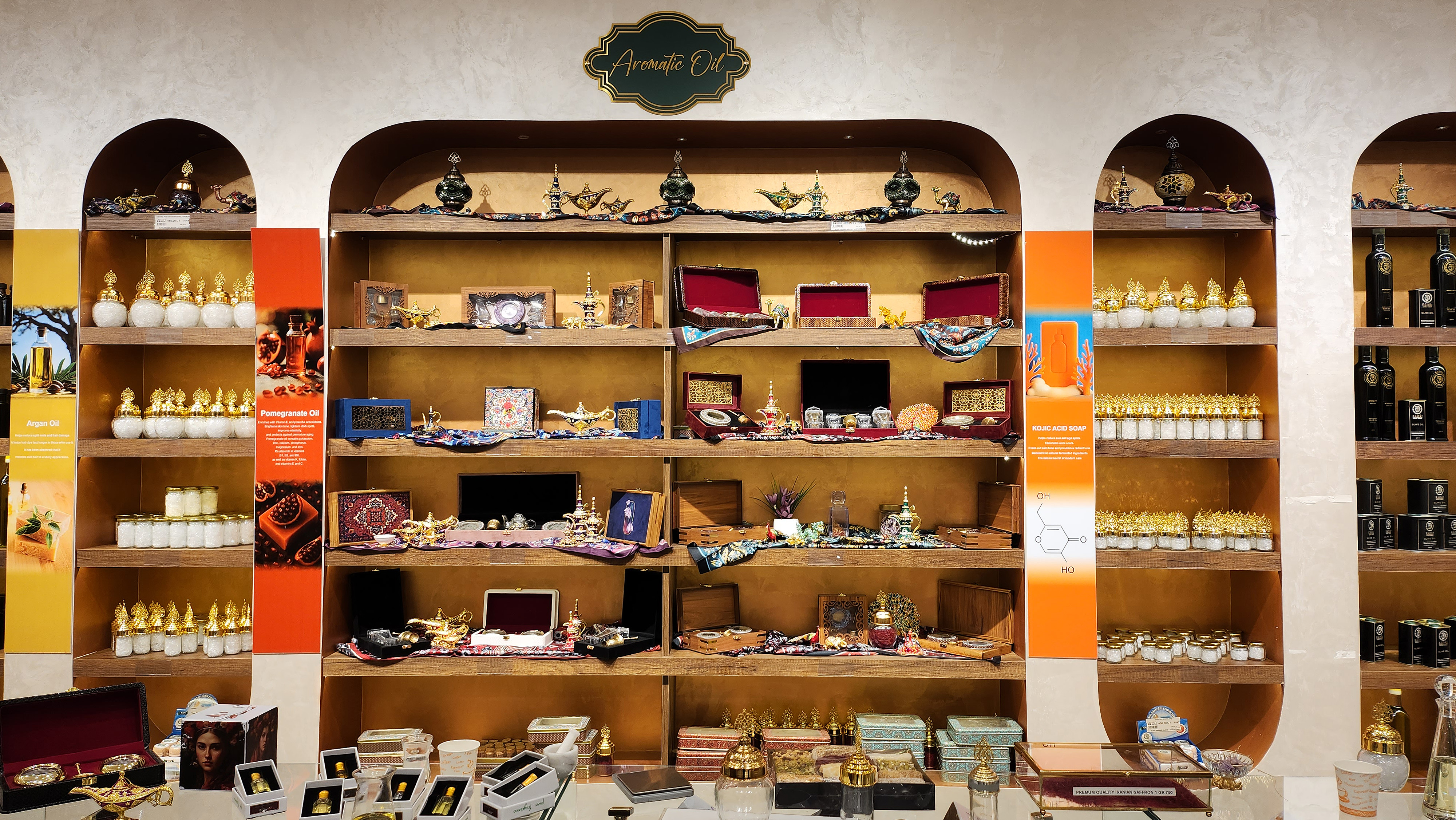
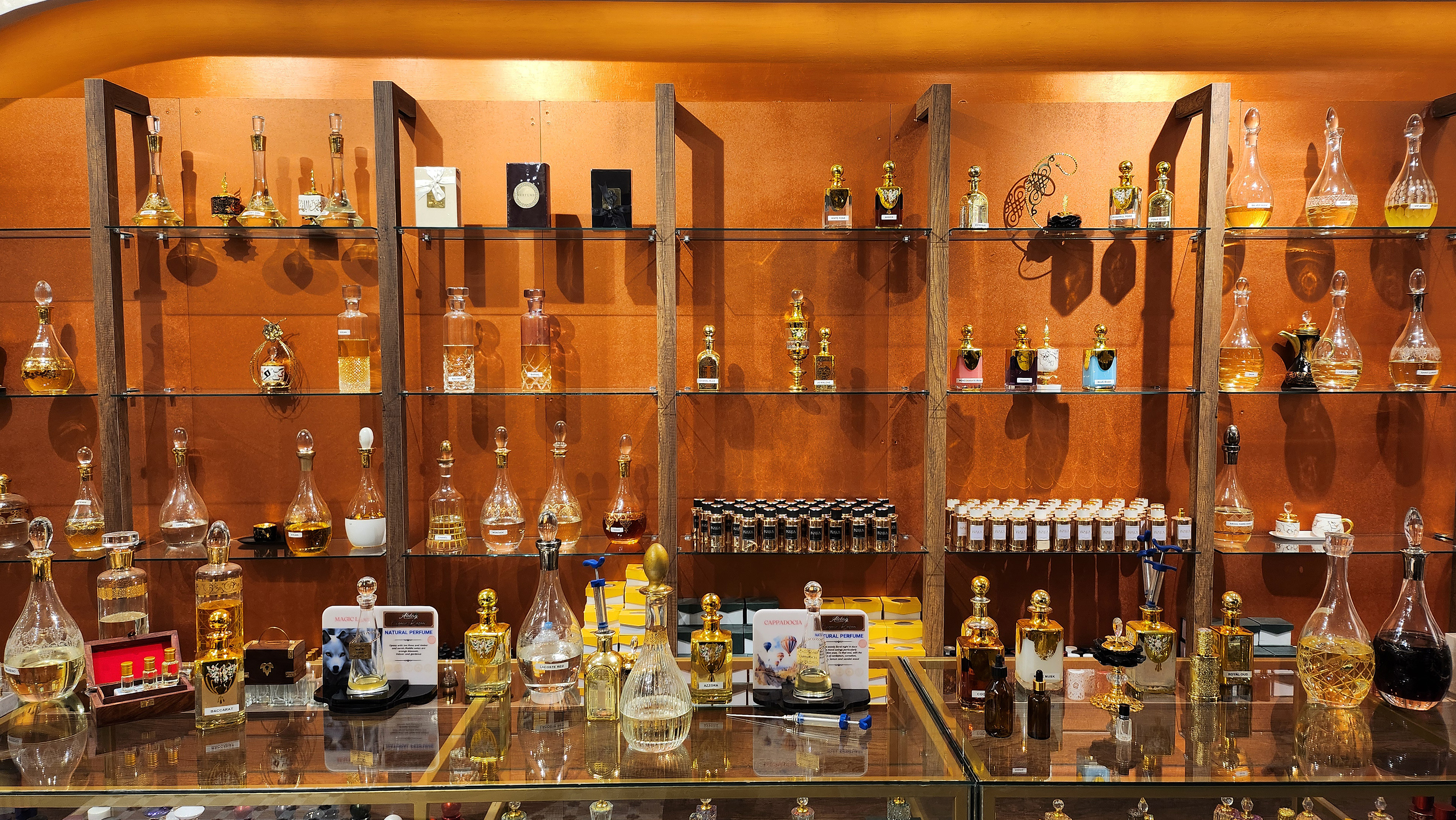
One of the designated shopping destinations on the tour was a large store selling every kind of Turkish delight confection you could imagine. Before setting the group free to sample the sweets, though, they gave us a demonstration of how to tell the difference between real and fake saffron (the real strands float and turn hot water “golden, not yellow”), had us smell potent vapors from menthol crystals dissolved in water, and swiped natural perfume on each of our hands.
My other half and I spent all of our allotted time tasting and buying Turkish delights, so we didn’t have time to smell their various perfume oils, but they looked like a mix of original souvenir scents and dupes of famous fragrances.
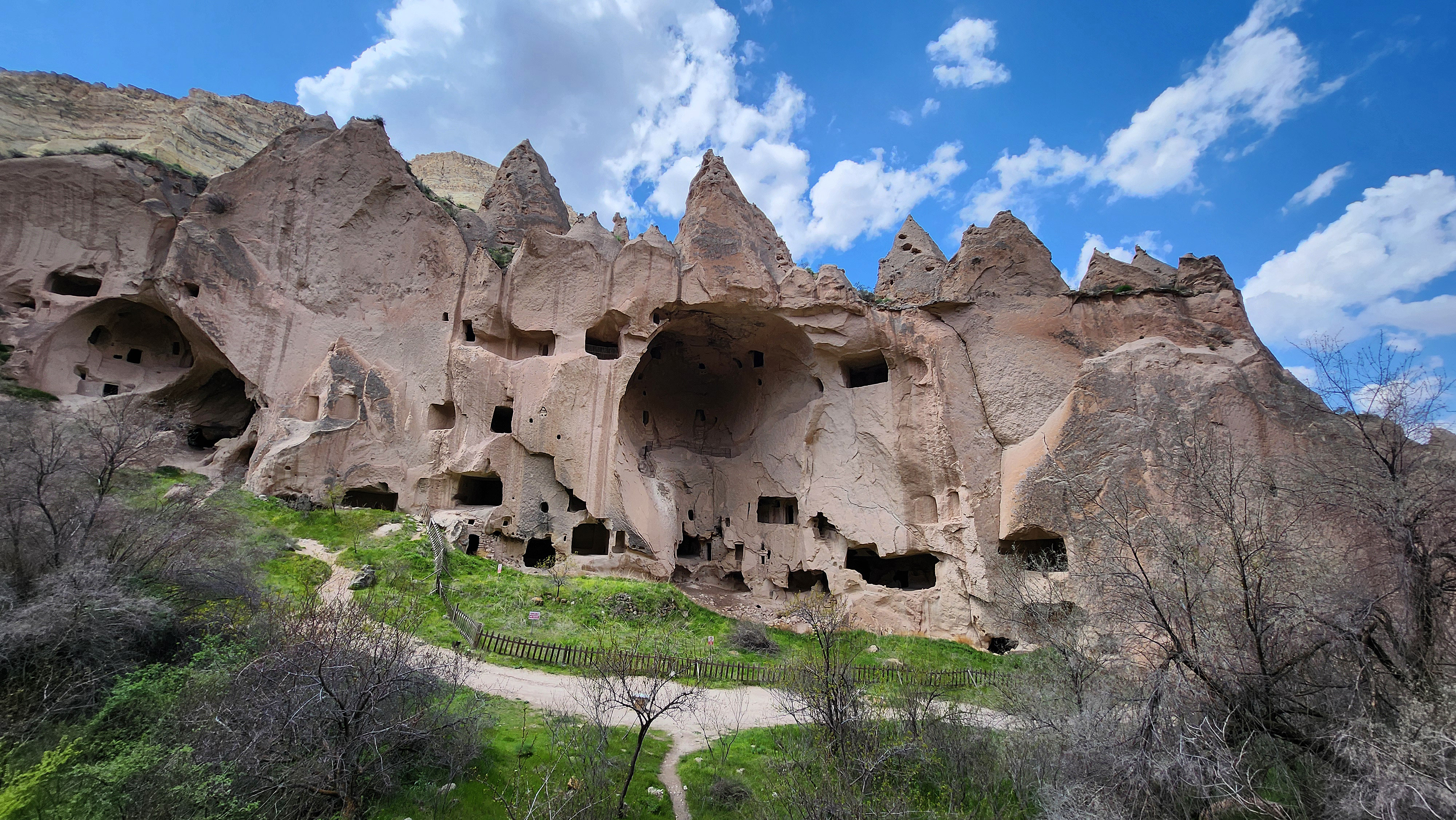
The Zelve Open Air Museum features both a monastery and a mosque, as well as a cave that may have once been a bazaar, large enough for camels to enter carrying goods for sale.
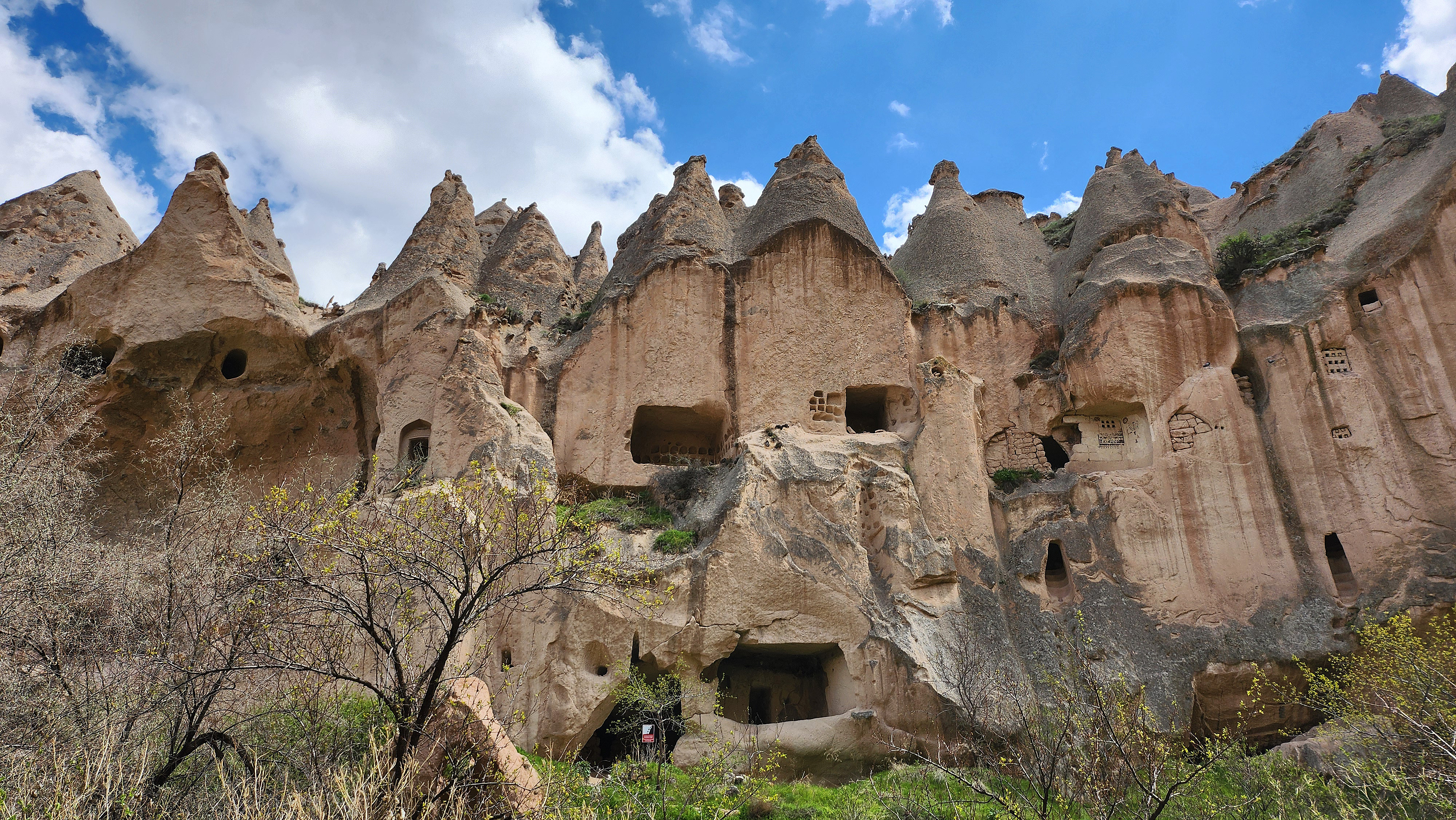
Paşabağları Open Air Museum has some distinct fairy chimneys at various stages of formation, which serves as a field geology lesson in addition to a feast for the eyes.
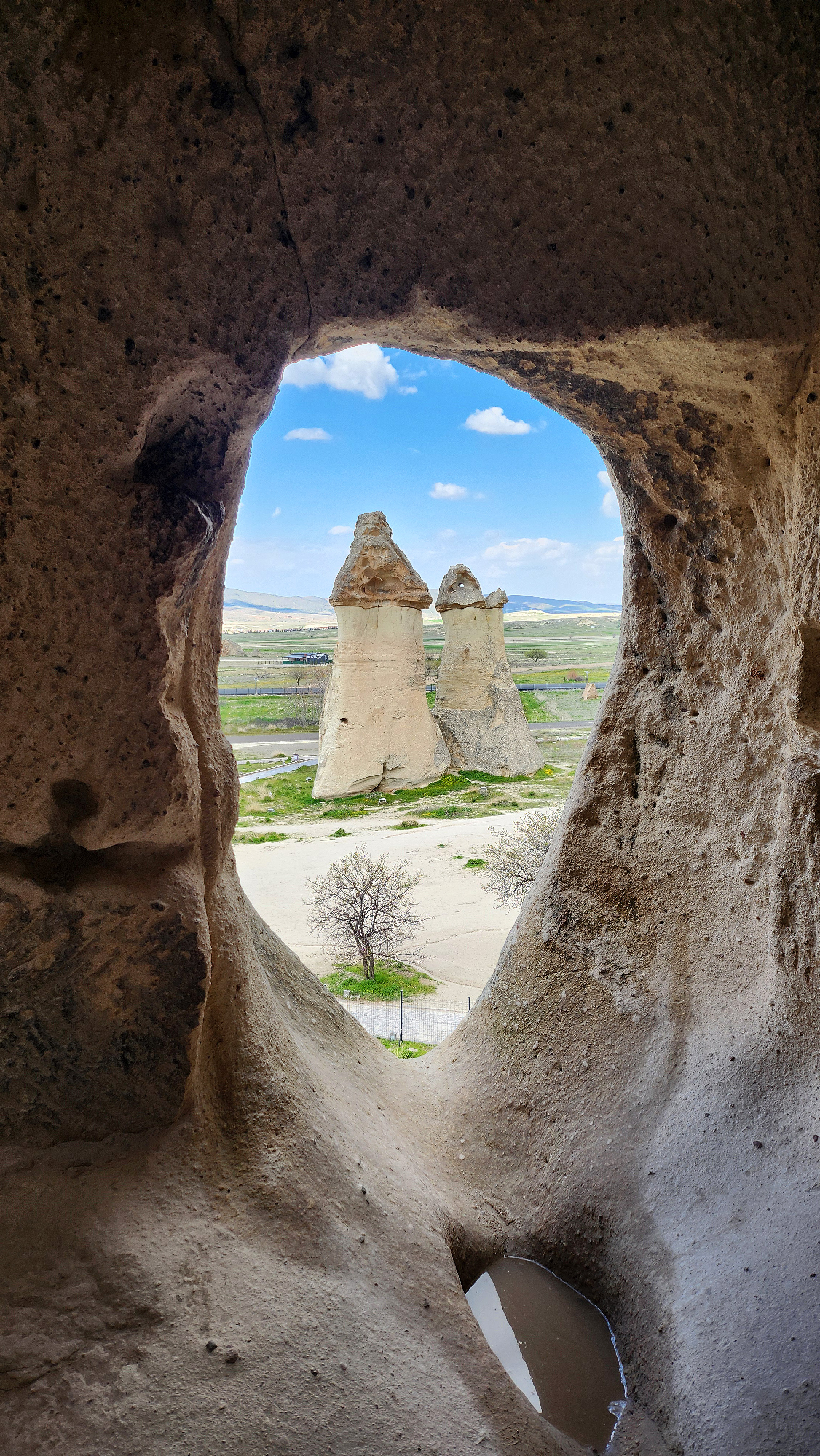
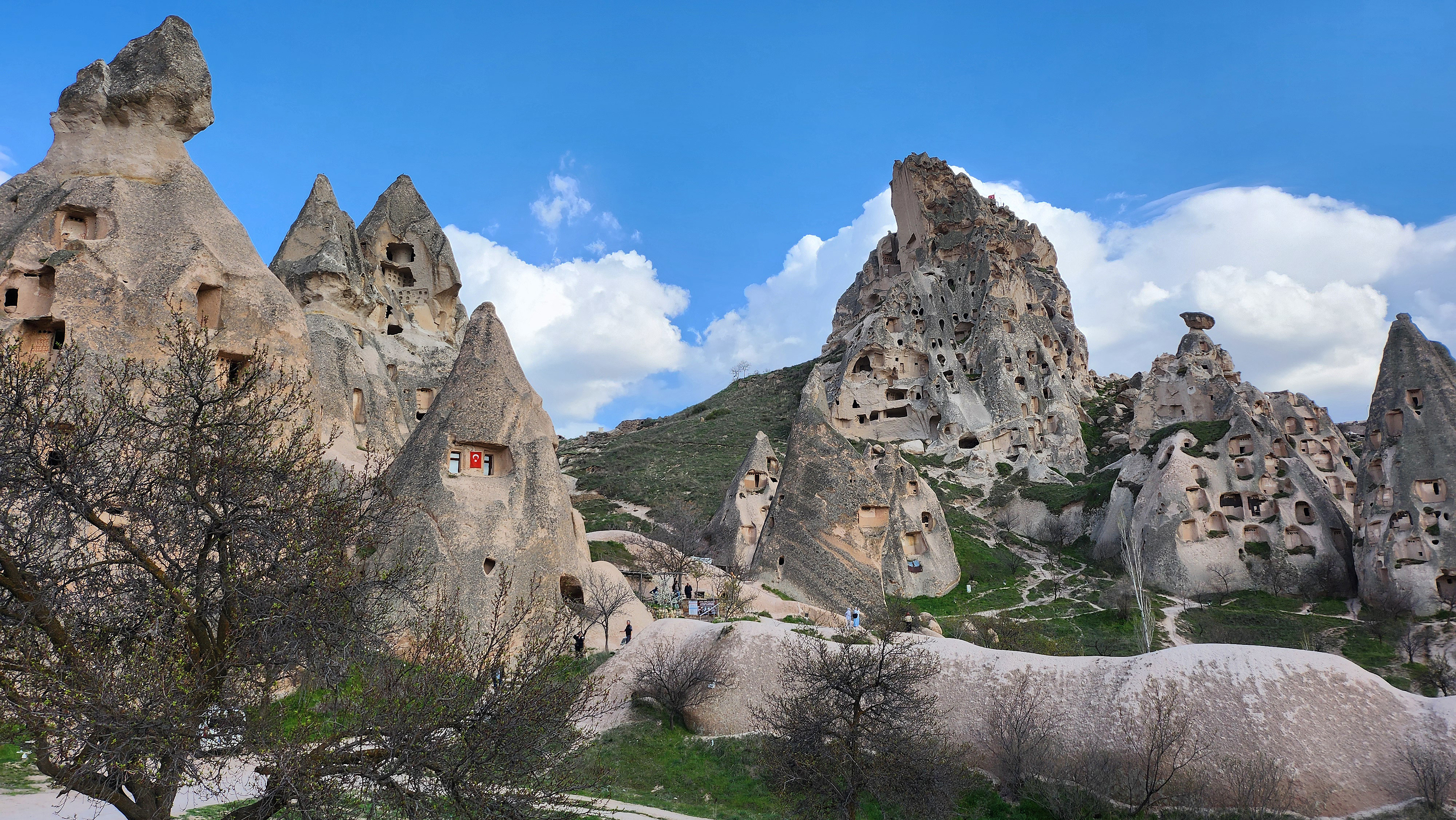
Our last stop was Uçhisar Castle, which is the highest point in Cappadocia and aptly named, as uç hisar can translate roughly to “outermost fortress.” We didn’t climb to the summit to see the panoramic view of surrounding valleys, but the jagged structures themselves were a fascinating testament to how humans have adapted to what nature has provided over the ages.
On the shuttle bus to Kayseri airport, we had an unexpected and amusing experience of hospitality. One set of passengers had not shown up outside of their hotel to be picked up, and while the rest of us waited, the driver—who did not appear to speak English—approached each of us wordlessly with a bottle of Kolonya and squirted it onto our hands. After we had all sanitized our hands with this heavily scented lemon and herbal cologne, he returned with a cluster of individually wrapped candies cupped in his palms for us to each take one or a few. Then he gave us a thumbs-up gesture and stepped back outside to continue waiting. (They still didn’t turn up, and we all left after a few minutes.)
Dear guests (this is how the tour guides addressed each group), I hope you enjoyed reading this and that you have a wonderful weekend.
 Nose Prose
Wonderful photos, Nose Prose! One of my friends visited Cappadocia recently. From their stories and photos and your post, it looks like a need to book some flights. The closest I’ve gotten is the Memo perfume, which is suitably earthy and dusty. However, it’s got a touch too much saffron for my liking.
LikeLiked by 1 person
Thanks, Daniel! Maybe the universe is telling you something. 😉 Expect prices to be quite high, though, with the hyperinflation of the last few years.
I’m not generally a fan of desert-inspired perfumes (though I find Tauer LAdDM appealing), but need to try the Memo perfume now.
LikeLiked by 2 people
The geology is absolutely next level. My understanding of the middle Eastern fragrance tradition is that it leans heavily toward oriental, incense, oud… the smells must have been amazing. Thanks for sharing.
LikeLike
Agreed! I just learned the term “geotourism” while looking up more information about the region.
The scentscape in Türkiye as far as I got to experience was indeed quite rich and strong.
LikeLiked by 1 person
Woo Hoo! Such wonderful photos Nose Prose. Did it inspire you to buy Memo Cappadocia? I’ve been thinking of buying it for Jin as a happy remembrance of our adventures there.
Portia xx
LikeLike
Thanks, Portia! So glad you and Jin have happy memories of your own there. I haven’t smelled the Memo fragrance, but will have to now!
LikeLike